

The Hidden Engine in Your Pond: My Deep Dive into the Rhizome Systems of Water Lilies and Spatterdock
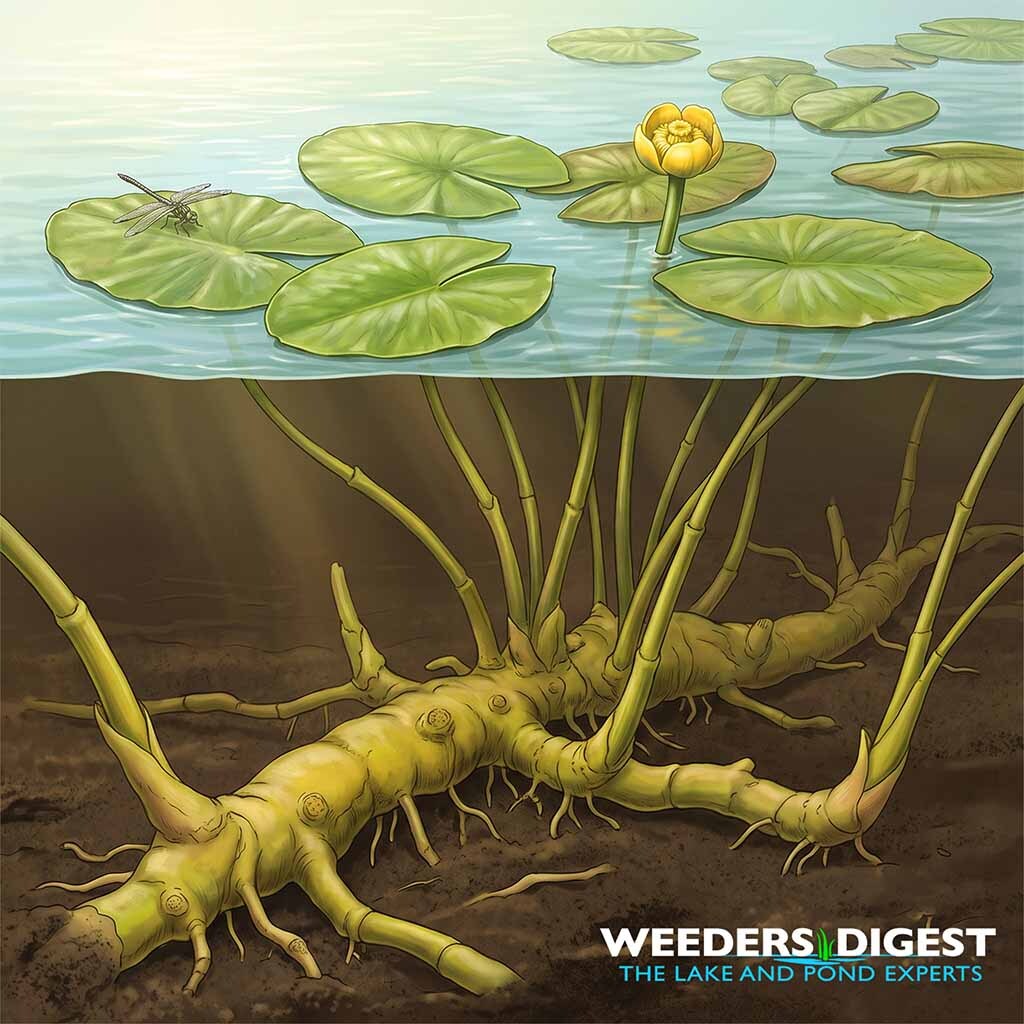 |

Summary:
The rhizome systems of floating-leaf plants like water lilies and spatterdock are thick, fleshy, horizontal underground stems that anchor the plants into the muddy bottom while acting as the central storage hub for nutrients, carbohydrates, and energy. While most people only ever notice the picturesque floating pads and vibrant flowers on the surface of the water, the true life force of these aquatic plants is buried deep within the benthic sediment. These underground networks serve a dual purpose: they tenaciously grip the muck to keep the plant from floating away in heavy currents, and they act like biological batteries, storing up enough energy during the growing season to ensure the plant can survive the winter and rapidly push new growth to the surface the following spring.
Because these root systems are completely submerged in anaerobic, oxygen-depleted soils, they are highly specialized. The stems and leaves connecting the rhizome to the surface contain spongy, air-filled channels that transport oxygen from the atmosphere down into the murky depths, allowing the rhizome to breathe. This continuous exchange of gasses is what makes it possible for these sprawling aquatic plants to thrive in environments where most terrestrial root systems would quickly rot and perish.
As a Certified Lake Manager, one of my most striking field observations always happens when stepping into the littoral zone of an aging waterbody; what appears to be a few delicate floating leaves on the surface is almost always anchored by a dense, unyielding web of massive, spongy rhizomes buried under the muck, often thicker than my own forearm, crisscrossing the substrate and completely stabilizing the pond floor. Trying to manage these plants requires understanding this hidden architecture, as pulling a few surface pads does absolutely nothing to slow down the immense carbohydrate reserves waiting just beneath your boots.
The Science Behind It:
The structural ecology of floating-leaf macrophytes, specifically within the genera Nymphaea (water lilies) and Nuphar (spatterdock), is entirely dependent on their expansive rhizomatous networks. A rhizome is a modified subterranean plant stem that sends out roots and shoots from its nodes, facilitating both nutrient acquisition and aggressive vegetative reproduction. In aquatic ecosystems, these rhizomes spread horizontally across the benthic zone (the lowest level of a body of water), creating a highly stable, interconnected mat that effectively sequesters nutrients from the sediment. This aggressive nutrient uptake allows them to outcompete free-floating algae for resources while severely limiting wave action and sediment suspension.
The sheer physical scale and biomass of these underground structures are remarkable and often dictate the ecological dynamics of the shallow littoral zone. According to research documented by the Rutgers New Jersey Agricultural Experiment Station, spatterdock rhizomes can grow up to 15 centimeters (approximately 6 inches) thick and sprawl 1 to 2 meters horizontally across the substrate. These stout, fleshy structures are highly adapted to hypoxic (low oxygen) conditions and can even withstand temporary periods of exposure to air during seasonal droughts. The massive thickness of the rhizome is not merely structural but functional; it is packed with dense starches that allow the macrophyte to overwinter successfully and rapidly deploy emergent petioles to the surface upon spring warming, often from sediment depths ranging from 0.3 to 1 meter.
Furthermore, environmental conditions such as water depth play a direct, quantifiable role in how these plants allocate their structural biomass. A morphological study published in the Journal of Environmental Management and Tourism evaluating the structural allocation of water lily biomass across different water depths found that the proportion of underground rhizome and root biomass decreases as water depth increases. The research indicated that groundwater depth significantly affects the allocation of underground biomass; specifically, the underground biomass proportion decreased from a high of 53.7 percent in shallow littoral zones to 42.4 percent in deeper waters. This demonstrates a phenotypical adaptation where the plant must reallocate its energy reserves away from horizontal rhizomatic expansion and toward rapid vertical petiole elongation simply to reach the photic zone for photosynthesis.
The internal anatomy of these rhizomes is equally complex, relying on an advanced aerenchyma system. Aerenchyma refers to the spongy tissue characterized by large interconnected air-filled cavities that run continuously from the stomata-rich floating leaves, down through the elongated petioles, and directly into the rhizome. This system facilitates the pressurized mass flow of atmospheric oxygen down into the benthic root tissues, preventing asphyxiation in the highly reducing, sulfide-rich muck. Simultaneously, metabolic byproducts like carbon dioxide and methane are transported from the rhizome back up to the atmosphere, showcasing a sophisticated internal ventilation mechanism that makes long-term survival in aquatic substrates possible.
Sources / References:
- https://njaes.rutgers.edu/fs1255/ (FS1255: Ecology and Control of the Freshwater Aquatic Plant Spatterdock)
- https://www.researchgate.net/publication/365940699_The_Effect_of_Water_Depth_on_the_Structure_and_Allocation_of_Waterlily_Nymphaea_pubescens_Willd_Biomass_in_Lebak_Swampland_in_Kalimantan_Selatan