

Are My Lawn Fertilizers Actually Ruining My Favorite Lake?
Summary:
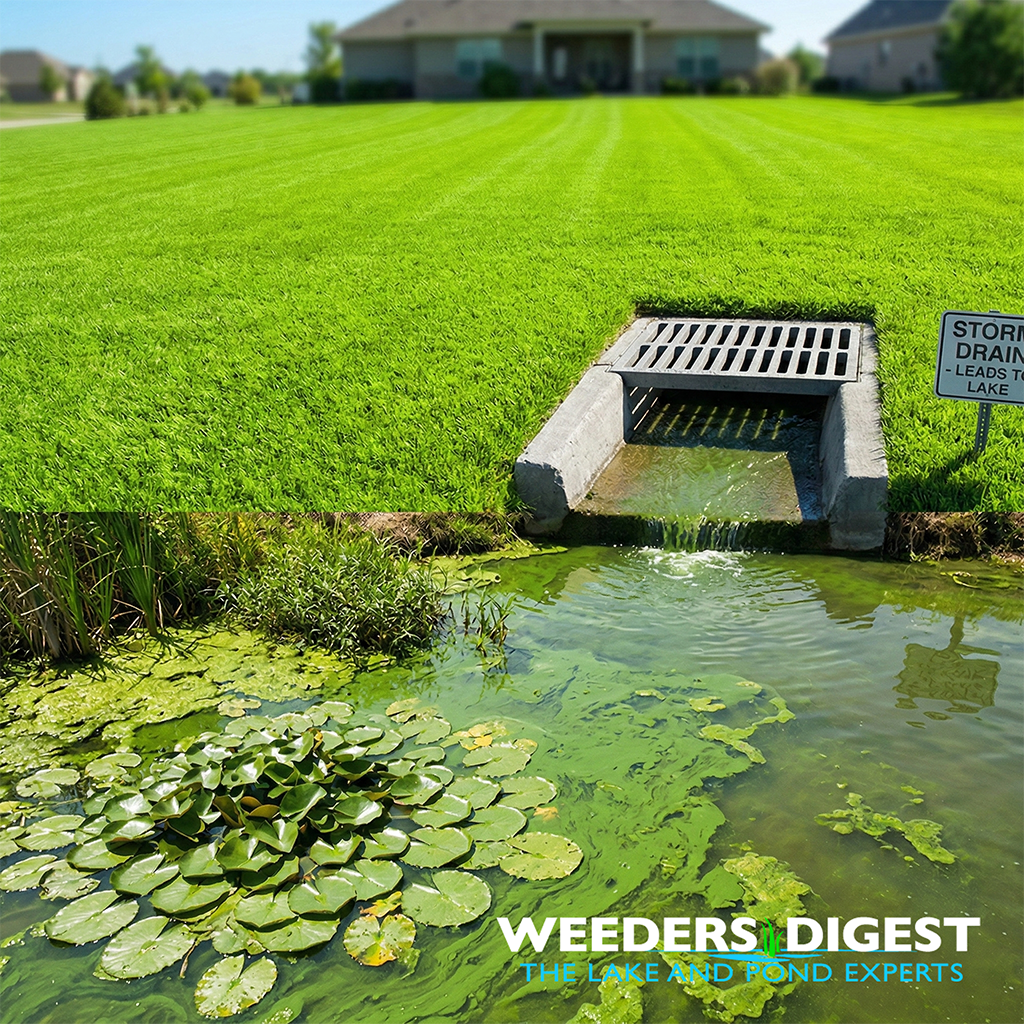
When I look at my lush, green lawn, it is easy to feel a sense of pride in the hard work put into maintaining my property. However, as someone who also loves spending time on the water, I’ve often had to ask myself if the very nutrients I’m putting on my grass are ending up in the lake. The short answer is a definitive yes. When we apply more fertilizer than our grass can actually drink up, or when we apply it right before a heavy rain, those chemicals don’t just stay in the soil. They hitch a ride on stormwater runoff and head straight for the nearest basin.
Think of fertilizer as "fast food" for plants. While it makes my grass grow quickly, it does the exact same thing for the plants I don’t want, like invasive milfoil and unsightly green algae. Once these nutrients reach the water, they act like a massive injection of fuel for aquatic weeds. This can turn a clear, swimmable shoreline into a murky, green mess in a very short amount of time. It isn't just about the view; it changes the entire feel and health of the water where my family swims and fishes.
The connection between my backyard and the lake is much closer than it looks on a map. Even if I don’t live directly on the water, the local storm drains often lead right to the lake without any filtering process. This means that my choice of fertilizer, and how much of it I use, has a direct impact on the water quality for everyone in the community. Understanding this link is the first step in managing my property in a way that protects the natural beauty of our local aquatic ecosystems.
The Science Behind It:
The primary mechanism by which lawn fertilizers impact lacustrine environments is through the introduction of limiting nutrients, specifically phosphorus and nitrogen. In most freshwater ecosystems, phosphorus acts as the limiting reagent for primary production. According to research from the University of Minnesota Extension, even small increments of phosphorus can trigger significant ecological shifts. When terrestrial runoff carries synthetic fertilizers into a water body, it initiates a process known as cultural eutrophication. This accelerated nutrient enrichment bypasses the natural, multi-century aging process of a lake, leading to rapid degradation of water clarity and quality.
The biochemical response to this nutrient influx is often characterized by massive phytoplankton blooms. As these algal colonies proliferate on the surface, they restrict light penetration to deeper submersed aquatic vegetation (SAV), disrupting the vertical structure of the habitat. When these blooms eventually senesce and die, the subsequent decomposition by aerobic bacteria consumes vast quantities of dissolved oxygen. This creates hypoxic conditions, or "dead zones," which can lead to fish kills and the loss of benthic macroinvertebrates. Citing data from the University of Florida’s IFAS, the transport of nitrogen is equally concerning, as it is highly mobile in soil and can easily leach into groundwater or enter surface waters via subsurface flow.
Furthermore, the physical composition of the shoreline plays a critical role in nutrient loading. Turfgrass, while aesthetically pleasing, possesses a relatively shallow root system compared to native riparian buffers. This lack of deep root structure reduces the soil’s capacity for nutrient sequestration and increases the velocity of surface runoff. Studies published in various ecological journals indicate that high-maintenance lawns contribute significantly higher concentrations of dissolved reactive phosphorus (DRP) than naturalized landscapes. This DRP is immediately bioavailable for uptake by cyanobacteria, some of which can produce cyanotoxins that pose health risks to humans and domestic animals.
From a limnological perspective, the cumulative impact of residential fertilizer use represents a non-point source pollution challenge that is difficult to mitigate once the nutrients have entered the water column. Once phosphorus enters the lake's internal nutrient cycle, it can be re-released from the bottom sediments during periods of anoxia, leading to a self-sustaining cycle of poor water quality. This "internal loading" means that the effects of today’s lawn fertilization can haunt a lake’s ecological health for decades, regardless of future reduction efforts.