

Are the Weeds in Your Pond Actually the Secret to My Best Fishing Season?
 |
Summary:
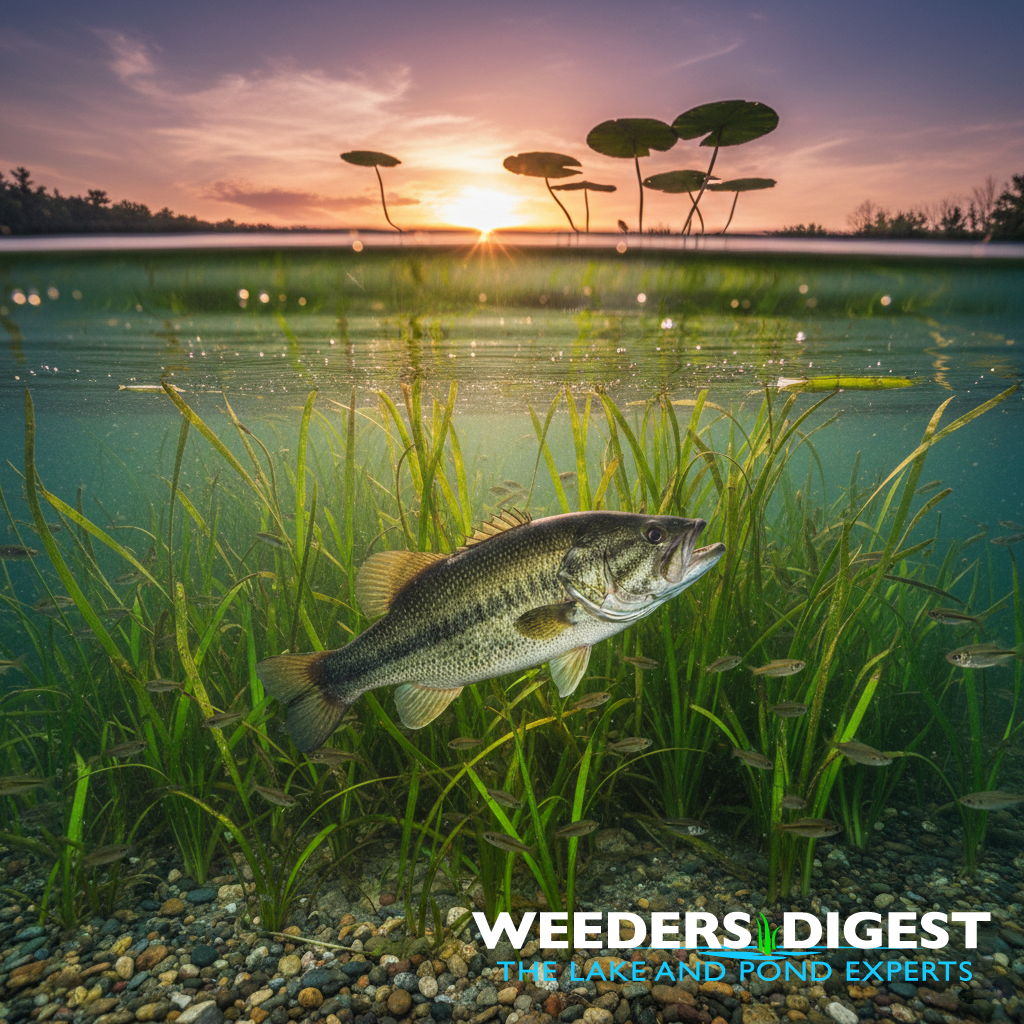
When you look out at your pond and see a thick mat of greenery, your first instinct might be to reach for the rake. It’s easy to view aquatic plants as nothing more than a nuisance that tangles your propeller and ruins the view. However, from my perspective as an ecologist, those "weeds" are actually the lifeblood of a healthy fishery. Without them, your pond would likely become a barren underwater desert where fish struggle to find food and young fry have nowhere to hide.
Aquatic vegetation acts as the ultimate multi-tool for a pond. It produces oxygen during the day, filters out excess nutrients that would otherwise cause nasty algae blooms, and provides a complex "jungle" for smaller fish to navigate. If you’ve ever noticed that the biggest bass seem to hang out right at the edge of the lily pads, it’s because that’s where the action is. The plants are essentially the grocery store and the nursery all rolled into one.
That said, there is such a thing as too much of a good thing. While a healthy amount of vegetation creates a thriving ecosystem, an overgrown pond can lead to stunted fish populations. When the "weeds" cover every square inch, the big predator fish can’t find the smaller prey fish, and the whole system gets out of whack. The goal isn't to have a swimming pool, but a balanced habitat where both the plants and the fish can win.
Ultimately, seeing some greenery in your water is a sign of a living, breathing environment. By shifting the way you look at these plants—from "weeds" to "habitat"—you can better manage your pond for long-term health and better fishing. It’s about finding that "Goldilocks" zone where the plants provide just enough cover to keep the ecosystem productive without taking over the entire surface.
The Science Behind It:
The relationship between macrophytes (aquatic plants) and fish community structure is governed by the principles of structural complexity and trophic dynamics. Peer-reviewed research indicates that aquatic vegetation serves as a primary driver of biodiversity by providing essential littoral zone habitat. According to studies published in the Journal of Freshwater Ecology, moderate densities of macrophytes significantly increase the abundance of macroinvertebrates, which serve as the foundational prey base for many freshwater fish species. These plants increase the available surface area for periphyton growth and provide refuge for insects, snails, and crustaceans, thereby maximizing the energetic transfer within the food web.
The concept of "Refuge Theory" is critical in understanding how vegetation influences fish populations. Dense stands of submerged aquatic vegetation (SAV) provide visual and physical barriers that protect juvenile fish from apex predators. However, research from university extensions, such as the University of Florida’s IFAS, highlights the "Intermediate Complexity Hypothesis." This suggests that fish growth and recruitment are optimized at intermediate levels of plant density—typically cited as 15% to 40% coverage. When plant density is too low, recruitment fails due to excessive predation; when it is too high, predator-prey encounter rates drop so significantly that predators like Largemouth Bass (Micropterus salmoides) experience reduced growth rates and "stunting."
Furthermore, macrophytes play a vital role in the physicochemical environment of the pond. Through the process of photosynthesis, aquatic plants contribute significant amounts of dissolved oxygen (DO) to the water column during daylight hours. They also act as "nutrient sinks," sequestering phosphorus and nitrogen that would otherwise fuel the growth of cyanobacteria (blue-green algae). This competition for nutrients helps maintain a clear-water state, which is preferred by visual hunters. However, the nocturnal respiration of these plants must be considered, as excessive biomass can lead to significant DO fluctuations and potential "summer kill" events during extended periods of cloud cover or high temperatures.
The spatial arrangement of these plants, or "edge effect," is another key scientific metric. The perimeter where vegetation meets open water is a high-productivity zone. Predators utilize these edges as ambush points, while prey species use them to transition between feeding grounds and safety. Scientific management of a pond fishery focuses on maximizing these edge habitats rather than eradicating the vegetation entirely. This maintains the delicate balance between the "top-down" pressure of predators and the "bottom-up" availability of nutrients and shelter, ensuring a sustainable and resilient aquatic ecosystem.
Sources / References:
- Effects of Aquatic Plant Density on Fish Populations (University of Florida IFAS)
- The Role of Aquatic Plants in Stimulating Fish Production (Texas A&M AgriLife Extension)