

Creating a Thriving Ecosystem: Attracting Wildlife to Your Lake Property
The Vision of a Living Shoreline
Lakefront living offers a unique opportunity to connect with nature. It's not just about the stunning views or recreational activities; it's about fostering a healthy ecosystem that supports a diverse array of wildlife. By making conscious choices about how we manage our properties, we can transform them into havens for birds, mammals, amphibians, and insects, enriching our lives and contributing to the overall health of the lake.
Think of your property as a vital part of a larger, interconnected web of life. When you focus on naturally attracting wildlife, you're not only creating a beautiful environment for yourself, but you're also playing a crucial role in preserving biodiversity and supporting the delicate balance of the lake ecosystem.
Nature’s Morning Chorus
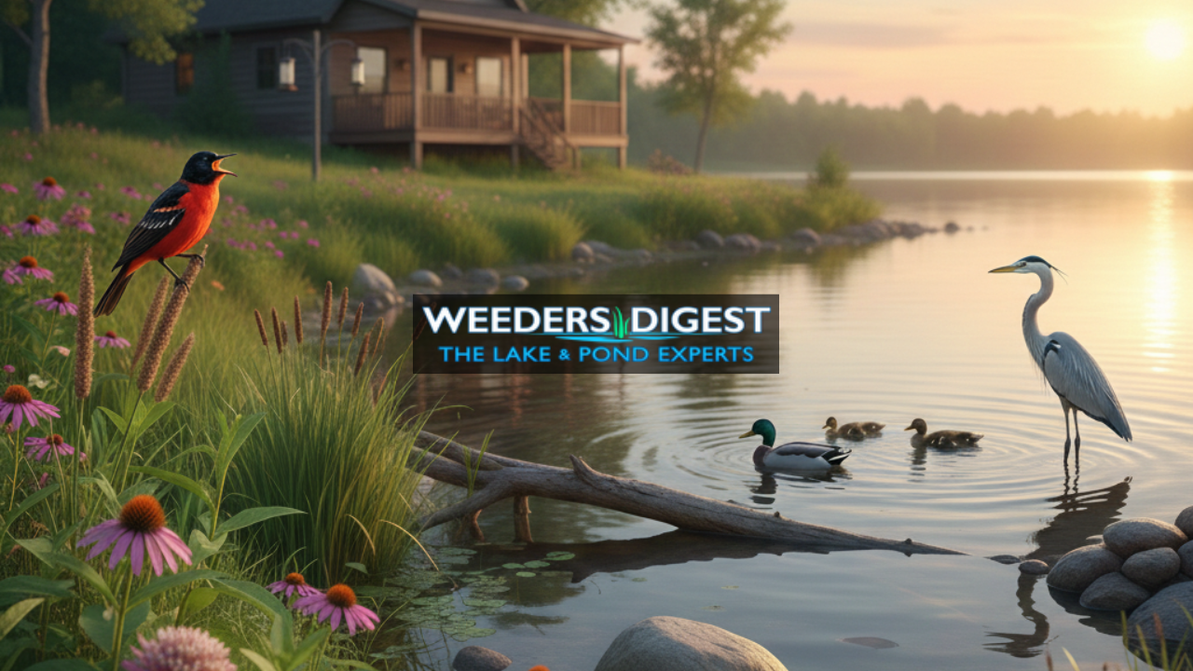
There is nothing quite like waking up, grabbing a cup of coffee, and stepping out onto the porch to hear the lake waking up. Whether it’s the songbirds competing for the first note of the morning, a family of ducks cutting a quiet V-trail across the glass-still water, or a blue heron standing like a statue in the shallows, these moments are why we love lake life.
It’s easy to think of these scenes as something you only see on the Discovery Channel, but you can actually cultivate this right in your own backyard. Attracting wildlife isn't just about "decorating" with nature; it’s about rolling out the welcome mat for a healthy, living ecosystem where every critter has a place to thrive.
Our Goal: Enhance Biodiversity Through Habitat Improvement
This article will walk you through practical steps to enhance your property. By implementing strategic improvements such as planting native vegetation, enhancing fish habitat, managing water quality, and minimizing human disturbance you can transform your shoreline into a thriving ecosystem.
Understanding the Lake Ecosystem
The Components of Health
A healthy lake ecosystem is a complex web of living and non-living components. Sunlight drives photosynthesis in aquatic plants, while nutrients like nitrogen and phosphorus support growth. However, balance is fragile; an excess of these nutrients can lead to harmful algae blooms.
The physical structure of the lake, its depth, shape, and substrate dictates which species can thrive. To maintain this balance, many owners use specialized lake and pond management tools to manage vegetation without disrupting the natural order.
Why Biodiversity Matters
Biodiversity is the insurance policy of a lake. A diverse ecosystem is more resilient against stressors like pollution or invasive species. Each resident, from the smallest pollinator to the largest raptor, has a job to do. When we attract wildlife, we aren't just looking at pretty animals; we are rebuilding the functional layers of the environment.
Key Strategies for Attracting Wildlife
Planting Native Vegetation
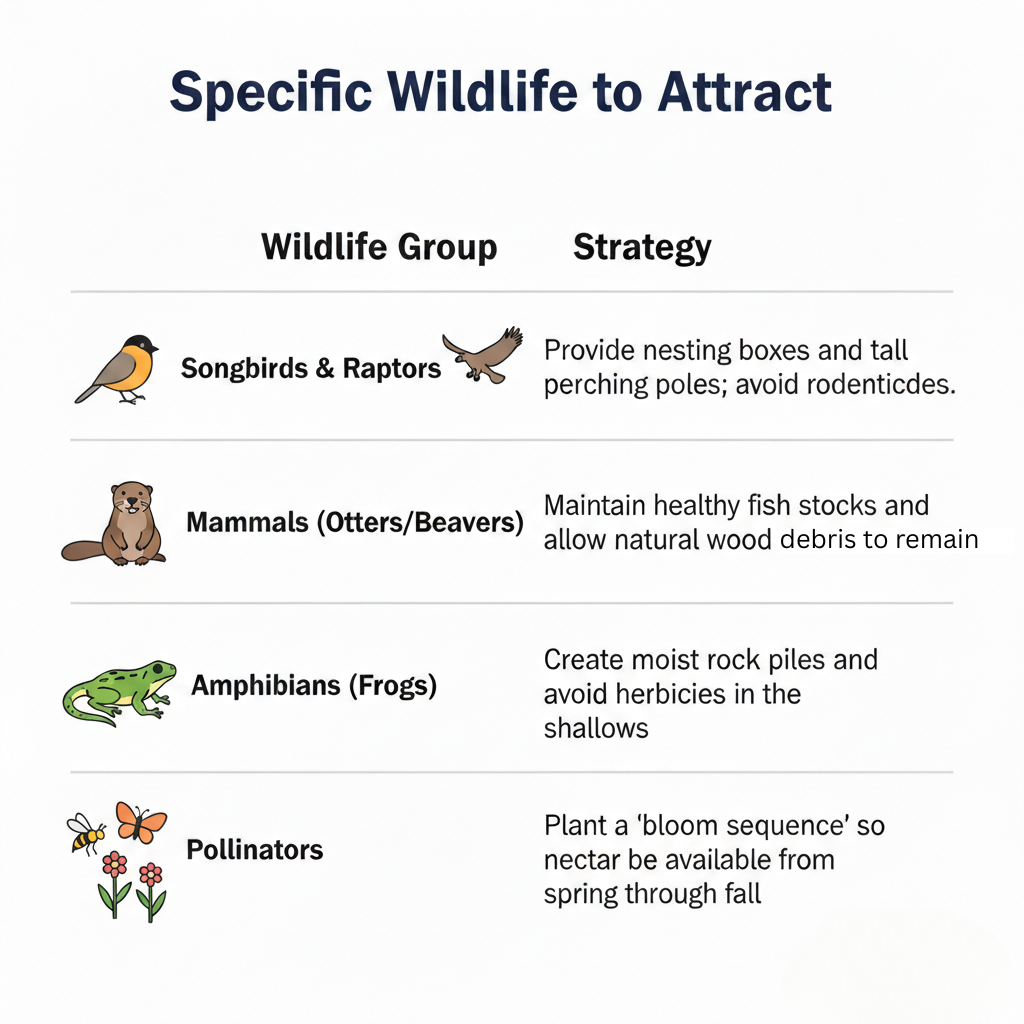
Native plants are the foundation of a wildlife haven. They provide the specific food and shelter that local species have evolved to require.
- Terrestrial Plants: Oaks and maples offer nesting sites, while shrubs like dogwood provide essential berries.
- Aquatic Plants: Submerged plants like pondweed provide oxygen and cover for fish. For help identifying which plants are beneficial and which might be invasive, refer to this Lake Weed Guidebook.
Enhancing Fish Habitat
Fish need "structure" to hide from predators and successful areas to spawn.
- Submerged Structures: Adding logs or rock piles creates "neighborhoods" for fish.
- Spawning Beds: Adding gravel or sand to shallow, protected areas encourages reproduction. For those dealing with heavy muck that smothers these habitats, using a muck and sludge control solution can help clear the way for healthy spawning.
Attracting Birds and Pollinators
- Nesting & Feeding: Install birdhouses and feeders, but ensure they are cleaned regularly to prevent disease.
- Berry-Producing Shrubs: Serviceberry and winterberry provide sustainable food sources that keep birds returning year-round.
- Pollinator Gardens: Plant milkweed and bee balm to support butterflies and bees.
Managing Water Quality
Clean water is the lifeblood of your ecosystem. High nutrient runoff from fertilizers can lead to oxygen depletion.
- Buffer Zones: Maintain a strip of native vegetation along the water's edge to filter pollutants.
- Aeration: Improving circulation can prevent stagnant conditions. You can find detailed advice on maintaining these levels in this article on how to improve lake water quality.
Minimizing Human Disturbance
Wildlife needs "quiet zones." Minimize the use of harsh chemicals, as pesticides can kill the very insects that feed the birds and fish you are trying to attract. For more information on the impact of runoff and lake protection, visit the Environmental Protection Agency (EPA).
Creating a wildlife-friendly lake property is a rewarding journey. Not only does it enhance the beauty of your home, but it also turns your backyard into a vital sanctuary for local species. By planting native species, managing muck, and protecting water quality, you are ensuring the lake remains a vibrant resource for generations to come.
Ready to transform your shoreline? Start today by assessing your current habitat. Whether you need to clear a space for a nesting area or improve your water's clarity, taking that first step makes a world of difference.
Frequently Asked Questions
What are the best native plants for pollinators? Milkweed, bee balm, and coneflowers are top choices for attracting bees and butterflies.
How do I prevent algae blooms? Reduce fertilizer use, maintain your septic system, and use aeration to keep water moving.
Are all lake weeds bad for wildlife? No! Native aquatic plants are essential for fish habitat. Only invasive species that "choke" the lake should be managed.
Recent Posts
-
Aquatic Weed Identification: A Spring Guide
Identify Spring Aquatic Weeds As the ice melts and the water warms, spring marks a critical period f …9th Apr 2026 -
Duckweed vs. Algae: How to Tell the Difference and Treat Accordingly
Duckweed vs. Algae: Spot the Difference When it comes to maintaining a healthy pond or lake, identif …3rd Apr 2026 -
How to Choose the Right Muck Reducer for Your Lake or Pond
Choosing Pond Muck Remover: Factors to Consider Pond muck is an inevitable part of any aquatic ecosy …3rd Apr 2026