

Can I Dredge My Shoreline Without Turning My Lake Into a Muddy Mess?

Summary:
It is entirely possible to dredge a small section of your shoreline without ruining the clarity of your water, but it requires a strategic approach rather than a "dig and hope" mentality. When you disturb the bottom of a lake or pond, you are essentially poking a beehive of settled silt, organic muck, and nutrients. Without the right precautions, these particles stay suspended in the water column, leading to that dreaded chocolate-milk appearance that can drift across your entire waterfront.
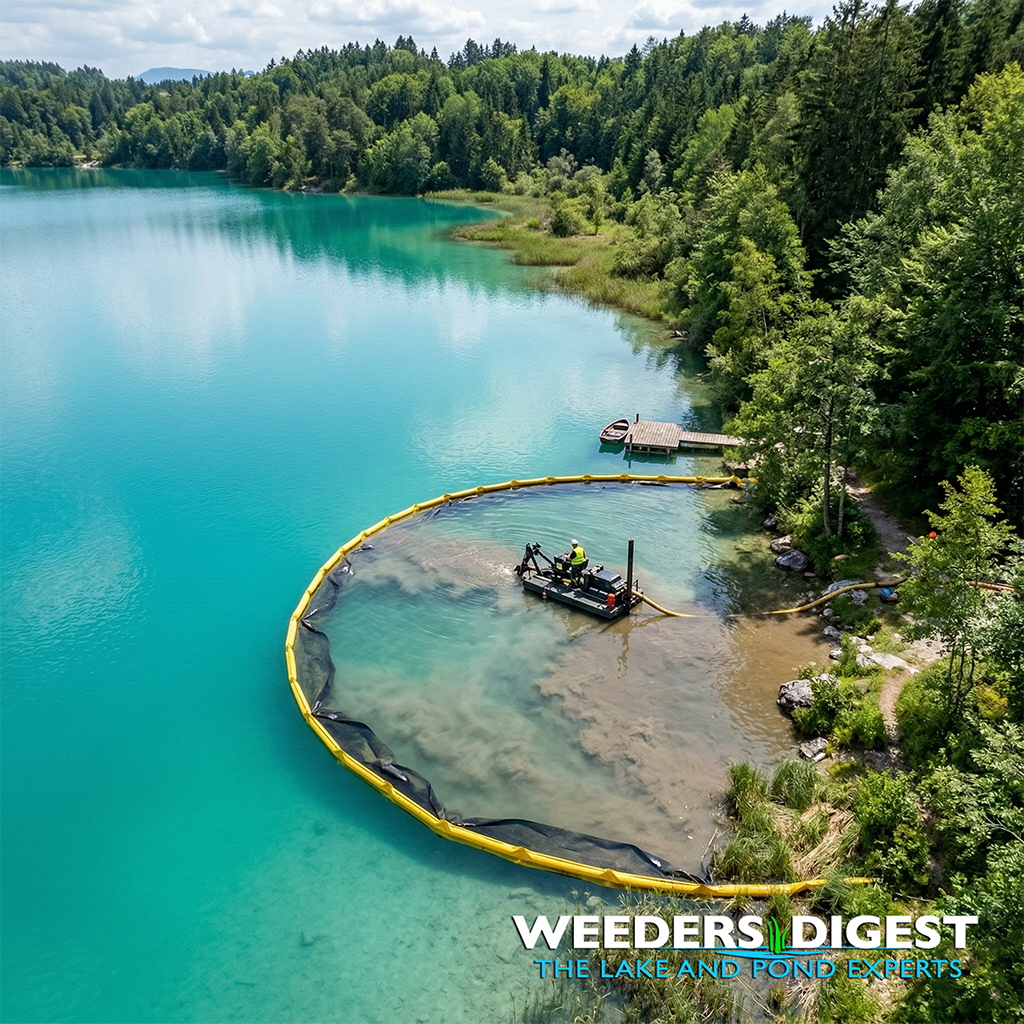
To keep your water clear, the focus must be on containment and timing. Think of it like a controlled surgical procedure; by isolating the area where you are working, you prevent the stirred-up sediment from escaping into the deeper, open water. Using specialized barriers and choosing the right equipment—such as a small-scale suction dredge rather than a heavy excavator—can make a world of difference in how quickly your shoreline returns to a pristine state.
The key to a successful "clean" dredge is patience and preparation. If you rush the process or use aggressive mechanical methods without a plan for sediment control, you risk triggering an algae bloom or long-term turbidity issues. However, by understanding how sediment behaves when it's moved, you can reclaim your sandy bottom or deeper boat slip while keeping the rest of your swimming area crystal clear.
The Science Behind It:
The primary challenge in localized dredging is the management of Total Suspended Solids (TSS) and the subsequent impact on Nephelometric Turbidity Units (NTU). Shoreline sediments often consist of fine-grained silts and unconsolidated organic matter, which possess low settling velocities. According to research published in the Journal of Environmental Management, the suspension of these fine particles increases the surface area for nutrient desorption, particularly phosphorus, which is often chemically bound to benthic sediments. If these particles are not contained, the resulting "turbidity plume" can reduce light penetration, inhibiting submerged aquatic vegetation (SAV) and potentially triggering localized eutrophication.
To maintain water clarity during a small-scale dredge, the implementation of a turbidity curtain or silt barrier is essential. These barriers utilize a flotation geomembrane and a weighted skirt to create a physical "curtain" that extends from the water surface toward the benthic zone. This creates a stagnant micro-environment where the hydraulic energy is minimized, allowing the disturbed particles to settle back to the bottom via gravity rather than being transported by wind-driven currents or wave action. Studies by university extensions on lake management emphasize that the effectiveness of these barriers is dependent on the particle size; clay-based sediments require significantly longer detention times to settle compared to coarser sands.
The method of extraction also plays a critical role in minimizing vertical sediment transport. Hydraulic dredging, which utilizes a vacuum-like suction, typically results in lower "resuspension rates" compared to mechanical dredging with a backhoe or dragline. Mechanical methods involve the repetitive entry and exit of a bucket through the air-water interface, which introduces significant turbulence and oxygenates the sediment-water interface. This disturbance can lead to "internal loading," where sequestered nutrients are reintroduced into the water column. Research indicates that hydraulic systems, which transport a slurry of water and sediment through a closed pipe to a dewatering area, maintain the highest degree of water clarity at the point of extraction.
Furthermore, the timing of the operation relative to the lake's thermal stratification and biological cycles is a vital consideration. Dredging during periods of high biological activity (late spring or summer) can exacerbate the risk of cyanobacteria blooms if nutrient-rich sediments are disturbed. Professional lake managers often recommend conducting small-scale dredging during "low-flow" periods or when the water table is at its lowest. By adhering to these physical and chemical principles of limnology, shoreline restoration can be achieved with minimal impact on the overarching aquatic ecosystem’s transparency and health.
Sources / References:
- Managing Lakes and Reservoirs - North American Lake Management Society (NALMS)
- Impacts of Dredging on Shoreline Sediments - University of Wisconsin-Extension