









Description
Keep Digesting Muck When Warm-Season Bacteria Slow Down
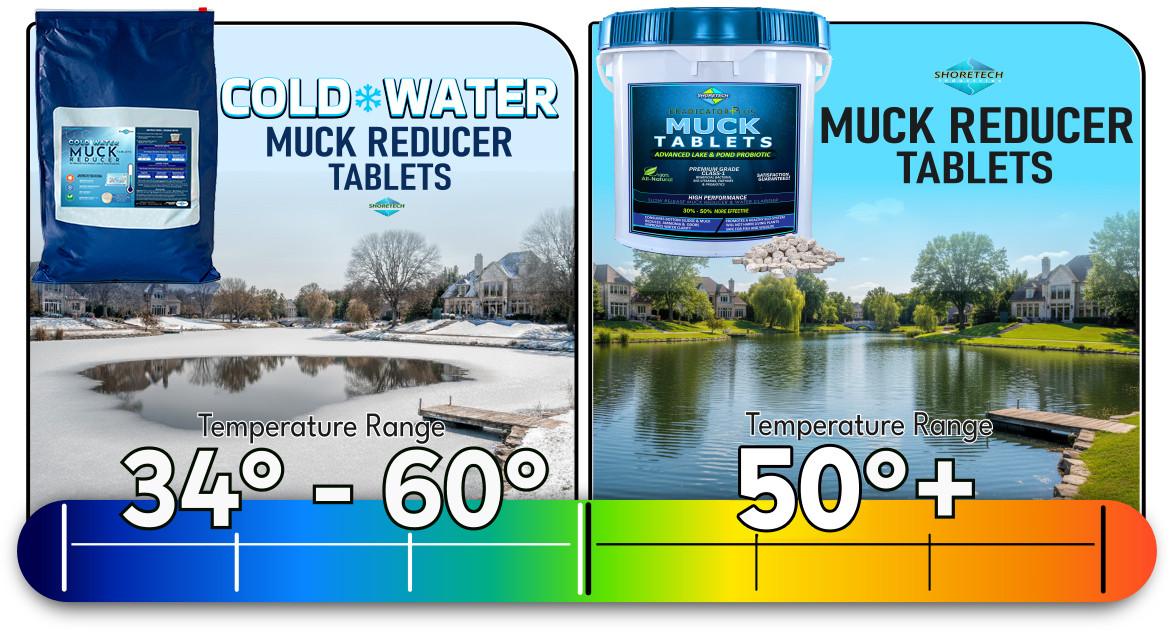
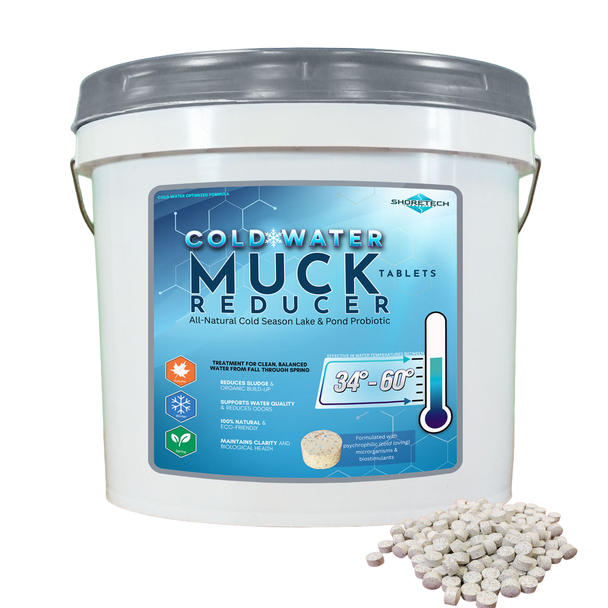
Cold Water Muck Reducer Tablets are probiotic sludge-digester tablets formulated with psychrophilic, cold-loving bacteria and bio-stimulants that remain active in water temperatures from 34°F to 60°F.
Use them in early spring and late fall to target organic muck, sludge, leaf litter, dead aquatic vegetation, fish waste and other decaying material when many traditional warm-water bacteria treatments are less active.
The dense sinking tablets carry beneficial bacteria and bio-stimulants directly into the muck layer, helping reduce organic sediment, improve water clarity, reduce anaerobic odors and manage the nutrient load created by decaying organic matter.
- Active in cold water from 34°F to 60°F
- Psychrophilic beneficial bacteria plus bio-stimulants
- Dense tablets sink directly into the muck layer
- Targets organic muck, sludge, leaves and dead vegetation
- Helps reduce nutrient loading from decaying organic material
- Non-toxic formula designed for aquatic environments
- Ideal for spring startup and late-fall shoreline maintenance
- Use across a whole water body or target docks, beaches, coves and shorelines
Biological Muck Digestion Slows as the Water Gets Colder
As lake and pond temperatures fall, the microbial communities that naturally digest organic material become less active. Cold Water Muck Reducer is formulated to keep biological activity working during the 34°F to 60°F shoulder seasons.
Early Spring
Jump-start microbial activity after winter and begin digesting bottom muck before warm-season treatments become fully active.
Late Fall
Target fallen leaves, dying weeds and algae before they spend the winter decomposing into another layer of organic sediment.
Cold Shorelines
Treat docks, coves, beaches and shoreline pockets while open-water temperatures remain above 34°F.
Year-Round Strategy
Use the cold-water formula in spring and fall, then transition to a warm-season muck reducer as temperatures rise.
Target the Material That Turns Into Muck
Cold Water Muck Reducer is designed for organic sediment. The bacteria and bio-stimulants help break down the material that accumulates on the bottom rather than simply masking symptoms at the surface.
Leaf Litter
Digest leaves that collect under docks, along shorelines and in coves before they compact into deeper sludge.
Dead Vegetation
Break down dead aquatic plants and algae residue that settle to the bottom and contribute to nutrient-rich muck.
Fish Waste
Target biodegradable waste that contributes to bottom sediment and nutrient loading in managed water bodies.
Bottom Sludge
Deliver beneficial cultures and bio-stimulants directly to the water-to-sediment interface.
Odor-Causing Decay
Reducing anaerobic organic buildup can help reduce the rotten-egg odor associated with poorly decomposed bottom material.
Excess Nutrients
Digesting organic debris before spring helps reduce the phosphorus and nitrogen load associated with decomposing material.
Put the Beneficial Bacteria Where the Muck Actually Is
The dense tablets sink through the water column and settle into the sediment layer. This keeps the bacteria and bio-stimulants concentrated in the treatment area instead of allowing a lightweight powder or floating product to drift away.
Broadcast them over the entire water body for broad treatment or concentrate the application in muck-prone areas such as docks, swimming beaches, coves and shoreline zones.
Use the tablets across a complete pond or lake treatment area, or focus them on the exact shoreline zones where organic sediment accumulates fastest.
This is a biological muck-reduction product, not an herbicide or algaecide. Its role is digesting organic sediment and dead organic debris.
Digest Fall Debris Before It Becomes Next Season’s Muck
Fall leaf litter and dying aquatic vegetation add organic matter and nutrients to the bottom. Treating while the water is still in the cold-water activity range gives the microbial community more time to digest that material before ice-over and spring warm-up.
Fall: Attack Leaf Drop
Apply before or during heavy leaf accumulation to begin breaking down fresh organic debris before winter.
Winter: Reduce Organic Load
Less undigested debris goes under the ice, so less decaying material sits on the bottom all winter.
Spring: Reduce the Nutrient Head Start
Less accumulated organic material means less nutrient-rich decay available as the water warms in spring.
Don’t Wait for Summer to Start Managing Muck
Cold Water Muck Reducer extends the biological treatment season into early spring and late fall, when warm-season beneficial bacteria may be dramatically less active. Broadcast the sinking tablets over the target area, let them settle into the sediment, and keep digesting organic muck while the water is between 34°F and 60°F.
Questions? Call Weeders Digest at 877-224-4899.
Dosage & Application
How Much Cold Water Muck Reducer Should I Use?
Apply once per month or as needed based on your treatment goal and existing muck load.
| 1/2 Acre | Targeted muck reduction: 10–25 lb · Maintenance & prevention: 5–12.5 lb · Floating debris degradation: 2.5–7.5 lb |
|---|---|
| 1 Acre | Targeted muck reduction: 20–50 lb · Maintenance & prevention: 10–25 lb · Floating debris degradation: 5–15 lb |
| 10 Acres | Targeted muck reduction: 200–500 lb · Maintenance & prevention: 100–250 lb · Floating debris degradation: 50–150 lb |
| 100 Acres | Targeted muck reduction: 2,000–5,000 lb · Maintenance & prevention: 1,000–2,500 lb · Floating debris degradation: 500–1,500 lb |
-
Measure the Area
Estimate the surface area and decide whether the goal is aggressive muck reduction, maintenance or floating-debris degradation.
-
Broadcast Evenly
Spread the tablets evenly over the water surface by hand or with a suitable spreader. They will sink to the bottom.
-
Target Problem Zones
For shoreline work, concentrate treatment around docks, coves, beaches and other areas where organic muck accumulates.
-
Reapply as Needed
A typical application interval is once per month. Adjust based on muck buildup and organic loading.
If used in the same program, complete the chemical treatment first, then apply Cold Water Muck Reducer afterward.
How It Works
Psychrophilic Bacteria Stay Active When Warm-Water Biology Slows
Cold Water Muck Reducer combines beneficial bacterial cultures with bio-stimulants designed for the water-to-sediment interface.
Why Ordinary Biology Slows
As water cools, many organisms responsible for natural decomposition slow dramatically or become dormant. The psychrophilic blend is selected specifically for activity in the 34°F to 60°F range, and can dramatically increase biological activity at temperatures as low as 34°F compared with untreated cold water.
Direct-to-Sludge Delivery
Dense tablets sink into the muck and release bacteria and bio-stimulants where organic material is concentrated.
Biological Nutrient Uptake
As organic matter is broken into smaller molecules, microbial growth helps consume nutrient compounds including nitrogen, ammonia and phosphate.
-
Sink
Tablets settle through the water column and reach the sediment.
-
Populate
Beneficial cultures and stimulants establish activity at the sediment interface.
-
Digest
Enzyme pathways accelerate breakdown of organic muck into smaller compounds.
-
Consume Nutrients
Microbial growth helps reduce nutrient loading tied to decomposing material.
-
Compact Sediment
A healthier microbial community supports firmer bottom conditions as organics are reduced.
-
Maintain
Repeat monthly or as needed through the cold-water treatment season.
When to Use
Use While Water Is 34°F–60°F
This formula is intended to extend biological muck control into colder parts of the season.
Early Spring: After Ice-Out
Begin when water rises above about 34°F to restart biological muck digestion before summer.
Late Fall: Before Ice-Over
Treat leaves and dying vegetation while there is still open water and temperatures remain in range.
Leaf Drop: Heavy Organic Loading
Apply before or during major leaf drop so fresh debris begins breaking down sooner.
Docks: Target High-Muck Areas
Use beneath docks and in sheltered shoreline areas where organic debris naturally collects.
Monthly: Continue Maintenance
Repeat about once per month or as needed while the water remains in the effective temperature range.
Warm Water: Transition Formulas
As water warms, move to a warm-season muck reducer when appropriate for your annual treatment plan.
Uniform distribution is best in open water while temperatures are still above approximately 34°F.
Specifications
Cold Water Muck Reducer Product Details
Full product specifications.
| Product Type | Cold-water probiotic lake and pond muck-reducer tablets |
|---|---|
| Effective Water Temperature | 34°F–60°F |
| Microbial Type | Psychrophilic beneficial bacteria with bio-stimulants |
| Format | Dense sinking tablets |
| Primary Targets | Organic muck, sludge, leaves, dead vegetation, algae residue, fish waste and other biodegradable debris |
| Application Frequency | Once per month or as needed |
| Application Method | Broadcast evenly by hand or with a suitable spreader |
| Recommended Water Bodies | Lakes, ponds, water gardens, reservoirs and similar water bodies |
| Target Areas | Whole water body, shorelines, coves, swimming beaches and dock areas |
| Live Plants & Algae | Does not kill live aquatic plants or algae |
| Available Sizes | 10 lb pail, 20 lb pail and 30 lb bag |
| Storage | Keep sealed, dry and protected from moisture and rodents. Tablets are freeze-tolerant in dry storage. |
| Chemical Compatibility | Do not mix directly with algaecides or herbicides. Apply after chemical treatment when used in the same program. |
Videos
How to Get Rid of Lake & Pond Muck in Cold Water
See how cold-water muck treatment extends the biological treatment season into early spring and late fall.
How to Get Rid of Lake & Pond Muck in Cold Water
Related Tools
Continue Muck Reduction Through Every Season
Cold Water Muck Reducer is designed for colder spring and fall windows. Pair it with warm-season biological muck control for a more complete annual program.
FAQs
Cold Water Muck Reducer FAQs
Common questions about temperature, timing, application, safety and cold-season muck reduction.
What makes Cold Water Muck Reducer different from regular muck treatments?
It is formulated for cold water from 34°F to 60°F using psychrophilic, cold-loving beneficial bacteria and bio-stimulants. Many warm-season microbial formulas become less active as temperatures fall.
What does it do for my lake or pond?
It digests organic bottom material such as leaves, dead vegetation, fish waste and other biodegradable debris, helping reduce muck and nutrient loading.
Will it kill weeds or algae?
No. This is not an herbicide or algaecide. It targets organic sediment and dead organic material rather than killing live aquatic plants or algae.
How do I apply the tablets?
Broadcast them evenly over the water surface by hand or with a suitable spreader. The dense tablets sink into the sediment layer.
How often should I apply them?
Approximately once per month or as needed based on muck levels, leaf loading and treatment goals.
When is the best time to use them?
In early spring after ice-out and in late fall before freeze-up while water is between 34°F and 60°F.
Can I use them with an algaecide or herbicide?
Do not mix them directly. Complete the chemical treatment first, then apply Cold Water Muck Reducer afterward.
Can I treat only around my dock or beach?
Yes. Treat the whole area or concentrate tablets in muck-prone shoreline zones such as docks, coves and beaches.
Should I apply after the surface freezes?
No. Apply before ice forms while the water is open and above approximately 34°F for better distribution.
Can fall treatment help reduce spring algae pressure?
Fall treatment helps digest leaves and dead vegetation before winter, reducing some of the organic phosphorus and nitrogen load available as the water warms in spring.
Can I use the tablets under docks?
Yes. Dock areas are often strong treatment targets because trapped leaves and decaying vegetation can create concentrated muck deposits.
Will freezing damage the tablets in storage?
No. The tablets are freeze-tolerant in dry storage. Keep the package sealed and protected from moisture and rodents.
What sizes are available?
10 lb pail, 20 lb pail and 30 lb bag.
1 Review
-
I’m amazed
This is our 1st year on a small lake. Previous owners did a simple little beach area…and that was it. The muck outside the beach was really, REALLY deep. I’m 5’11”, I sank upto my waist. After 2 rounds of tablets and using the muck roller said area is down to my lower thigh!! For us, worth it!!