

How Far Into the Water Does My Shoreline Impact Actually Reach?
 |
Summary:
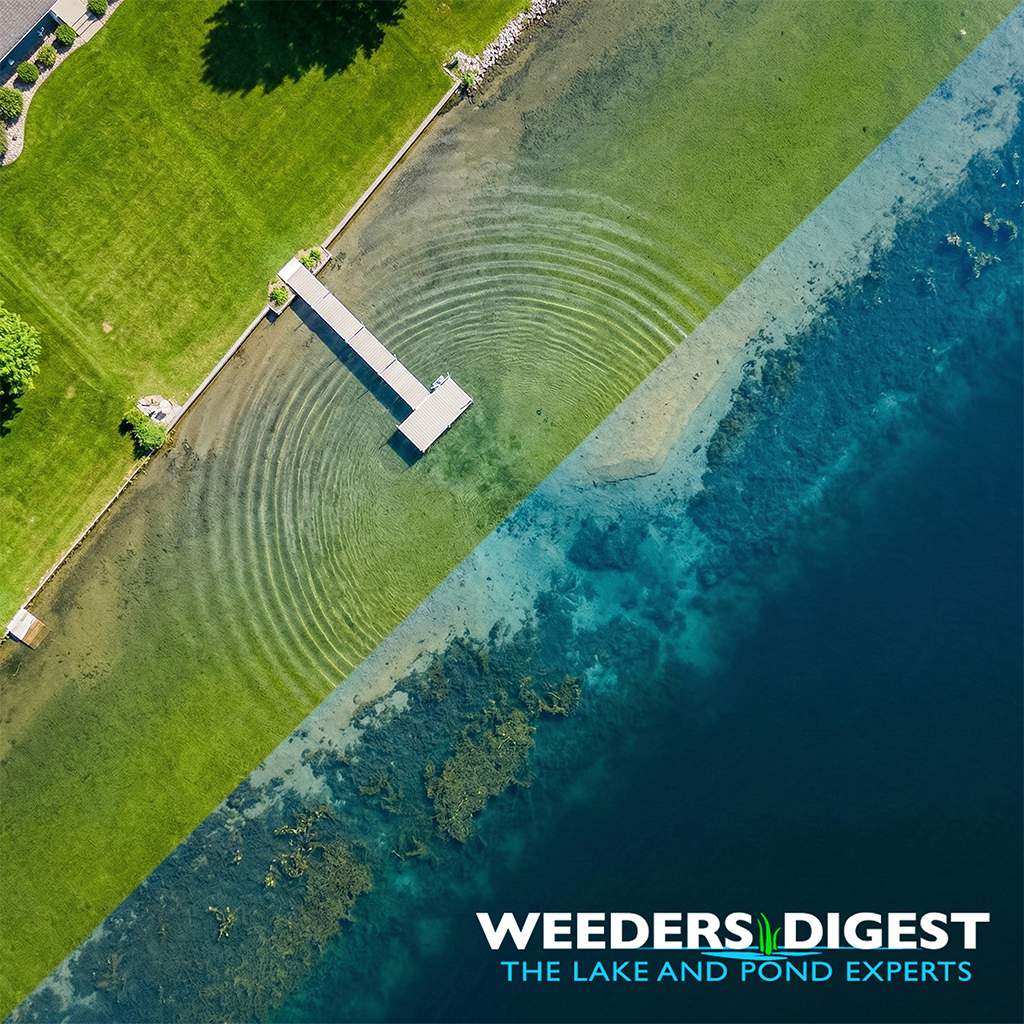
When you look out at your waterfront, it is easy to assume that the changes you make to your beach or lawn stop at the water's edge. However, as a lake manager, I often have to explain to homeowners that the "shoreline" isn't just a thin line on a map; it is a complex, moving boundary where the land and water are constantly exchanging energy and nutrients. Your personal impact on the lake ecosystem extends much further into the water than you might think, often reaching well into the littoral zone where sunlight hits the bottom and plants grow.
The choices you make regarding your shoreline—whether you remove native plants, add sand, or maintain a manicured lawn—create a ripple effect that travels deep into the lake. These actions alter the habitat for fish, change how waves interact with the lake bed, and influence the clarity of the water far beyond your property line. Understanding this reach is the first step in becoming a true steward of your lakefront property.
Essentially, your footprint doesn't stop where your feet get wet. The ecological "shadow" of a developed shoreline can extend dozens, sometimes hundreds, of feet into the open water, impacting the very water quality and fishing opportunities that likely drew you to the lake in the first place. By recognizing the extent of this reach, we can better manage our lakes for future generations.
The Science Behind It:
The reach of shoreline impact is defined by the disruption of the littoral zone, the near-shore area where sunlight penetrates to the lake sediment. Research indicates that the conversion of natural shorelines to developed landscapes significantly alters the physical and biological structure of the adjacent aquatic environment. According to studies published by the University of Minnesota Extension and various ecological journals, the removal of coarse woody habitat and emergent vegetation reduces the complexity of the "ecotone"—the transition area between land and water. This loss of complexity results in a measurable decline in macroinvertebrate diversity and fish nesting success hundreds of feet from the shore.
Sedimentation and nutrient loading represent two of the most extensive "reach" factors in shoreline impact. When natural buffer strips are replaced by impervious surfaces or turf grass, the velocity of runoff increases, carrying phosphorus and nitrogen directly into the lake. This nutrient plume does not remain localized; it disperses through advection and diffusion, stimulating algal blooms in the pelagic (open water) zones. Radomski and Goeman (2001) demonstrated that highly developed shorelines have significantly less emergent and floating-leaf vegetation, which normally serves as a biological filter and a stabilizer for lake bottom sediments.
Furthermore, the physical energy of the lake is altered by shoreline development. Natural shorelines with diverse vegetation and irregular shapes act as energy dissipaters for wave action. Conversely, hardened shorelines such as seawalls reflect wave energy back into the lake rather than absorbing it. This "reflected wave energy" causes "lake bed scouring," which can resuspend fine sediments and nutrients into the water column far from the wall itself. This process increases turbidity and can inhibit the growth of beneficial submersed aquatic vegetation (SAV) in deeper waters by reducing light penetration.
Ecological connectivity is also severed when shoreline impact reaches into the water. Many aquatic species, including various amphibians and North American game fish, require specific near-shore habitats for different life stages. The "impact reach" is therefore also a temporal and biological one; for instance, the removal of shoreline brush can eliminate the primary food source for terrestrial insects that fall into the water, which in turn reduces the caloric intake available for littoral fish species. This trophic cascading effect ensures that the anthropogenic footprint of a single dock or cleared beach is felt throughout the local aquatic food web.
Sources / References:
- https://extension.umn.edu/lakes-and-wetlands/shoreline-stabilization-and-restoration
- https://www.canr.msu.edu/news/the_shoreline_is_the_boundary_between_land_and_water_right