

How Long Winters Are Secretly Reshaping My Lake
 |
Summary:
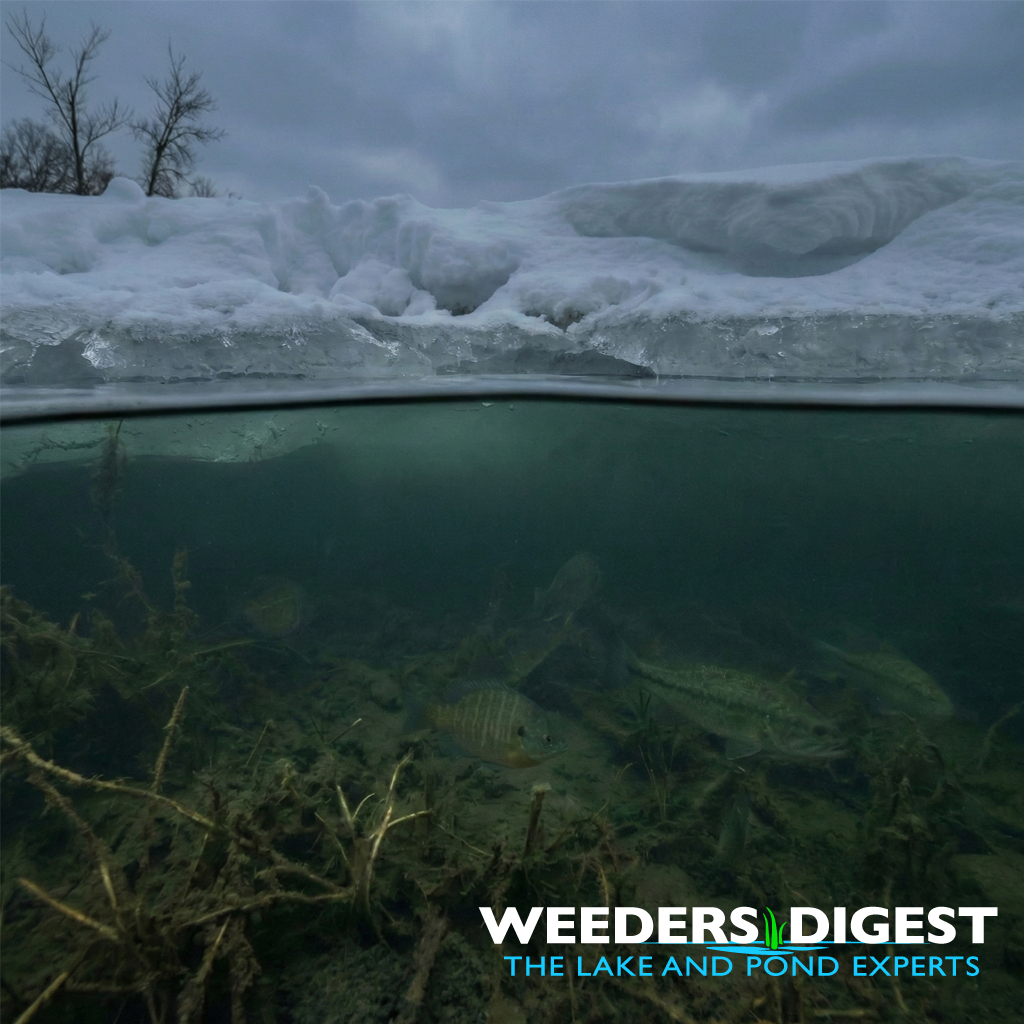
If you are like me, you might look out at a frozen lake in late March and simply see a dormant sheet of white, waiting for the spring thaw. However, beneath that ice, a long winter triggers a high-stakes survival drama that fundamentally changes the water chemistry and biology for the rest of the year. When winter drags on, the ice acts like a sealed lid on a Tupperware container. It prevents fresh oxygen from the air from mixing into the water, while the heavy snow on top acts like blackout curtains, blocking the sunlight needed for underwater plants to produce new oxygen.
As the weeks stretch into months, the creatures living in your lake—from tiny bugs to trophy bass—begin to consume the remaining oxygen supply. In a typical winter, there is just enough breath to last until the ice melts. But during an extended winter, that supply runs out. This leads to a "winterkill," where fish suffocate not from cold, but from a lack of air. You might not see the damage until the ice melts and dead fish wash up on the shore, but the impact goes deeper than just fish loss.
A long winter also changes the nutrient balance of your water. Because the bottom of the lake loses oxygen first, the sediment releases massive amounts of phosphorus that were previously locked away in the mud. This acts like a time-release fertilizer bomb. When the ice finally melts, that surge of nutrients can trigger explosive algae blooms, turning clear water into pea soup much earlier in the summer than usual. So, while the lake looks peaceful under that extra month of ice, it is actually brewing a chemical storm that will define your summer swimming and fishing conditions.
The Science Behind It:
The primary mechanism by which extended ice cover alters lentic ecosystems is through the uncoupling of atmospheric gas exchange and the cessation of photosynthetic activity. In a phenomenon known as the "winter inverse stratification," the water column is sealed off from atmospheric oxygen re-aeration. As detailed in Winter severity shapes zooplankton community in a shallow green lake (2025), prolonged ice cover, particularly when accompanied by deep snowpack, attenuates photosynthetically active radiation (PAR) to near-zero levels. This light limitation inhibits phytoplankton and submerged macrophytes from producing dissolved oxygen (DO) via photosynthesis.
Simultaneously, biological oxygen demand (BOD) and sediment oxygen demand (SOD) continue to consume the available DO. Bacterial respiration in the sediment and water column depletes oxygen from the bottom up. In scenarios of extended winter duration, this depletion drives the hypolimnion (bottom waters) into hypoxia (<2 mg/L) or complete anoxia. Research indicates that once anoxia is established, the redox potential at the sediment-water interface drops, causing the chemical reduction of iron and manganese. This reduction releases orthophosphate (phosphorus) bound to iron complexes back into the water column, a process known as internal loading.
This internal loading creates a "chemical memory" that persists long after ice-out. The accumulated nutrients fuel rapid phytoplankton growth once solar radiation and mixing return in the spring. Furthermore, extended winters significantly alter the phenology of the planktonic food web. As noted in Impacts of Changing Winters on Lake Ecosystems Will Increase With Latitude (2025), a delay in ice-off mismatches the timing between the spring phytoplankton bloom and the hatching of zooplankton grazers. This "mismatch" can lead to reduced energy transfer up the trophic levels to forage fish and piscivores, potentially stunting growth rates or altering community structures for the entire open-water season.
Sources / References:
- Winter severity shapes zooplankton community in a shallow green lake (2025). Available at: https://pmc.ncbi.nlm.nih.gov/articles/PMC12683618/
- Impacts of Changing Winters on Lake Ecosystems Will Increase With Latitude (2025). Available at: https://pmc.ncbi.nlm.nih.gov/articles/PMC12376094/
- Divergent oxygen trends in ice-covered lakes driven by ice-cover decline and ecological memory (2024). Available at: https://www.pnas.org/doi/10.1073/pnas.2426140122