

How My Choice of Shoreline Landscaping Saved My Lakefront from Invasive Weeds
 |

Summary:
When I first looked out at my lakefront property, I saw a battleground between my vision of a perfect lawn and the encroaching wall of aquatic weeds. Like many homeowners, I initially thought that a manicured grass lawn extending right to the water's edge was the gold standard for lake living. However, I quickly learned that this traditional approach was actually fueling the very weed growth I was trying to prevent. By removing the natural transition zone between the land and the water, I was inadvertently creating a highway for nutrients to flow directly into the lake.
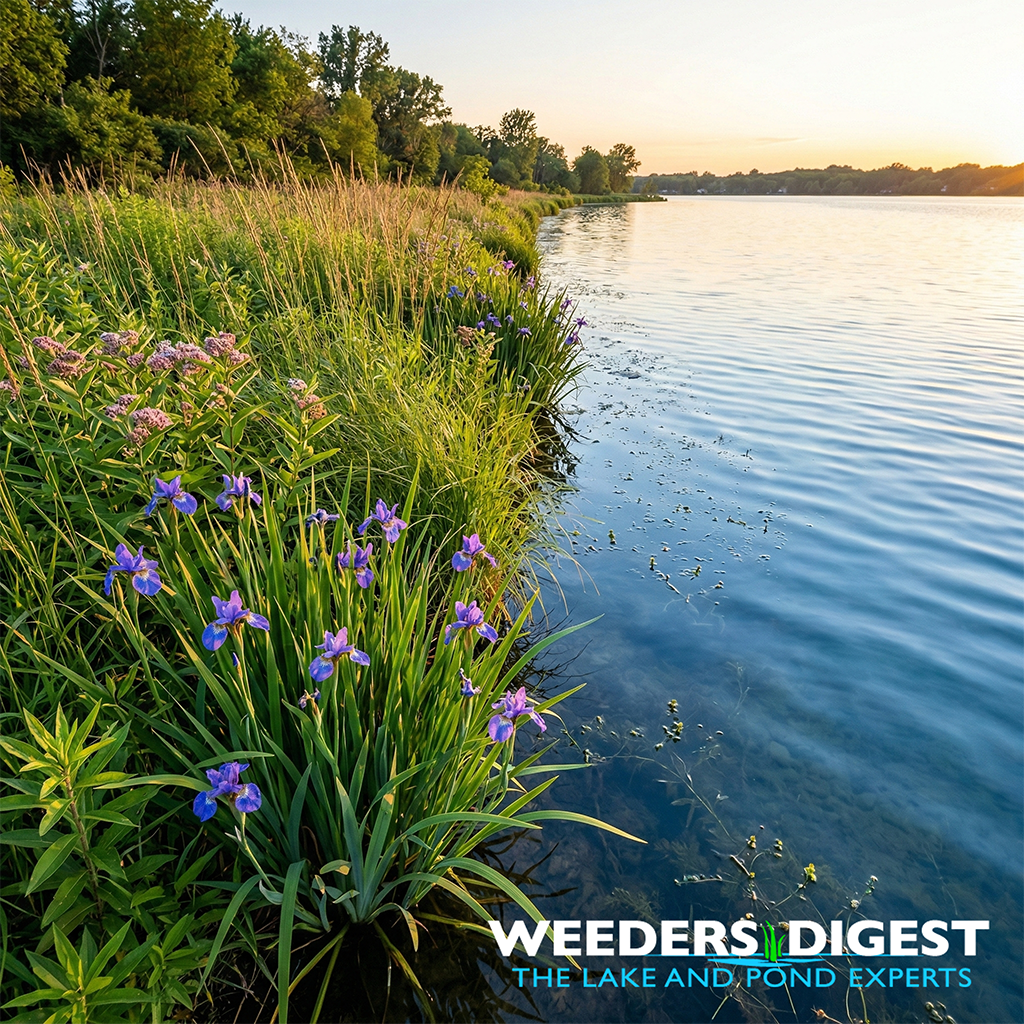
The way we choose to landscape our shorelines acts as the primary filter for everything entering the aquatic ecosystem. Traditional turf grass has shallow roots and requires fertilizers that act as high-octane fuel for aquatic plants like Milfoil and Hydrilla. When I replaced my turf with a native "buffer strip" of deep-rooted plants, the change was dramatic. This natural barrier acted like a sponge, soaking up excess nitrogen and phosphorus before they could reach the water.
Understanding the relationship between your backyard and the lake bed is the first step toward sustainable pond and lake management. It is not just about aesthetics; it is about managing the chemical balance of the water. By opting for a more natural shoreline, I didn't just improve my view—I fundamentally changed the habitat to favor a clear, balanced water column rather than a choked, weedy mess.
Choosing native sedges, rushes, and wildflowers over a mowed lawn is the most effective long-term strategy for any homeowner looking to reduce their reliance on manual weeding or chemical treatments. A well-designed shoreline landscape creates a biological wall that protects the water quality and keeps invasive species at bay by limiting their food source.
The Science Behind It:
The relationship between terrestrial landscaping and aquatic plant proliferation is dictated by the principles of nutrient loading and limnological trophodynamics. In many developed lakefronts, the removal of the riparian buffer zone leads to increased non-point source pollution. According to research published by the University of Minnesota Extension, native riparian vegetation with deep, complex root systems can sequester significant amounts of phosphorus and nitrogen, which are the primary limiting nutrients for aquatic weed growth. When these nutrients bypass a buffer and enter the littoral zone, they trigger a "bottom-up" effect, stimulating the rapid biomass production of opportunistic species such as Myriophyllum spicatum.
Furthermore, the physical structure of a landscaped shoreline influences the recruitment of aquatic macrophytes. A study by the Wisconsin Department of Natural Resources (WDNR) highlights that "hardscaped" or mowed shorelines increase surface runoff velocity and erosion. This erosion deposits fine, nutrient-rich sediments onto the lake bed, creating an ideal substrate for the rooting of invasive weeds. Conversely, a naturalized shoreline slows the velocity of overland flow, allowing suspended solids to settle in the terrestrial environment rather than the aquatic one. This reduction in sedimentation maintains the original substrate composition, which may be less hospitable to certain invasive colonizers.
The ecological concept of "niche occupancy" also plays a critical role in this dynamic. In a healthy, naturally landscaped system, the transition zone is occupied by emergent plants like Typha or Schoenoplectus. These species compete directly with submerged weeds for both space and nutrients. Research from the North American Lake Management Society (NALMS) suggests that maintaining a diverse assemblage of native shoreline plants creates a biological "resistance" to invasion. By maintaining a high level of biodiversity at the water's edge, the available ecological niches are filled, leaving fewer resources for invasive weeds to establish dominant monocultures.
In addition to nutrient mitigation, shoreline landscaping affects the thermal properties and light penetration of the littoral zone. Overhanging native vegetation provides shading, which can locally reduce water temperatures and limit the photosynthetic active radiation (PAR) available to submerged weeds. Because many invasive aquatic plants are highly sensitive to light availability, the strategic placement of shoreline trees and tall shrubs can act as a natural growth regulator. This integrated approach to lake management moves beyond reactive treatments and addresses the anthropogenic drivers of weed proliferation at their source.
Sources / References:
- https://extension.umn.edu/lakes-and-wetlands/shoreline-runoff-systems
- https://www.uwsp.edu/uwexlakes/clp/