

How Your Favorite Lake Grows Old: Understanding The Natural Aging Process
Summary:
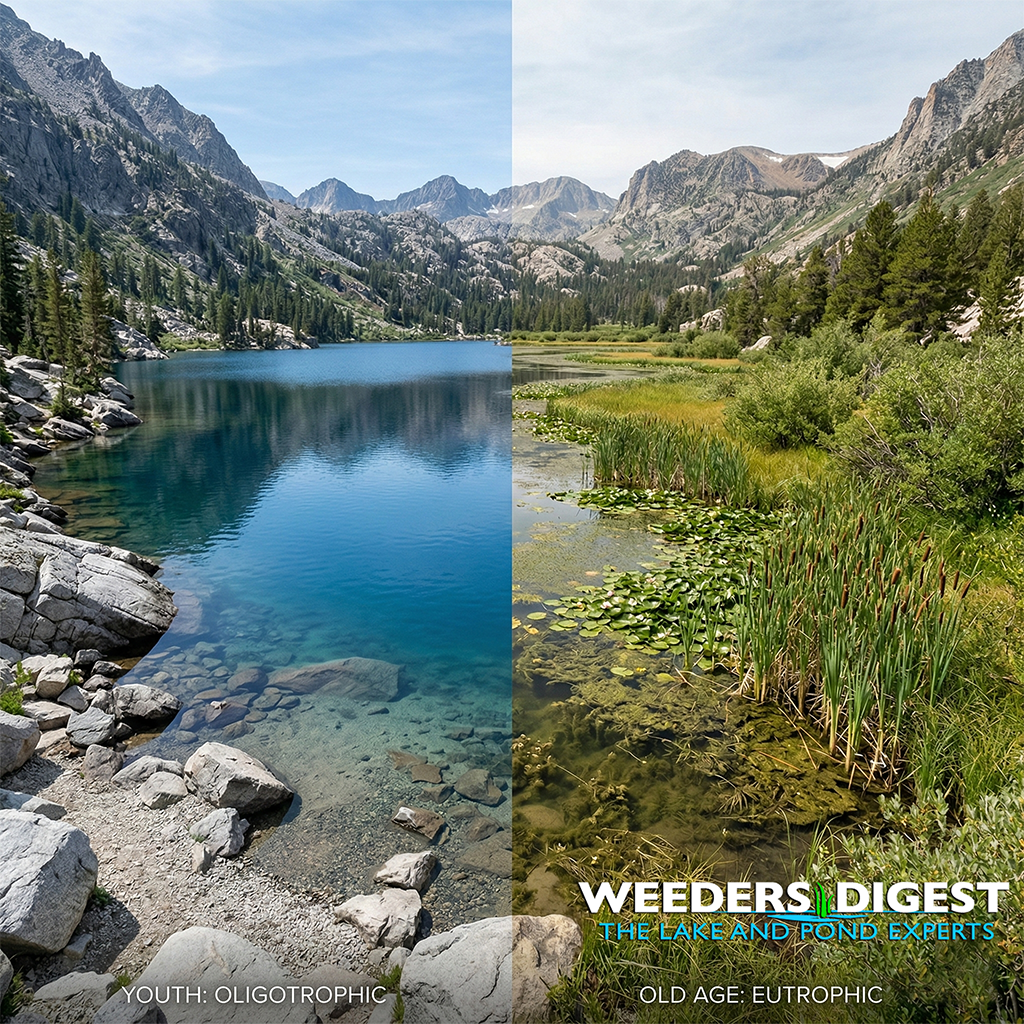
Just like people, lakes have a natural lifespan, though theirs is measured in thousands of years rather than decades. When a lake is "young," it is typically deep, clear, and has a rocky or sandy bottom with very little plant life. As the years go by, the lake begins to collect sediment, leaves, and nutrients from the surrounding land. This process is a bit like a bathtub slowly filling up with soil and debris; eventually, the water becomes shallower and the bottom becomes muckier.
As my lake ages, the increase in nutrients acts like fertilizer for aquatic plants and algae. You might notice that a lake that was once perfect for deep-diving is now filled with lily pads or tall weeds near the shore. This isn't necessarily a sign that the lake is "sick," but rather a sign that it is maturing. Over a very long period, the lake will continue to fill in until it eventually transitions into a wetland, a marsh, and finally, solid dry land.
This transformation is called "eutrophication." While it is a completely natural cycle, human activity around the shoreline can often speed it up. By understanding that a lake is a living, changing system, we can better appreciate the different stages of its life and manage our expectations for how it looks and functions. My goal is to help you recognize these changes so you can be a better steward of your waterfront property.
The Science Behind It:
The aging process of lacustrine systems is scientifically defined as natural succession, primarily driven by the process of eutrophication. This involves the gradual increase in the concentration of phosphorus, nitrogen, and other plant nutrients in an aquatic ecosystem. According to foundational limnological principles, lakes are categorized by their trophic state: oligotrophic (young/low nutrients), mesotrophic (middle-aged/moderate nutrients), and eutrophic (old/high nutrients). As a lake transitions through these stages, the biological productivity increases, leading to higher rates of organic matter accumulation on the lake bed.
Physical sedimentation plays a critical role in the structural evolution of the basin. Over millennia, influent streams and surface runoff transport inorganic silts and clays into the pelagic zone, while the senescence of aquatic macrophytes and phytoplankton contributes to the buildup of organic "muck" or sapropel. As the mean depth of the water body decreases, the euphotic zone—the layer of water receiving enough sunlight for photosynthesis—reaches a greater percentage of the lake bottom. This feedback loop accelerates the growth of rooted vegetation, further trapping sediments and accelerating the transition toward a terrestrial environment.
Internal nutrient cycling further complicates the aging process. In many maturing lakes, the hypolimnion (the bottom layer of water) can become anoxic during summer stratification. This lack of oxygen triggers chemical reactions in the sediment that release phosphorus back into the water column, a phenomenon known as internal loading. This process can cause a "cultural eutrophication" effect where the lake appears to age much faster than it would under pristine conditions. Research published by university extension programs emphasizes that land-use patterns in the watershed significantly dictate the rate of this nutrient influx.
The final stages of a lake’s life are characterized by the encroachment of emergent vegetation from the littoral fringe toward the center. As the open water area diminishes, the system transitions into a palustrine wetland. The shift from a deep-water habitat to a shallow, peat-accumulating bog or fen represents the climax of the aquatic successional sere. Eventually, as the basin fills completely and the water table stabilizes relative to the soil surface, the site will support terrestrial woody vegetation, completing the transformation from a lake to a forest or meadow.
Sources / References:
- https://www.canr.msu.edu/news/lake_aging_natural_eutrophication
- https://extension.psu.edu/eutrophication-the-natural-aging-of-lakes