

Is My Muck Problem Actually Solvable? The Truth About Adding Bacteria to Your Lake

Summary:
If you own a lakefront property or a backyard pond, you’ve likely dealt with that thick, dark, and often smelly layer of "muck" that coats the bottom. It makes swimming unpleasant and can lead to unwanted weed growth. The idea of simply "pouring a treatment" into the water to eat away that sludge sounds almost too good to be true. Many homeowners wonder if these beneficial bacteria products are just marketing hype or if they truly offer a biological solution to a physical problem.
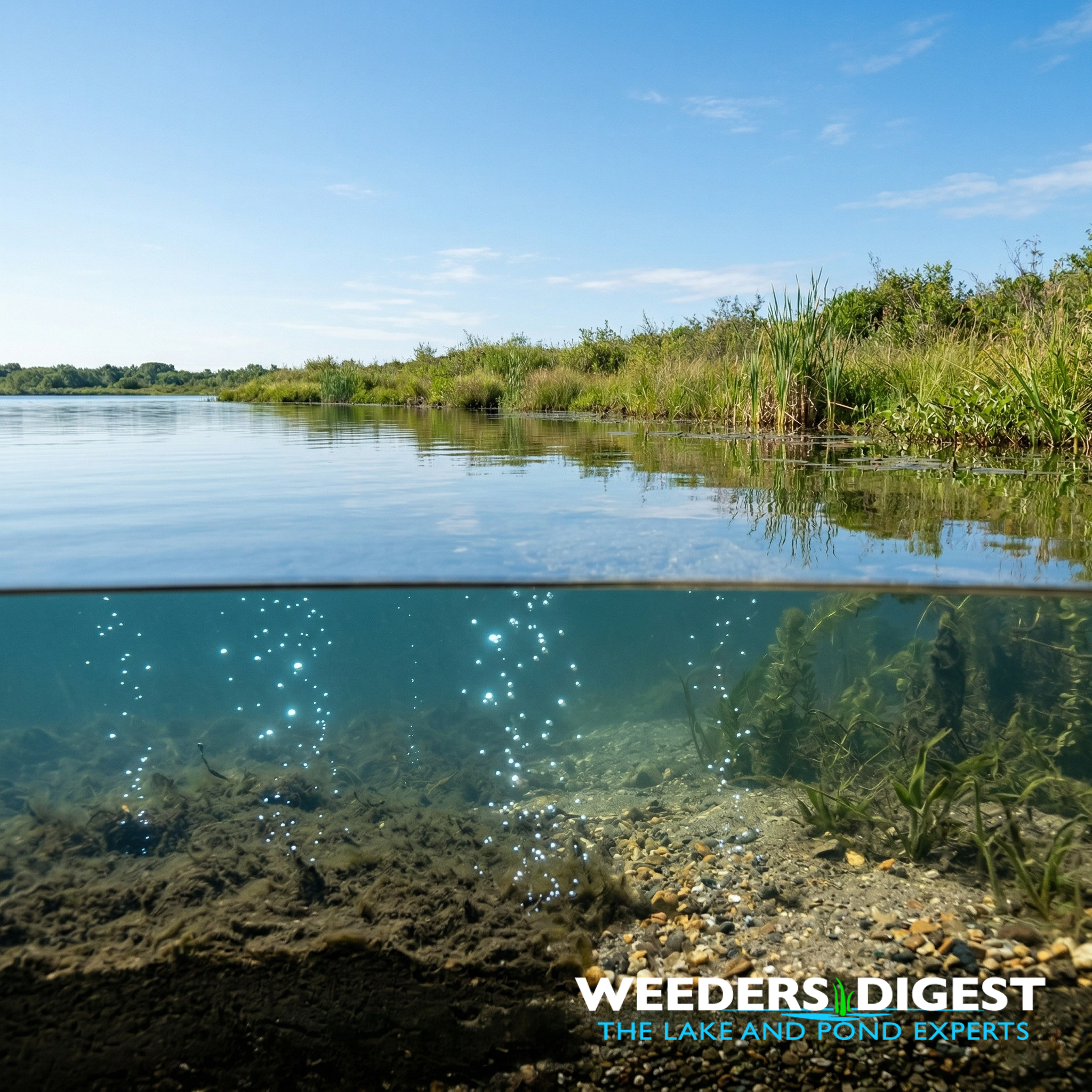
The short answer is that beneficial bacteria can indeed reduce muck, but it isn't an overnight disappearance act. These microbes work by consuming the organic matter—like dead leaves, grass clippings, and fish waste—that makes up the softest layers of the pond floor. However, they cannot "eat" inorganic materials like sand, clay, or rocks. To get the best results, these bacteria usually need a little help from you, specifically in the form of oxygen, which acts like fuel for their appetite.
Think of these bacteria as a tiny cleanup crew. When the conditions are right, they break down the structural integrity of the organic sludge, turning solid waste into harmless gases that bubble up and leave the system. While it won't replace the immediate results of physical dredging for massive restoration projects, consistent use of high-quality microbial blends can significantly firm up a pond bottom and reduce the "muck" depth over a growing season.
Success with these biological treatments depends entirely on the environment of your water body. Factors like water temperature, pH levels, and dissolved oxygen concentrations determine how fast these microbes can work. Understanding the relationship between these tiny organisms and the chemistry of your lake is the key to moving from a murky, sludge-filled shoreline to a cleaner, clearer swimming area.
The Science Behind It:
The process of muck reduction via microbial inoculation is technically referred to as bioaugmentation. In aquatic ecosystems, the "muck" layer is primarily composed of autochthonous organic matter (dead aquatic plants and algae) and allochthonous inputs (leaves and runoff). When these materials settle at the benthic zone, they undergo decomposition. In many aging water bodies, the rate of organic deposition exceeds the rate of natural microbial decomposition, leading to an accumulation of sapropel—a dark, nutrient-rich sludge. According to research published through the University of Florida’s IFAS extension, this accumulation is a hallmark of cultural eutrophication.
Bioaugmentation introduces concentrated strains of aerobic and facultative anaerobic bacteria, often from the Bacillus genus, which are selected for their high enzymatic activity. These microorganisms secrete extracellular enzymes, such as cellulase, protease, and lipase, which break down complex organic polymers into simpler soluble compounds. Once these compounds are liquified, the bacteria ingest them and metabolize them into carbon dioxide, water, and nitrogen gas. This metabolic pathway is significantly more efficient in aerobic conditions; aerobic respiration can process organic carbon up to ten times faster than anaerobic fermentation (Boyd, 2015).
The efficacy of these bacterial additions is heavily contingent upon the sediment-water interface's oxygen levels. In anoxic (oxygen-depleted) environments, common at the bottom of deep or stagnant ponds, decomposition slows and produces malodorous byproducts like hydrogen sulfide and methane. Research indicates that the integration of sub-surface aeration alongside bacterial treatments enhances the "muck-eating" process by maintaining the high redox potential required for aerobic microbes to thrive. This synergistic approach ensures that the bacteria remain in an active metabolic state rather than becoming dormant.
Furthermore, these beneficial bacteria play a critical role in nutrient cycling, specifically regarding phosphorus and nitrogen. By rapidly sequestering these nutrients into their own biomass, the bacteria outcompete nuisance algae and submerged macrophytes for the limiting nutrients required for growth. Over time, the reduction in organic sediment depth—often measured in inches per season in controlled studies—leads to a decrease in internal nutrient loading. This creates a feedback loop that improves overall water clarity and reduces the long-term biological oxygen demand (BOD) of the water body.
Sources / References:
- University of Florida IFAS Extension: Understanding Eutrophication and Aquatic Plant Management
- Journal of Aquatic Plant Management: Evaluation of Bioaugmentation for Organic Sediment Depth Reduction