

Is My One Little Lakefront Property Really That Important?
Summary:
As a homeowner, it is easy to look at the vast expanse of a lake and feel that your single plot of land is just a drop in the bucket. You might wonder if skipping a round of fertilizer or leaving a few fallen logs in the water actually makes a difference when there are hundreds of other houses on the shoreline. It feels like the lake's health is determined by "big" factors—like industrial runoff or city sewage—rather than what you do with your lawn or your dock.
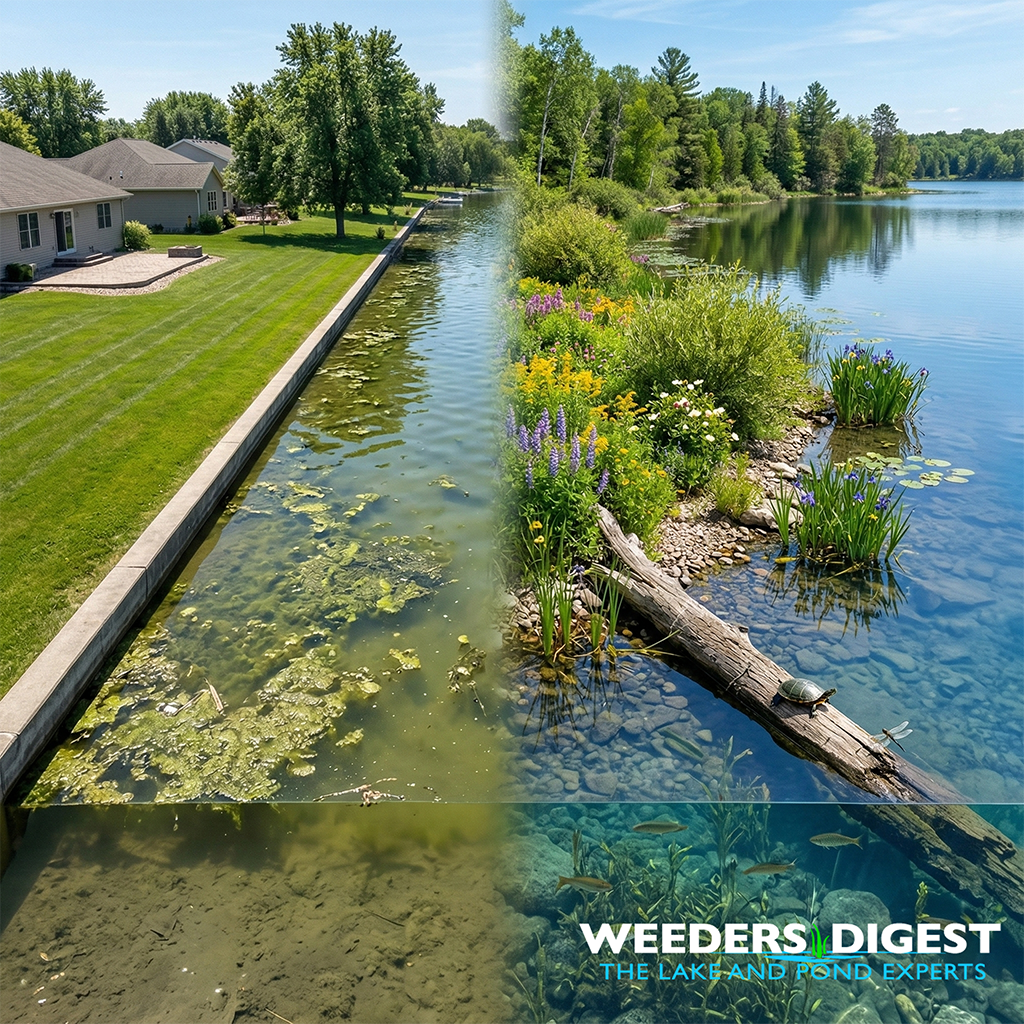
The truth is that lakes are not just bodies of water; they are reflections of the land that surrounds them. Every square foot of your property acts as a tiny watershed. When you replace natural trees and shrubs with a manicured lawn or a concrete patio, you change how water moves. Instead of soaking into the ground where it can be cleaned by soil and roots, rainwater picks up speed and carries oil, pet waste, and chemicals directly into the lake.
Think of it as a "death by a thousand cuts" scenario. While one house might only contribute a small amount of runoff, the cumulative effect of dozens of "small" changes creates a massive impact. When you choose to maintain a natural buffer or limit the use of chemicals, you aren't just protecting the water in front of your house; you are helping to maintain the delicate balance of the entire ecosystem that makes lake life so desirable in the first place.
Your property is actually the first line of defense for the lake. By making even small adjustments—like planting native flowers along the shore or keeping your septic system in top shape—you are actively preventing the growth of murky algae and protecting the habitat that fish and birds need to survive. You have more power over the health of your lake than you might think.
The Science Behind It:
The ecological integrity of a lentic ecosystem is inextricably linked to the land-water interface, known as the riparian and littoral zones. Research indicates that shoreline development significantly alters these habitats by simplifying structural complexity. According to a study published by the Washington State Lake Protection Association, the transition from a natural forested shoreline to a residential landscape often involves the removal of "coarse woody habitat"—fallen trees and branches—which serve as essential nesting and foraging sites for fish, turtles, and macroinvertebrates. The removal of this native vegetation reduces the "roughness" of the land, leading to a dramatic increase in surface runoff volumes.
The chemical impact of a single property is primarily driven by non-point source (NPS) pollution. In an undisturbed forest state, approximately 40% to 60% of rainfall infiltrates the soil, while only about 1% becomes surface runoff. However, as documented by the Lake George Association, when a site is cleared and graded for residential use, infiltration can drop to 30%, while surface runoff can skyrocket to 50%. This runoff serves as a transport mechanism for limiting nutrients, particularly phosphorus and nitrogen. In many freshwater systems, phosphorus is the primary driver of cultural eutrophication; a single pound of phosphorus entering the water can stimulate the growth of up to 500 pounds of wet algae.
Furthermore, the physical modification of the shoreline through "hardening"—the installation of seawalls or riprap—interrupts the natural hydrological and biological exchange between the lake and the land. A meta-analysis of shoreline hardening found that seawalls supported 23% lower biodiversity and 45% fewer organisms compared to natural, unarmored shorelines (PMC5421310). These structures reflect wave energy rather than absorbing it, which leads to increased scouring of the lake bottom and the loss of aquatic macrophytes (water plants). These plants are vital because they stabilize sediments and compete with algae for available nutrients.
The cumulative impact of these individual property changes is significant enough to be measured in economic terms. Peer-reviewed hedonic property value models have consistently shown a direct correlation between water clarity and real estate prices. Studies in states like Minnesota and New Hampshire found that even small decreases in Secchi disk transparency (a measure of water clarity) resulted in statistically significant drops in property values across the entire lake. This confirms that the management decisions of a single landowner do not exist in a vacuum; they contribute to a "feedback loop" where ecological degradation eventually compromises the financial and aesthetic value of the very land being developed.
Sources / References:
- How Your Property Impacts Lake George - Lake George Association
- Ecological Consequences of Shoreline Hardening: A Meta-Analysis - PMC
- The Effects of Shoreline Development on Lake Littoral and Riparian Habitats - ResearchGate