

Is Your Lake Gone Forever? Understanding the Lasting Legacy of Drought on Your Shoreline
 |
Summary:
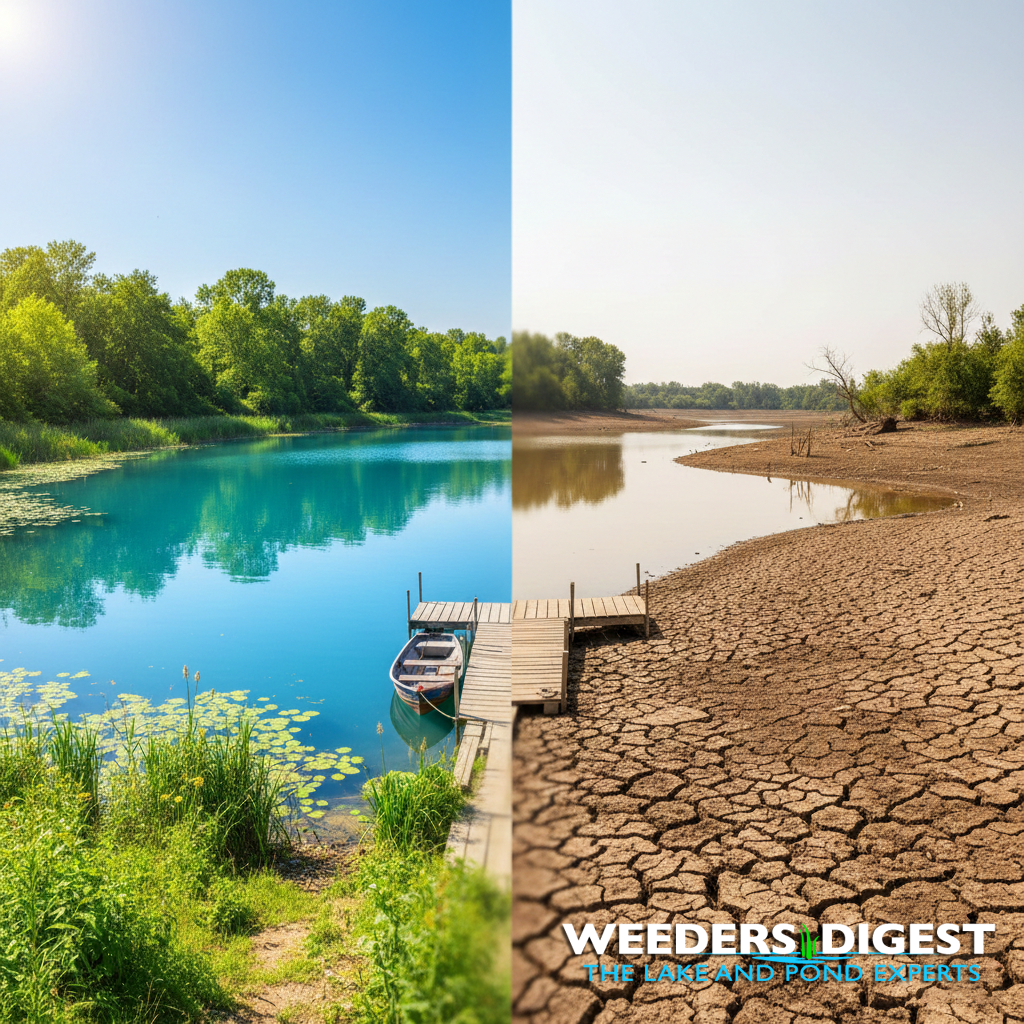
If you have watched your shoreline recede and your once-deep dock area turn into a mudflat, your first fear is likely that your lake is permanently broken. It is a heartbreaking sight for any homeowner to see the water they love vanish, leaving behind cracked earth and dying aquatic plants. You might wonder if the ecosystem can ever truly reset to the way it was before the dry spell began, or if the "new normal" is a fundamental shift in the lake’s identity.
The short answer is that while lakes are incredibly resilient, a severe drought does not simply hit a "pause" button; it initiates a complex transformation. Some changes are temporary and will reverse the moment the rains return and the water table rises. However, other shifts—especially those involving the chemistry of the sediment and the types of plants that take root in the dry lakebed—can leave a legacy that lasts for decades. Your lake will likely return, but it may come back with a different personality than the one you remember.
During a drought, the exposed lakebed undergoes a process called oxidation. This can actually be a "reset" for a lake that has been struggling with excessive muck, as the air helps break down organic matter. Conversely, it can also trigger a massive "green-up" of invasive weeds once the water returns, because those dormant seeds finally got the oxygen they needed to germinate. Understanding this balance is key to knowing what to expect when the water finally laps against your shoreline again.
Essentially, the "permanence" of the change depends on the duration of the drought and the local geology. While the water level itself is cyclical, the biological and chemical "scarring" from a multi-year dry period can alter the clarity of your water and the health of your fish populations for years to come. Your lake isn't gone, but it is evolving, and knowing the science behind that evolution can help you manage your expectations for its recovery.
The Science Behind It:
The impact of drought on lacustrine ecosystems is defined by the disruption of the hydrological connectivity and the subsequent alteration of biogeochemical cycling. According to research published in Freshwater Biology, drought conditions lead to the contraction of the littoral zone, which serves as the primary area for nutrient cycling and habitat complexity. As water levels decline, the concentration of dissolved organic matter and nutrients typically increases due to reduced dilution and the evaporative concentration of ions. This shift can lead to a state of "internal loading," where the lake begins to fuel its own degradation even without external runoff.
One of the most significant "permanent" changes occurs within the benthic sediments. When lake sediments are exposed to the atmosphere, the shift from anaerobic to aerobic conditions accelerates the mineralization of organic phosphorus. Research from the Journal of Environmental Quality indicates that once these sediments are re-inundated, they may release a pulse of bioavailable phosphorus into the water column. This phenomenon, often referred to as "phosphorus legacy," can trigger persistent harmful algal blooms (HABs) that did not exist prior to the drought, fundamentally shifting the lake from a macrophyte-dominated state to a turbid, phytoplankton-dominated state.
Furthermore, the seed bank dynamics within the exposed substrate undergo a radical transition. Many opportunistic and invasive species, such as Phragmites australis or various terrestrial weeds, take advantage of the exposed mudflats to establish deep root systems. When the lake eventually refills, the decomposition of this terrestrial biomass can lead to localized hypoxic conditions (low oxygen), which can be fatal to benthic invertebrates and sensitive fish species. The Ecological Society of America notes that while some native aquatic plants rely on occasional drawdowns for recruitment, prolonged drought can deplete the seed bank of sensitive native species, leading to a permanent loss of biodiversity.
The physical structure of the lake can also be altered through the compaction of organic "muck." As the water departs, the weight of the water column is removed, and the drying process causes organic sediments to shrink and harden. While this can result in a firmer lake bottom in the short term, the subsequent refilling often leads to the suspension of fine particulates that were previously sequestered. This increases total suspended solids (TSS) and reduces Secchi disk transparency. These changes in light penetration can permanently restrict the depth at which submersed aquatic vegetation can survive, effectively shrinking the "breathable" zone of the lake.
Ultimately, the degree of permanence is dictated by the "hysteresis" of the system—the idea that the path to recovery is not the same as the path to degradation. Even if the water volume returns to its pre-drought cubic hectometers, the ecological community may have crossed a threshold into an alternative stable state. As cited in Limnology and Oceanography, the recovery of zooplankton communities and higher trophic levels like predatory fish can lag significantly behind the physical recovery of the water level, often requiring human intervention or decades of stable conditions to mirror the pre-drought baseline.
Sources / References:
- University of Florida IFAS: Impact of Drought on Freshwater Systems
- USGS: Drought and Its Impact on Lake Water Quality