

Is Your Lake’s Problem Just a Phase? How I Tell the Difference Between a Hiccup and a Crisis
Summary:
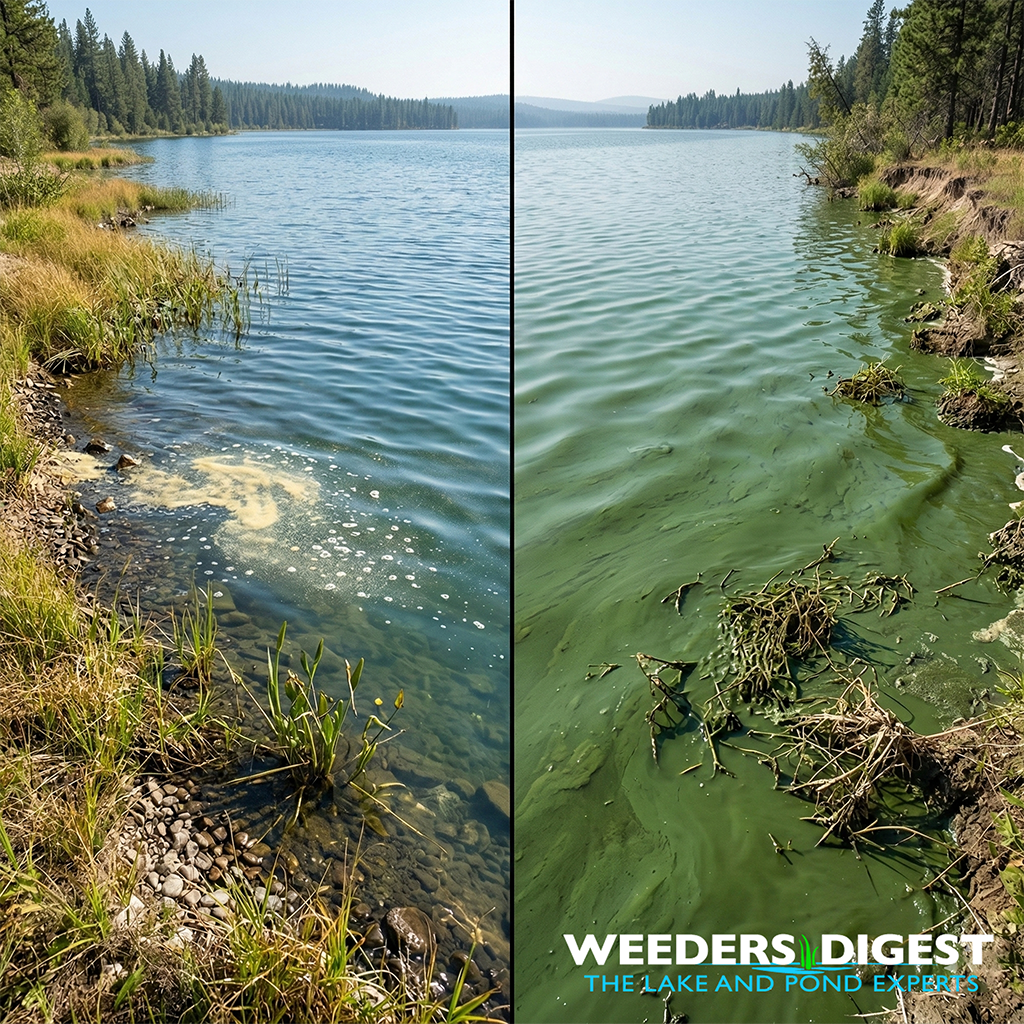
When you look out at your shoreline and see a sudden explosion of green slime or a strange cloudiness in the water, it is easy to feel a sense of panic. You might wonder if your beautiful waterfront property is permanently ruined or if you are looking at a massive repair bill. In my experience working with water bodies of all sizes, I have learned that lakes are incredibly dynamic. They breathe, they pulse with the seasons, and they often react to external shocks like heavy rain or heatwaves in ways that look alarming but are actually quite short-lived.
Distinguishing between a temporary nuisance and a deep-rooted ecological shift comes down to understanding the "rhythm" of your pond. A temporary problem usually has a clear "start" and "stop" trigger—think of it like a summer cold. It might look messy for a week after a big thunderstorm washes lawn clippings into the water, but if the underlying systems are healthy, the water will clear up on its own once the extra nutrients are processed. These "pulse" events are part of a natural cycle and often resolve without any heavy-handed intervention.
However, if you notice that the water never truly recovers, or if the "bad" days are starting to outnumber the "good" ones, you are likely dealing with a chronic condition rather than a temporary flare-up. When a lake stays murky for months or the weeds never die back in the winter, the lake’s internal chemistry has likely hit a breaking point. Recognizing these patterns early is the best way to protect your investment and the local environment.
The Science Behind It:
The determination of whether a limnological disturbance is transient or chronic depends largely on the lake’s "resilience" and the nature of the nutrient loading. In aquatic ecology, researchers often distinguish between "pulse" disturbances, which are temporary and discrete in time, and "press" disturbances, which are continuous and force the ecosystem into a new state. According to research published in Frontiers in Ecology and the Environment, ecosystems can exist in "alternative stable states." A lake might be clear and macrophyte-dominated one year, but if a threshold of phosphorus is crossed, it can flip into a turbid, algae-dominated state that is extremely difficult to reverse.
One of the primary indicators of a temporary problem is the duration of "Hydrologic Residence Time." This refers to the average time water spends in a particular basin. If a lake has a high flushing rate, temporary spikes in pollutants or suspended solids are often washed out of the system before they can cause permanent shifts in the biological community. Conversely, in closed-basin lakes with low turnover, even a "temporary" input of nutrients can become a permanent fixture because the phosphorus settles into the sediment, where it can be recycled back into the water column through a process known as internal loading.
Monitoring "Secchi Disk" transparency and dissolved oxygen (DO) levels provides the data necessary to diagnose the longevity of an issue. A temporary dip in DO often occurs after a heavy storm due to the decomposition of organic matter washed into the lake—a phenomenon known as "Biochemical Oxygen Demand" (BOD). However, if anoxic conditions persist at the lake bottom (the hypolimnion) throughout the entire summer, it indicates a chronic state of eutrophication. Research from the Journal of Lake and Reservoir Management suggests that chronic issues are characterized by the loss of "ecological buffering," where the lake can no longer self-regulate its nutrient cycles.
Furthermore, the presence of specific "indicator species" can reveal the timeline of a problem. A sudden bloom of filamentous algae might be a temporary response to a single fertilizer application nearby. However, the consistent dominance of cyanobacteria (blue-green algae) often signifies a long-term shift in the nitrogen-to-phosphorus ratio. These microorganisms are highly adapted to stable, high-nutrient environments, and their presence usually suggests that the "lake problem" has transitioned from a temporary environmental reaction to a chronic ecological regime shift.
Sources / References:
- University of Florida IFAS: Understanding Eutrophication and Lake Health
- Journal of Lake and Reservoir Management (North American Lake Management Society)