

Can Native Milfoil Weevils Actually Control Your Eurasian Watermilfoil?
 |

Summary:
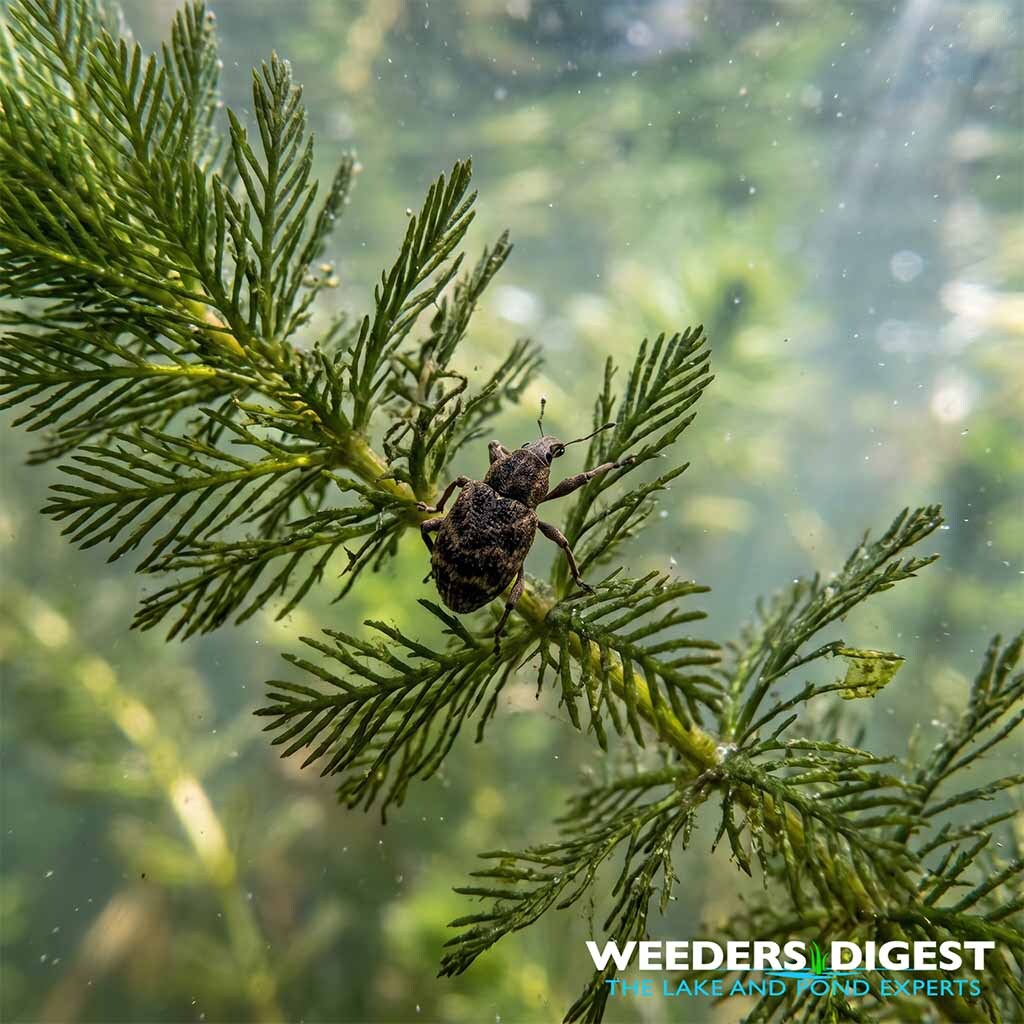
Biological control using the native milfoil weevil (Euhrychiopsis lecontei) is a specialized approach for managing Eurasian watermilfoil, but it is rarely a "silver bullet" for immediate lake-wide eradication. While these tiny, native beetles are biologically programmed to feed exclusively on milfoil, their ability to control a weed infestation depends heavily on their population density, environmental conditions, and the specific characteristics of your lake’s plant community. When their numbers reach sufficient levels, these weevils can significantly suppress milfoil growth by damaging stems, which reduces the plant's buoyancy and depletes the energy reserves it needs to survive the winter.
In my years conducting field surveys and managing aquatic habitats, I’ve often seen homeowners hoping for a quick, "natural" solution to their milfoil mats. However, successful biocontrol is a delicate balancing act. You might find a high density of weevils in one bed of milfoil, only to find the population thins out in another area due to factors like water temperature, predation by sunfish, or simply the lack of sufficient healthy plant tissue for the larvae to develop. It is important to view weevils as one component of a broader, integrated management plan rather than a guarantee of a weed-free shoreline.
The Science Behind It:
The milfoil weevil is a herbivorous aquatic beetle that completes its entire life cycle submerged within the water column. As a specialist herbivore, its biological success is tightly coupled with its host plant. Adult females deposit eggs on the apical meristems—the growing tips—of the milfoil, and upon hatching, the larvae act as stem miners. This larval stage is the primary driver of plant decline; the larvae consume the cortex of the stem, a process that physically disrupts the plant’s internal vascular system. By preventing the translocation of essential gases, carbohydrates, and photosynthates, the feeding behavior drastically reduces the plant's buoyancy and vigor.
Quantitative research highlights that the effectiveness of this biocontrol method is highly density-dependent. Studies have indicated that for a notable decline in milfoil biomass to occur, weevil densities often need to reach thresholds of approximately 0.5 to 2.0 weevils per stem, or in some cases, 100 to 200 weevils per square meter of the lake bottom. Research published in journals such as Lake and Reservoir Management demonstrates that when these densities are achieved, weevil-treated milfoil can experience a 71% reduction in total plant biomass compared to un-amended control sites. Furthermore, this mining activity effectively exhausts the starch and sugar reserves stored in the plant's roots, which are critical for overwintering survival.
Despite these promising statistics, environmental variables frequently limit the weevil's widespread efficacy. Data from multi-year surveys indicate that while weevil damage is common, natural densities in many North American lakes remain quite low—often averaging only 0.15 to 0.67 weevils per stem. Factors such as predation by native fish species (like bluegills and pumpkinseeds) can significantly suppress weevil populations, preventing them from reaching the critical mass required for large-scale suppression. Additionally, the weevil's preference for healthy milfoil tissue means that if a lake’s milfoil beds are already stressed or if the water temperature deviates significantly from the weevil’s optimal range, their reproductive success and overall impact on the weed population will be diminished.
Because the milfoil weevil is highly host-specific, it will focus its feeding primarily on Eurasian watermilfoil when it is abundant, but it may shift to native species when the invasive population crashes, which adds a layer of ecological complexity to their use as a management agent. Consequently, professional lake managers must account for the lag time inherent in biological control. Unlike mechanical or chemical treatments that provide immediate results, the suppression of a milfoil bed via weevils is a gradual, multi-seasonal process that relies on the insect’s ability to survive the winter—often in shoreline leaf litter—and successfully recolonize the lake the following spring.