

How Droughts and Drawdowns Are Completely Changing Your Lake's Weed Ecology
 |

Summary:
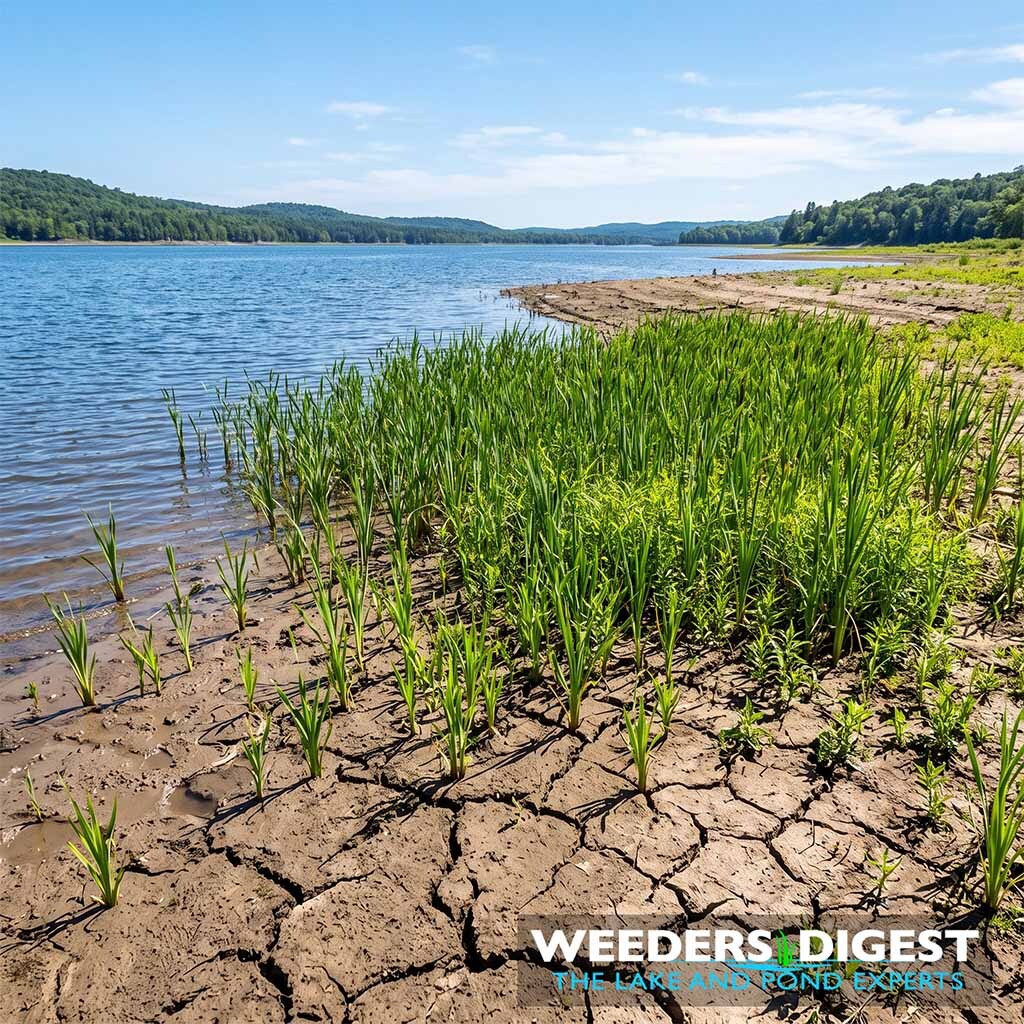
Fluctuating water levels alter weed ecology by exposing shallow lakebeds to air, which kills off submerged aquatic plants through drying and freezing while simultaneously triggering an explosive overgrowth of emergent shoreline weeds. When water levels drop significantly during a drought or an intentional drawdown, the plants that normally thrive entirely underwater lose their structural support and dry out, causing massive die-offs. At the same time, the newly exposed, nutrient-rich mud becomes the perfect nursery for wetland seeds that have been waiting in the soil for years, allowing tall, grassy weeds to quickly march out toward the remaining water.
In our 20 years of evaluating waterfronts and aquatic ecosystems, one of the most consistent patterns I observe during a severe dry spell is this sudden, aggressive shift in plant dominance. Walking a recently exposed shoreline, it is incredibly common to step over the desiccated, crumbling stems of once-thriving pondweeds, only to find the damp mud completely overtaken by thousands of tiny cattail and bulrush sprouts. The lake is essentially resetting its boundaries in real time.
When the rains return and water levels eventually rise back to normal, the newly established emergent weeds often survive the shallow flooding, while the native submerged plants have to start completely over from seed or surviving roots. This ecological reset is why property owners are often shocked to find a much denser, marshier, and weedier shoreline standing in the water than they had before the drought began.
The Science Behind It:
The physical exposure of the littoral zone—the shallow, light-penetrated nearshore area of a waterbody—triggers an immediate shift in the biogeochemical environment of the lakebed. When the hydrosoil (bottom sediment) is dewatered, it undergoes rapid oxidation and desiccation (extreme drying). This atmospheric exposure is lethal to the vegetative propagules of obligate submerged macrophytes, such as the rhizomes, tubers, and turions that rely on water for insulation and structural integrity. Research published in the Journal of Aquatic Plant Management demonstrates that managed winter drawdowns, which expose sediments to freezing air temperatures, can result in an 80% to 90% reduction in the subsequent spring biomass of susceptible invasive species like Eurasian watermilfoil.
However, the mortality of submerged species coincides with a rapid germination event for emergent and transitional wetland flora. The oxygenation of previously anoxic lakebed sediments accelerates microbial decomposition, making legacy nutrients—particularly bound phosphorus and nitrogen—suddenly bioavailable. This nutrient spike, combined with direct sunlight and atmospheric oxygen, activates dormant seed banks. Field studies indicate that a persistent water level drop of just 0.5 to 1 meter during the growing season can double the colonization rate of aggressive emergent vegetation, fundamentally shifting the littoral ecology from a submerged plant community to a semi-aquatic marsh ecosystem.
When water levels rebound following a sustained drawdown, the newly altered plant community experiences severe physiological and biochemical stress. The terrestrial and emergent vegetation that colonized the exposed mudflats is suddenly inundated. As this flooded vegetation dies and begins to decompose, it fuels aggressive microbial respiration that strips dissolved oxygen from the surrounding water column. Ecological models from university lake extension programs indicate that reflooding a densely vegetated, previously exposed shoreline can increase the biochemical oxygen demand (BOD) in the littoral zone by more than 100%, creating localized hypoxic (low oxygen) conditions that suppress the recovery of native benthic fauna and fish spawning habitats.
Ultimately, a lake's long-term resilience to fluctuating water levels is determined by phenotypic plasticity—the ability of certain aquatic macrophytes to physically alter their physiological structure in response to environmental shifts. Amphibious species possess the unique capacity to transition from rigid, stomata-heavy emergent leaves during low water periods to highly dissected, flexible submerged leaf morphologies when flooded. Species lacking this adaptability are systematically outcompeted, leading to a permanent reduction in biodiversity and an ecological shift that favors highly adaptable, often invasive, nuisance vegetation.
Sources / References:
- Journal of Aquatic Plant Management: Effects of Drawdown on Aquatic Macrophytes (apms.org)
- North American Lake Management Society (NALMS): Managing Lakes and Reservoirs for Ecological Stability (nalms.org)
- University of Florida IFAS Extension: Influence of Water Level Fluctuations on Plant Communities (edis.ifas.ufl.edu)