

How Invasive Milfoil Changes the Life Beneath Your Water’s Surface
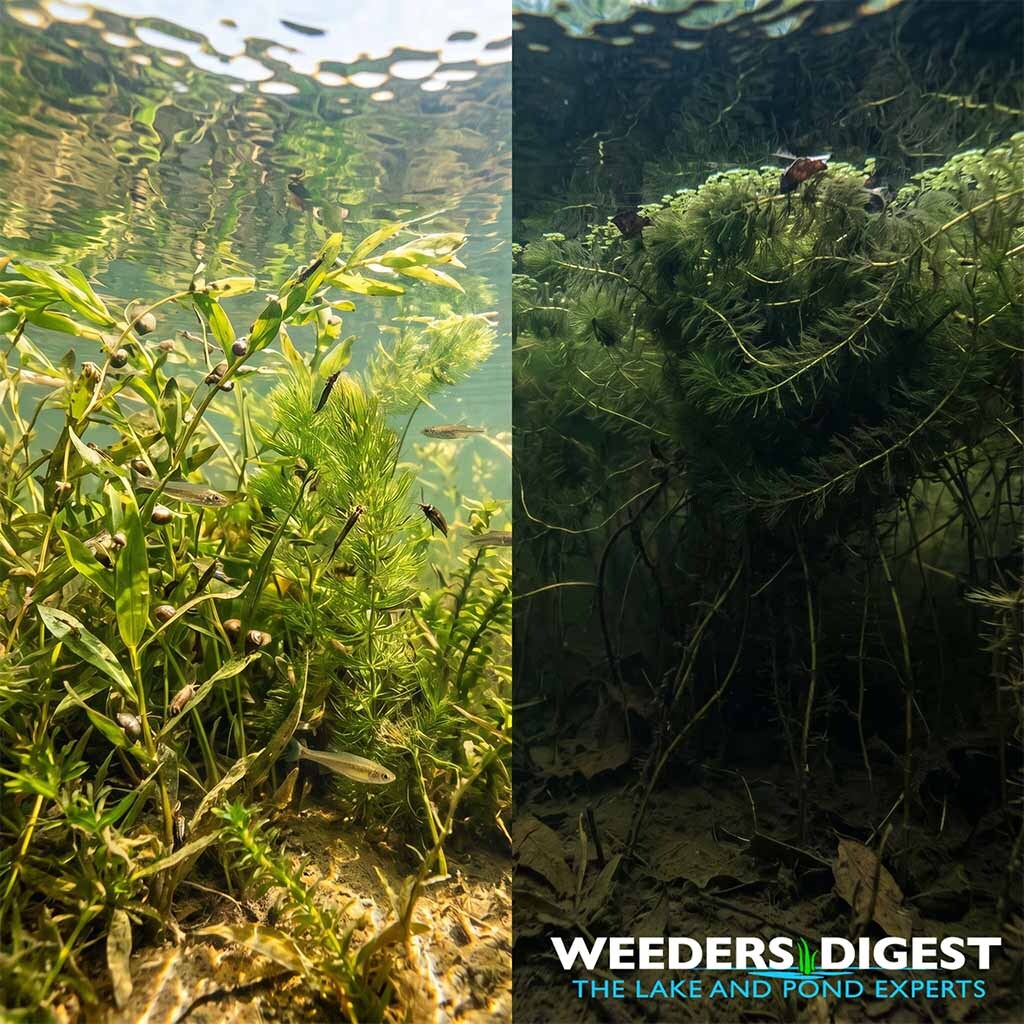 |

Summary:
Invasive Eurasian watermilfoil fundamentally alters the underwater environment by reducing the diversity and abundance of native aquatic invertebrates that serve as the primary food source for fish and other wildlife. When this aggressive plant invades a lake or pond, it creates dense, monotypic stands that physically and chemically displace the native vegetation that local insects and crustaceans have evolved to inhabit. While some might assume that any underwater plant structure is beneficial for invertebrates, research indicates that the replacement of native milfoil species with the invasive variety leads to a less productive and less diverse community of organisms, which ultimately ripples up the food chain.
As a Certified Lake Manager, I often observe this firsthand during routine littoral zone surveys. When I pull a sampling rake through a native plant bed, I typically see a vibrant, messy mix of snails, damselfly larvae, and freshwater shrimp. In contrast, when I sample a thick, surface-matted bed of Eurasian watermilfoil, the community is often eerily uniform. You might find a high number of one or two specific types of "generalist" invertebrates, but the rich, complex web of life that sustains healthy fish populations is notably absent. It is a classic case of an ecosystem losing its functional complexity, even if the total plant biomass remains high.
The Science Behind It:
The ecological impact of Eurasian watermilfoil (Myriophyllum spicatum) is largely driven by its ability to form dense canopy-forming beds that alter the physical and chemical architecture of the littoral zone. These mats significantly reduce light penetration and restrict water circulation, which effectively suppresses the growth of native macrophytes. Because native invertebrates are often highly specialized to rely on specific native plant architectures and biochemical profiles, the displacement of these plants by an exotic, invasive species creates a habitat mismatch.
Empirical research comparing native milfoil species (Myriophyllum sibiricum and Myriophyllum alterniflorum) to the invasive M. spicatum reveals consistent declines in invertebrate community health. A study published in the journal Hydrobiologia (Wilson & Ricciardi, 2009) demonstrated that native milfoils consistently support higher invertebrate diversity and higher total biomass compared to Eurasian watermilfoil. Specifically, the researchers found that native species supported a significantly higher abundance of gastropods—a critical food source for many benthic fish species—than the invasive counterpart.
The mechanics of this decline involve both physical and chemical factors. Eurasian watermilfoil often possesses different structural complexities and phenolic compounds that can inhibit or discourage colonization by native invertebrate species. While the plant's feathery leaves might appear similar to those of native milfoils, the "epiphytic" community—the bugs that live on the surface of the plants—is markedly different in composition. By replacing diverse, native-dominated habitats with monocultures of M. spicatum, the overall food web efficiency is degraded, leading to lower energy availability for higher-order predators like fish.
Furthermore, the senescence of these massive plant beds in late autumn leads to rapid decomposition, which creates localized zones of low dissolved oxygen. This oxygen depletion, or hypoxia, can be lethal to the very macroinvertebrates that survived the summer. Because these organisms are sedentary or have limited mobility, they cannot easily escape these "dead zones," leading to sharp fluctuations in population density that are not present in more stable, native-dominated aquatic environments.
Sources / References:
- Wilson, B. G., & Ricciardi, A. (2009). "Epiphytic macroinvertebrate communities on Eurasian watermilfoil (Myriophyllum spicatum) and native milfoils (Myriophyllum sibiricum and Myriophyllum alterniflorum)." Journal of the North American Benthological Society (now Freshwater Science). https://redpath-staff.mcgill.ca/ricciardi/Wilson&Ricciardi2009.pdf
- Engel, S. (1995). "Eurasian watermilfoil as a fishery management tool." Fisheries. https://www.noaa.gov/sites/default/files/legacy/document/2020/Oct/07354626647.pdf