

How My Childhood Summers at the Lake Shaped My Life as a Conservationist
 |

Summary:
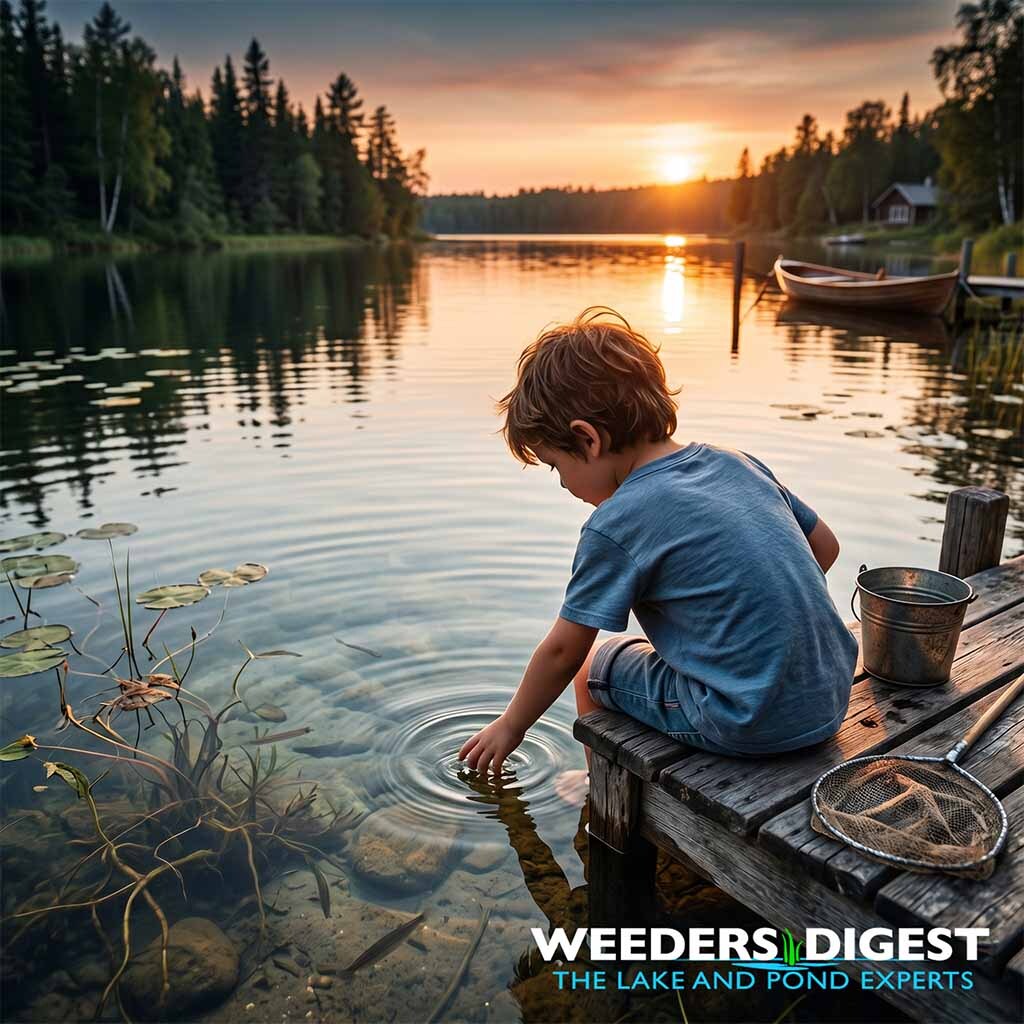
The sights and sounds of a summer at the water’s edge—the rhythmic lap of waves against a wooden dock, the shimmer of a dragonfly’s wings, and the cool squish of lake-bottom silt between toes—do more than just fill a photo album. For many of us, these early experiences act as the fundamental building blocks for how we treat the environment as adults. When we spend our formative years immersed in the natural rhythms of a lake ecosystem, we develop a profound sense of "place attachment." This emotional bond transforms a body of water from a mere vacation spot into a living entity that we feel a personal responsibility to protect.
Growing up with a "home lake" creates a bridge between play and preservation. As children, we aren't thinking about nutrient loading or invasive species; we are simply falling in love with the clarity of the water where we swim. However, that love eventually matures into a conservation mindset. Research suggests that these "significant life experiences" are the strongest predictors of environmental stewardship in adulthood. If you spent your July afternoons chasing minnows, you are far more likely to advocate for clean water policies or participate in local shoreland restoration projects today.
These memories serve as an internal compass for our ecological values. They provide a baseline of what a healthy environment "should" look and feel like. When we see a lake struggling with algal blooms or declining fish populations later in life, our childhood memories trigger a sense of loss that motivates action. We aren't just protecting a resource; we are protecting a piece of our own history. This lifelong commitment to conservation is often the legacy of a single, sun-drenched summer spent exploring the shallows.
The Science Behind It:
The psychological phenomenon linking childhood nature exposure to adult environmentalism is frequently categorized under the "Significant Life Experiences" (SLE) framework. Research conducted by Chawla (1999) and subsequent longitudinal studies indicate that frequent, unstructured play in natural settings during childhood is a primary precursor to "pro-environmental behavior" (PEB). This development is rooted in the formation of an ecological identity, where the individual ceases to view the environment as an external "other" and begins to integrate the health of the ecosystem into their own sense of well-being.
From a limnological and sociological perspective, this connection is deepened through "biophilia"—a term popularized by E.O. Wilson suggesting an innate tendency in humans to seek connections with nature and other forms of life. When children interact with aquatic ecosystems, they engage in sensory-rich experiences that stabilize neural pathways associated with emotional regulation and environmental empathy. According to a study published in the Journal of Environmental Psychology, "place attachment" specifically to water bodies acts as a mediator for conservation. Individuals with high levels of attachment to a specific lake are statistically more likely to engage in "private-sphere" behaviors, such as reducing fertilizer runoff on their own property, and "public-sphere" behaviors, such as joining lake associations.
The cognitive aspect of this impact involves the establishment of an "ecological baseline." As noted in research regarding "shifting baseline syndrome," individuals often perceive the state of the environment they encountered in their youth as the natural standard. For those who experienced high-quality, oligotrophic (nutrient-poor and clear) lakes as children, the deviation toward eutrophication (nutrient over-enrichment) in adulthood creates a "cognitive dissonance" that drives restorative action. This baseline provides the internal motivation necessary to support complex management strategies, such as benthic barrier installation or aquatic plant management, which are required to return a system to its remembered state.
Furthermore, the social-ecological system (SES) is reinforced through intergenerational transmission. Families that recreate at lakes often pass down traditional ecological knowledge (TEK) alongside recreational skills. This informal education—learning where the fish spawn, identifying native lilies, or understanding seasonal water level fluctuations—creates a sophisticated, though often subconscious, understanding of aquatic biology. As highlighted by the North American Lake Management Society (NALMS), these "citizen scientists" are the backbone of modern limnology, providing the volunteer monitoring and advocacy essential for the long-term sustainability of inland waters.