

How Next-Gen Eco-Friendly Polymers Are Transforming Your Strategy for Targeted Herbicide Delivery
 |

Summary:
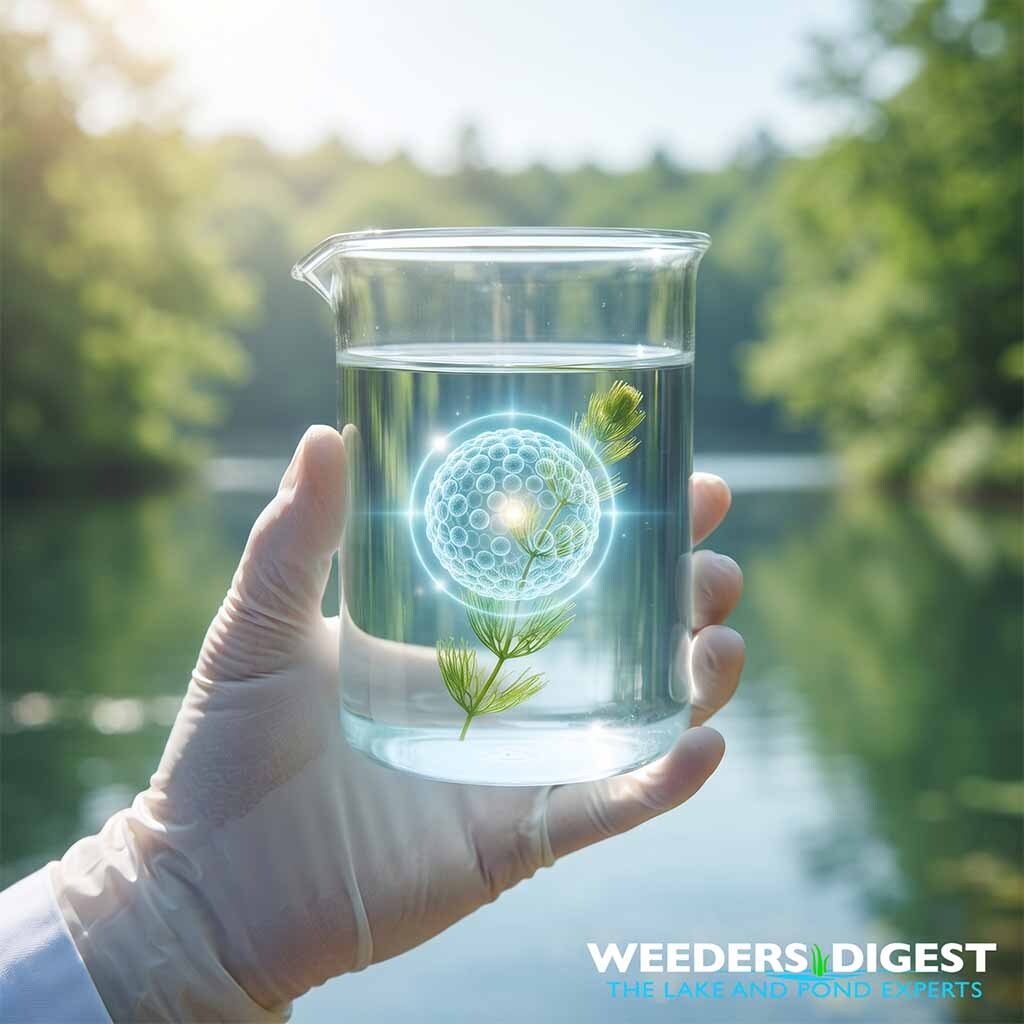
Eco-friendly polymers and next-gen carriers are microscopic, biodegradable delivery vehicles designed to encapsulate aquatic herbicides and release them precisely onto targeted invasive plants, drastically reducing the total amount of chemicals introduced into your pond. Think of them as microscopic smart-sponges made from naturally occurring materials—like plant proteins or crustacean shells—that lock the active ingredients safely inside until they come into direct contact with the nuisance weed. Instead of pouring a raw liquid treatment into the water and hoping it drifts to the right spot, these advanced carriers ensure the herbicide sticks directly to the plant without washing away into the surrounding water column. For you, this means a significantly more effective treatment against stubborn aquatic growth, less environmental impact on native species, and ultimately safer water for recreation.
As a Certified Lake Manager, one of the most frustrating scenarios I encounter in the field is watching a meticulously calculated herbicide application get pushed away from a dense patch of Eurasian watermilfoil due to unexpected wind-driven currents or natural thermal stratification. Before these advanced polymer carriers were an option, we constantly battled this "dilution effect" by having to rely on higher concentrations of products just to ensure a lethal dose actually reached the target zone. Watching these new biopolymer formulations in action is entirely different; the treatment noticeably adheres to the plant's surface, initiating die-back almost immediately, and we no longer see the widespread non-target chemical drift that used to complicate our post-treatment ecological surveys.
These smart delivery systems are fundamentally changing the way we approach long-term lake restoration. Because these microscopic carriers are synthesized from organic matter, they break down harmlessly into the natural aquatic environment once their job is complete, leaving zero synthetic residue behind. This represents a massive leap forward for waterfront homeowners, guaranteeing that your battle against invasive weeds is highly targeted, environmentally responsible, and ultimately more cost-effective since precious active ingredients are no longer wasted to the open water.
The Science Behind It:
The technical mechanics of next-generation carrier systems rely on the principles of nanotechnology and controlled-release formulations (CRFs), utilizing highly biodegradable biopolymers such as chitosan, zein, and lignin. Traditional aquatic herbicides suffer from high aqueous solubility and low affinity for lipophilic compounds, which frequently leads to rapid dilution, leaching, and off-target toxicity within dynamic aquatic ecosystems. By encapsulating the active herbicidal ingredient within a polymeric nanocarrier, the physicochemical properties of the formulation are radically altered. The biopolymer acts as a protective, semi-permeable matrix that prevents premature hydrolytic or photolytic degradation of the herbicide within the water column, ensuring that the maximum volume of the active chemical is preserved until it physically interacts with the target macrophyte's cuticle.
The interaction between the biopolymer carrier and the aquatic weed is primarily driven by targeted surface charges and controlled diffusion kinetics. For instance, chitosan-based nanocarriers often possess a strong positive surface charge, which creates a robust electrostatic attraction to the negatively charged cell walls of submerged aquatic foliage. Once adhered, the release of the herbicide is heavily modulated by swelling-controlled or degradation-controlled mechanisms. In a swelling-controlled system, the hydrophilic polymer matrix absorbs surrounding water, expanding its porous structure to allow the active ingredient to diffuse outward at a precise, sustained rate. This sustained release maintains a localized lethal concentration of the herbicide strictly at the site of absorption, bypassing the rapid environmental dilution factor that traditionally plagues conventional liquid applications.
Recent quantitative analyses underscore the drastic efficiency improvements offered by these eco-friendly polymeric systems. According to peer-reviewed research published in the Journal of Agricultural and Food Chemistry (ACS Publications, 2025), synthesizing natural-based polymeric nanosystems using a combination of zein (a corn-derived protein) and a cross-linker poloxamer for herbicide delivery resulted in a highly stable encapsulation efficiency of over 40% to 60%. More importantly, this specific biopolymer carrier system achieved an exceptional targeted weed control efficacy ranging from 90% to 96%. When compared directly to conventional, non-encapsulated commercial herbicide applications—which only yielded a 40% efficacy rate under the exact same experimental parameters—the use of next-gen carriers effectively more than doubled the treatment's success rate while simultaneously mitigating toxicity to non-target indicator species.
Ultimately, transitioning to nanobased biopolymers addresses the most critical ecotoxicological concerns associated with chemical lake management. Because the delivery vectors are synthesized entirely from biological macromolecules, they undergo natural enzymatic degradation by both benthic and pelagic microorganisms, ensuring no persistent microplastics or toxic synthetic polymers accumulate in the sediment. This intersection of advanced material science and aquatic ecology provides limnologists with a surgically precise tool to eradicate invasive species while actively preserving the long-term biological integrity and biodiversity of the broader aquatic ecosystem.