

Is Your Lake Safe? My Guide to Differentiating Harmful Algal Blooms from Harmless Scums
 |

Summary:
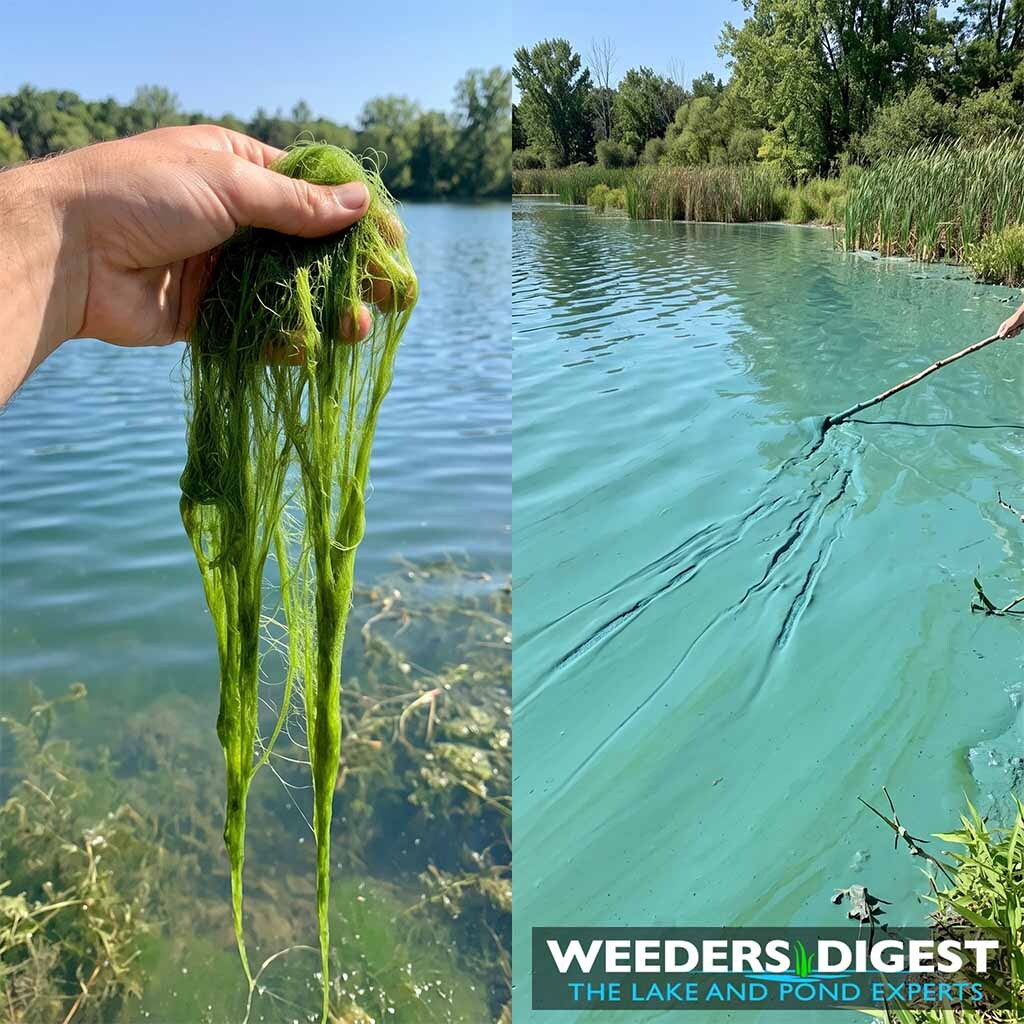
To definitively differentiate a toxic Harmful Algal Bloom (HAB) from a harmless pond scum, you must test its physical structure: harmless green algae can be physically lifted out of the water like tangled wet cotton, whereas dangerous cyanobacteria will coat the water’s surface like spilled green paint and slip straight through your fingers. This simple physical assessment is commonly known as the "stick test" and is the most reliable immediate method for homeowners to gauge the safety of their water. If the green mass on your pond looks structurally solid or resembles tiny distinct leaves, it is generally safe, but if it looks like a neon blue-green oil slick, you must avoid contact.
During a routine site visit last summer, a panicked property owner called me out to inspect a thick green mat completely covering their bay. As a Certified Lake Manager, my first step is always the stick test. When I plunged a wooden paddle into the water and pulled up a heavy clump of stringy, fibrous material, I was able to immediately assure them that this was merely harmless filamentous algae, not the highly toxic cyanobacteria they feared.
Understanding what is floating in your water is absolutely crucial for the safety of your family and your pets. Dogs are especially vulnerable to toxic blooms because they tend to drink the water while swimming and will instinctively lick their fur clean afterward. While harmless scums might be an eyesore that temporarily ruins the aesthetic appeal of your shoreline, they do not pose a biological threat to mammalian health.
If your shoreline water ever resembles a thick, foul-smelling pea soup that breaks apart when you touch it, it is critical to keep all humans and animals out of the water. Toxic blooms require professional ecological remediation and laboratory testing to confirm when the water is safe again. Until you have definitive proof that the bloom has dissipated, always err on the side of caution and treat any un-liftable, paint-like surface scum as a potential hazard.
The Science Behind It:
The fundamental biological distinction between Harmful Algal Blooms (HABs) and harmless aquatic scums begins with taxonomy. The organisms responsible for HABs are predominantly cyanobacteria, which are prokaryotic microorganisms lacking a true nucleus and membrane-bound organelles. In contrast, harmless green scums are typically composed of eukaryotic green algae (Chlorophyta) or tiny floating aquatic vascular plants like watermeal and duckweed. While cyanobacteria utilize chlorophyll-a for photosynthesis much like true plants, they also possess accessory pigments called phycobiliproteins, specifically phycocyanin, which imparts their characteristic blue-green coloration.
Morphological differences dictate the physical behavior of these organisms on the surface of the water. True green algae often form filamentous structures, consisting of multicellular chains connected by strong cellulose cell walls. This cellular architecture provides high structural integrity and tensile strength, allowing filamentous algae to weave into dense, fibrous mats that can be physically grasped and lifted. Cyanobacteria, however, primarily exist as single cells or loosely aggregated colonies suspended within a mucilaginous matrix. Because they lack interlocking fibrous structures, cyanobacterial blooms cannot be picked up; they simply break apart and slip through physical barriers, creating the visual phenomenon commonly described as spilled paint.
The defining danger of cyanobacteria lies in their capacity to synthesize secondary metabolites known as cyanotoxins. The exact evolutionary function of these compounds remains a subject of ongoing ecological research, but they are highly toxic to humans, pets, and wildlife. Microcystins, the most prevalent class of cyanotoxins, are potent hepatotoxins that inhibit protein phosphatases in the liver, leading to severe cellular damage, internal hemorrhaging, and potential liver failure upon ingestion. Harmless green algae and floating macrophytes do not possess the genetic pathways required to synthesize these toxic secondary metabolites, rendering them biologically safe despite their visually unappealing accumulation.
Identifying the threshold where a cyanobacteria presence escalates into a dangerous public health threat requires precise quantitative monitoring. According to public health standards established by the Massachusetts Department of Public Health (MDPH) and aligned with federal environmental guidelines, recreational water bodies trigger active health advisories when total cyanobacteria cell counts exceed 70,000 cells per milliliter (cells/mL). Furthermore, chemical analyses must demonstrate that the concentration of microcystins in the water column exceeds 8 micrograms per liter (µg/L) to classify the bloom as acutely toxic. Reaching these specific quantitative benchmarks indicates that the aquatic ecosystem is experiencing a severe ecological imbalance that poses a direct physiological threat to mammals.
The proliferation of these blooms to such extreme concentrations is primarily driven by anthropogenic eutrophication and thermal stratification. When water bodies receive excess nutrient loading—specifically phosphorus and nitrogen from agricultural runoff or inadequate wastewater management—cyanobacteria exploit these resources rapidly. Additionally, many bloom-forming cyanobacteria species contain intracellular gas vesicles that allow them to actively regulate their buoyancy. During hot, calm weather conditions, they migrate to the water's surface to maximize their exposure to photosynthetically active radiation. This buoyancy regulation effectively shades out competing green algae and benthic vegetation, allowing the cyanobacteria to dominate the water column and cement the Harmful Algal Bloom.