

Is Your Muck-Raking or Dredging Project Actually Working? My Field Assessment
 |

Summary:
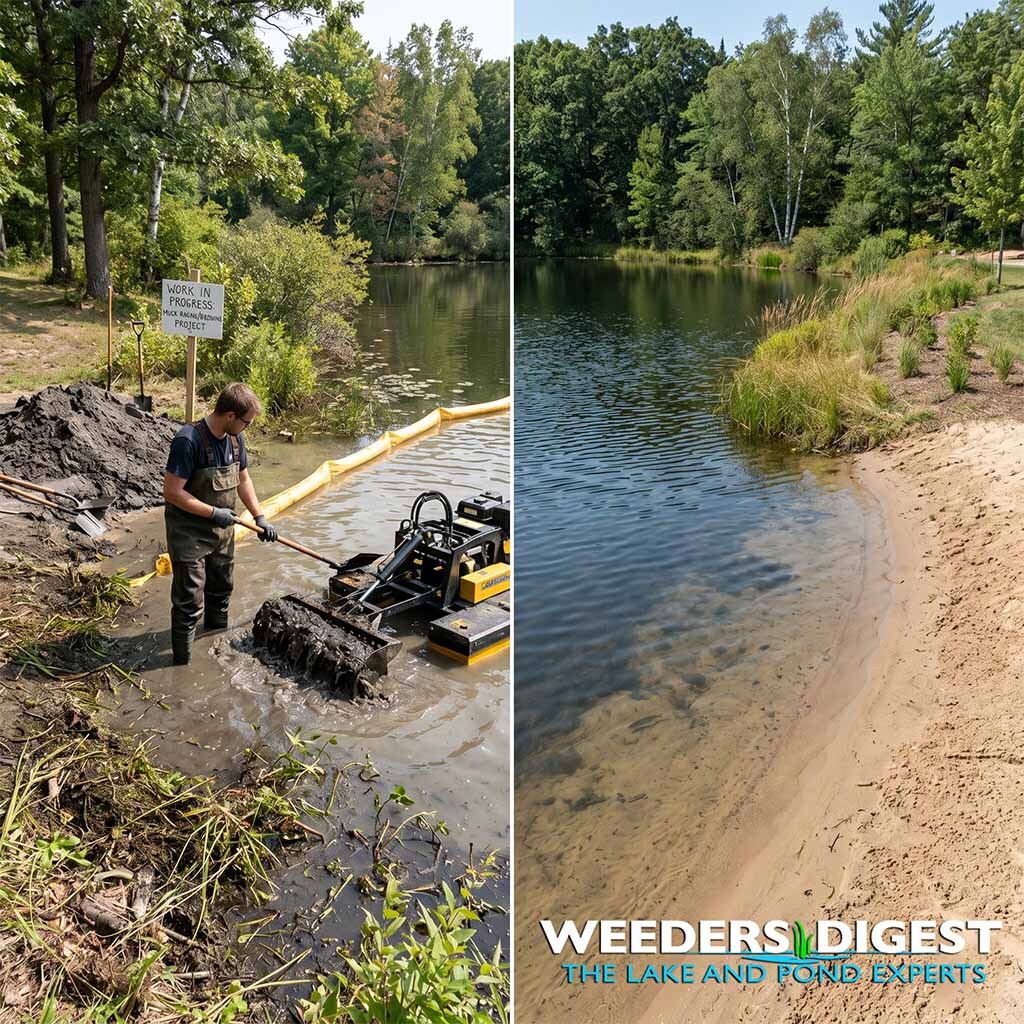
Labor-intensive sediment removal, such as manual raking or mechanical dredging, is highly effective for immediate depth restoration and physical muck reduction, but its long-term success is entirely dependent on addressing the external sources of nutrient loading. While dredging provides an instantaneous "reset" to your shoreline by physically removing organic sludge that traps phosphorus and nitrogen, it does not stop the cycle of new sediment from entering the basin via runoff or decaying organic matter. Without a comprehensive watershed management plan, these projects are often short-lived interventions rather than permanent solutions.
In my years as a Certified Lake Manager, I have frequently walked property lines where owners spent thousands on aggressive dredging, only to find the "muck" returning within a few short seasons. I recall one particular site where we removed over 300 cubic yards of sediment from a boat slip. The client was ecstatic with the results until the first heavy spring rainfall flushed a massive load of lawn fertilizer and leaf litter directly into that same depression. The physical removal was successful, but the lack of an inflow management strategy meant the "clean" basin became a sediment trap once again.
The true efficacy of your project lies in the nuance between temporary cosmetic cleanup and permanent ecosystem restoration. While physical extraction is sometimes the only way to reclaim a lost recreational area, homeowners should view these projects as a foundational step. Once the legacy nutrient load—the stored muck—is removed, the long-term goal must shift toward preventing new material from accumulating. Understanding the biological and chemical mechanics of your pond’s "internal loading" is the difference between a one-time expense and a recurring maintenance nightmare.
The Science Behind It:
The efficacy of dredging is primarily tied to the management of internal nutrient loading. Benthic sediments, or "muck," function as a reservoir for nutrients such as phosphorus, which is often chemically bound to the sediment particles. Research published in MDPI (2024) highlights that while environmental dredging effectively reduces the nitrogen and phosphorus content of sediments, it also disrupts the internal equilibrium of the lake system. By removing the top layer of legacy sediment, the process exposes deeper layers that may alter the retention mechanisms of the pond. Crucially, the study found that column cores in dredged areas often show that newly accumulated sediments reach a new nutrient equilibrium within a few years, essentially allowing phosphorus pollution to rise back toward pre-dredging levels if exogenous (external) sources are not controlled.
From a limnological perspective, the mechanical disturbance caused by dredging often triggers a temporary spike in Total Suspended Solids (TSS). This turbidity creates significant ecological stress. According to the Journal of Environmental Management, the suspension of fine benthic particles increases the surface area for nutrient desorption. When these sediments are churned up, phosphorus—which was previously sequestered in the anaerobic (oxygen-poor) bottom zone—is released into the water column. This rapid bioavailability of nutrients frequently leads to secondary water quality issues, such as cyanobacteria blooms, immediately following a dredging event if the operation is not performed with proper containment.
Furthermore, the scale of the operation matters. Mechanical dredging involving heavy excavators introduces significant turbulence that can oxygenate the sediment-water interface, potentially promoting the release of stored gases and nutrients. In contrast, smaller-scale interventions like hydro-raking offer a less invasive approach to managing sediment. While hydro-raking cannot "reset" a water body the way large-scale hydraulic suction dredging can, it minimizes the vertical sediment transport that leads to long-term turbidity issues. Data indicates that hydraulic systems, which move a sediment-water slurry through a closed pipe, maintain superior water clarity at the point of extraction compared to traditional mechanical bucket dredging.
Ultimately, the goal of physical muck removal is to shift the pond from a state of internal nutrient recycling back toward a state of external dependence. If a water body is already in an advanced state of eutrophication, removing the sediment provides a "clean slate" that allows for better performance of biological treatments like aeration or beneficial bacterial augmentation. Without addressing the underlying input of allochthonous materials—leaves, grass clippings, and runoff-borne soil—the biological, chemical, and physical benefits of an expensive dredging project are typically exhausted within three to seven years, depending on the watershed's specific loading rates.
Sources / References:
- Effects of Dredging on Nitrogen and Phosphorus Storage Patterns and Retention Mechanisms in Column Core Sediments in the Caohai Region of Dianchi Lake - MDPI
- Can I Dredge My Shoreline Without Turning My Lake Into a Muddy Mess? - Weeders Digest
- A Beginner's Guide to Water Management—Muck: Causes and Corrective Actions - University of Florida IFAS Extension