

Is Your Pond Hiding a Floating Forest? How Coontail Thrives at Any Depth
 |

Summary:
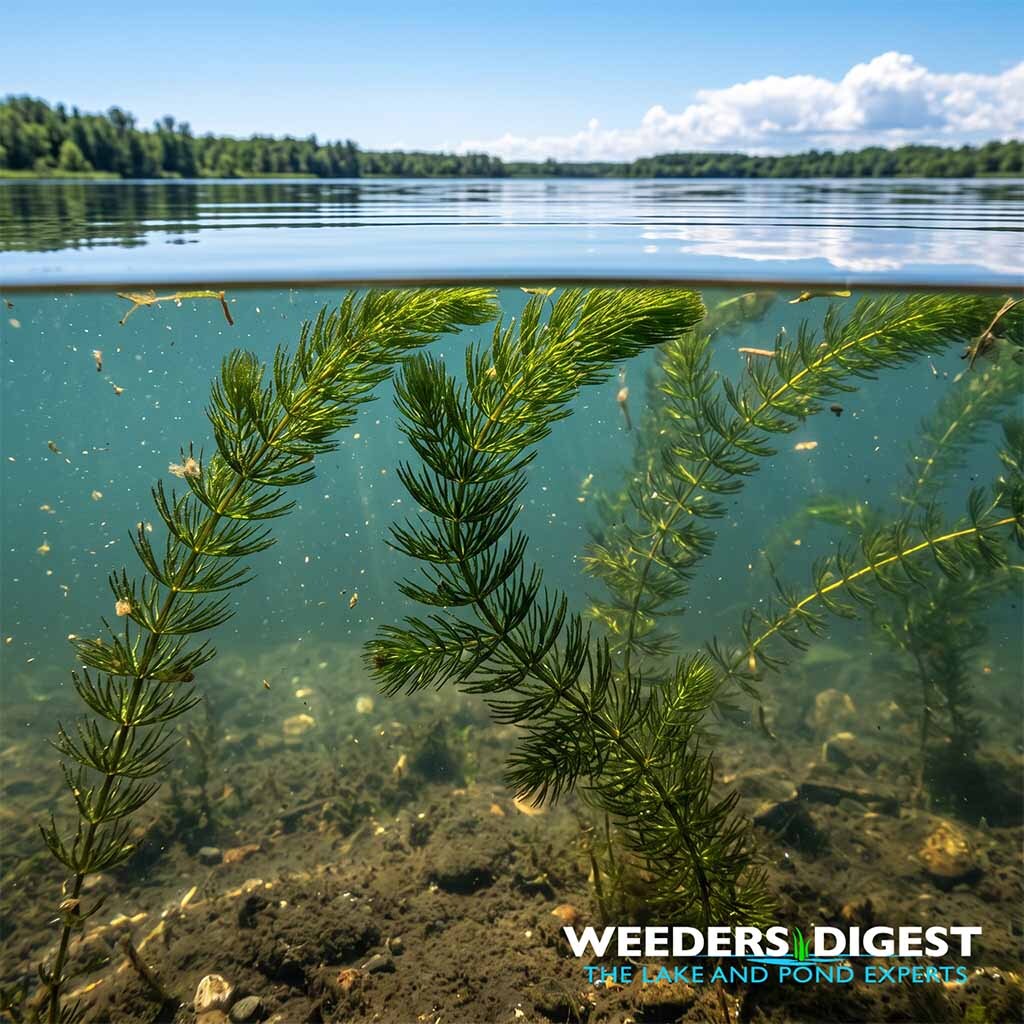
Coontail thrives in variable depths without roots because it rapidly absorbs all the nutrients and gases it needs directly through its specially adapted leaves and stems while freely drifting in the water column. Unlike many other aquatic plants that must anchor into the mud to pull sustenance from the soil, this plant relies entirely on the surrounding water for survival. Its unique structure allows it to sink, float, or suspend at whatever depth provides the ideal balance of sunlight and temperature, making it incredibly resilient in changing water levels.
In my years out on the water as a Certified Lake Manager, I have mapped lakebeds where sudden drop-offs would typically create barren underwater deserts, only to find massive, dense clouds of Coontail flourishing completely unattached just above the thermocline. It is always a fascinating moment when you pull a sampling rake up from a steep 12-foot dredge hole, expecting nothing but muck, and instead retrieve heavy, bright green stalks of rootless Coontail that have independently positioned themselves exactly where the nutrient flow is best.
Because it does not waste energy growing deep root systems, this plant can rapidly shift its energy into upward vegetative growth or horizontal branching. When sunlight becomes scarce in deep or murky water, the plant simply elongates its brittle stems to reach higher up into the photic zone. This unparalleled freedom of movement and efficient nutrient uptake mechanism explain why this floating perennial can dominate a backyard pond just as easily as it colonizes a massive reservoir.
The Science Behind It:
Ceratophyllum demersum, commonly known as Coontail, is an obligate submerged macrophyte that completely lacks true root structures and stomata, which are the microscopic pores typically used by terrestrial and some aquatic plants for gas exchange. Instead of utilizing a vascular root system to extract phosphorus and nitrogen from the benthic zone, this angiosperm relies entirely on foliar nutrient uptake. Its highly dissected, dichotomously branched leaves create an exceptionally high surface-area-to-volume ratio. This morphological adaptation allows the plant to absorb dissolved minerals, organic matter, and carbon dioxide directly from the surrounding water column through a remarkably thin epidermal cuticle.
The ability of C. demersum to thrive at variable depths is intrinsically linked to its buoyancy regulation and unique morphological flexibility. Research published in the CABI Compendium notes that this cosmopolitan species can occupy extreme depths ranging from 0.5 to 15.5 meters, depending entirely on water clarity and the penetration of photosynthetically active radiation. To manage these varying depths without a benthic tether, the plant develops specialized intercellular air spaces within its stem tissues. These pneumatic cavities provide adjustable buoyancy, allowing the stem to suspend freely in the photic zone, while modified lower leaves sometimes act as weak rhizoids to temporarily snag onto submerged debris.
Depth tolerance is also driven by its robust thermal and biochemical adaptability. According to a year-long mesocosm study published in Oxford Academic's Journal of Plant Ecology, canopy-forming macrophytes like C. demersum exhibit uniquely high biomass production that enables rapid nutrient assimilation and carbon dioxide fixation, successfully thriving in optimal water temperatures between 15°C and 30°C. When water temperatures begin to drop below 10°C in temperate climates, the plant ceases normal vegetative expansion and undergoes a profound metabolic shift. Rather than dying off, it redirects its energy reserves to produce turions, which are dense, specialized dormant buds packed with starch.
These turions detach from the main plant structure and sink directly to the dark, sheltered lakebed, allowing the organism to safely overwinter and survive under ice. A study on submersed macrophyte density and greenhouse gas emissions hosted by the Office of Scientific and Technical Information highlights that C. demersum can exhibit four to six cohort turnovers annually. The sunken turions remain dormant until spring temperatures trigger hormonal changes, causing them to germinate and rise back up through the water column. This cyclical lifecycle flexibility ensures that the macrophyte can rapidly colonize and dominate varying depths without ever needing a permanent, rooted foundation in the substrate.