

My Comprehensive Guide: Understanding Herbicide and Biological Treatments for Your Lake
 |

Summary:
Effective aquatic vegetation management relies on a strategic balance between herbicide applications and biological control methods, each serving different roles depending on your specific lake conditions and goals. Herbicides act as a rapid-response tool to knock back invasive or nuisance plant populations quickly, while biological agents provide a more sustainable, long-term approach to suppressing weed regrowth. The most successful management plans often integrate both, using chemistry to clear immediate obstructions and biological agents to maintain a healthier, more balanced ecosystem over time.
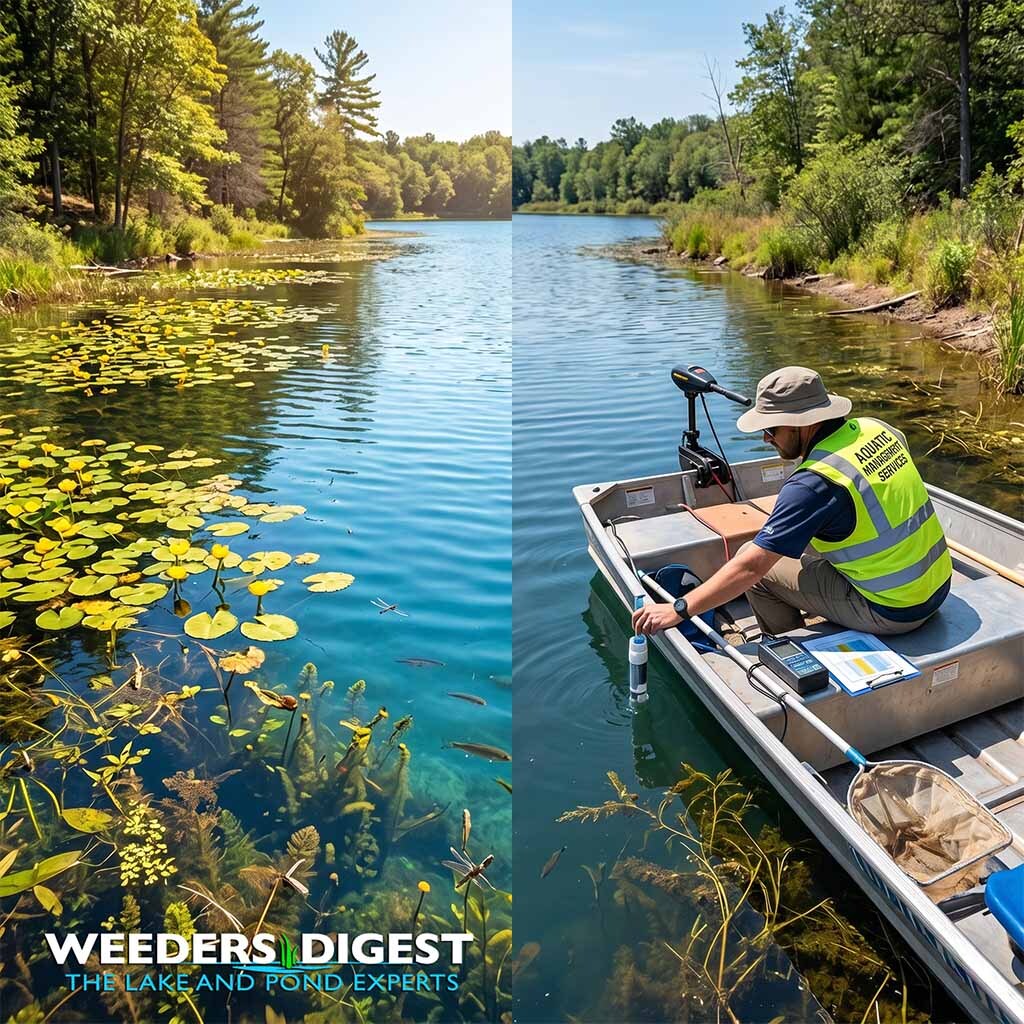
As a lake manager, I’ve often walked a shoreline where invasive milfoil was choking out the native lilies, effectively turning a vibrant habitat into a monoculture. In those instances, relying solely on one method often fails; if you only use herbicides, you're constantly chasing the weeds, but if you don't use them at all, you might lose the native plants you're trying to protect before biological controls can establish themselves. The key is to manage the density of the weeds rather than aiming for total eradication, which allows your native plant community to recover and thrive.
The Science Behind It:
Aquatic vegetation management is rooted in the principles of Integrated Pest Management (IPM), which seeks to achieve long-term control of nuisance species while minimizing non-target impacts. Chemical control, or the use of aquatic herbicides, operates by interfering with plant-specific physiological processes. For example, systemic herbicides like 2,4-D function as synthetic auxins that mimic plant growth hormones, causing excessive respiration and rapid depletion of carbohydrate reserves, which eventually leads to plant mortality. Research has demonstrated that such systemic treatments can result in nearly 100% mortality of target species like Eurasian watermilfoil within 20 days. However, these rapid results come with potential ecological trade-offs, as large-scale applications have been linked to significant declines in native plant diversity and can temporarily reduce dissolved oxygen levels during the decomposition phase.
Biological control represents a more nuanced approach, utilizing host-specific insects or pathogens to suppress weed populations. Unlike chemicals, which offer an immediate impact, biological agents often require time to establish and typically aim for long-term population stabilization at sub-economic levels rather than total eradication. Studies have shown that while biological treatments may be slower to manifest, they can leave plant tissue with significantly higher carbohydrate and starch reserves in native populations compared to chemical treatments, indicating a lower overall physiological stress on the surrounding ecosystem.
The effectiveness of these methods is highly variable. Historical data suggests that classical biological control programs have historically achieved a "good" or "partial" success rate of approximately 30%. Because invasive species can evolve resistance—such as the documented resistance of hydrilla to the herbicide fluridone—the most robust scientific consensus supports an integrated approach. By combining the immediate biomass reduction of herbicides with the continuous, self-sustaining pressure of biological agents, lake managers can mitigate the risks associated with excessive chemical dependency while keeping invasive populations below the threshold where they interfere with recreational and ecological water uses.
Understanding these dynamics is critical for your management strategy. Treating large quantities of vegetation at once carries a high risk of oxygen depletion, which can be catastrophic for fish populations. Current best practices dictate that treating no more than one-fourth to one-third of the total surface area of a water body at any given time significantly minimizes this risk. By aligning your management tactics with these ecological realities, you ensure that your water remains both usable and biologically resilient for the long term.