

My Field Guide to Sonication Technologies: Using Ultrasonic Waves to Disrupt Algal Cells
 |

Summary:
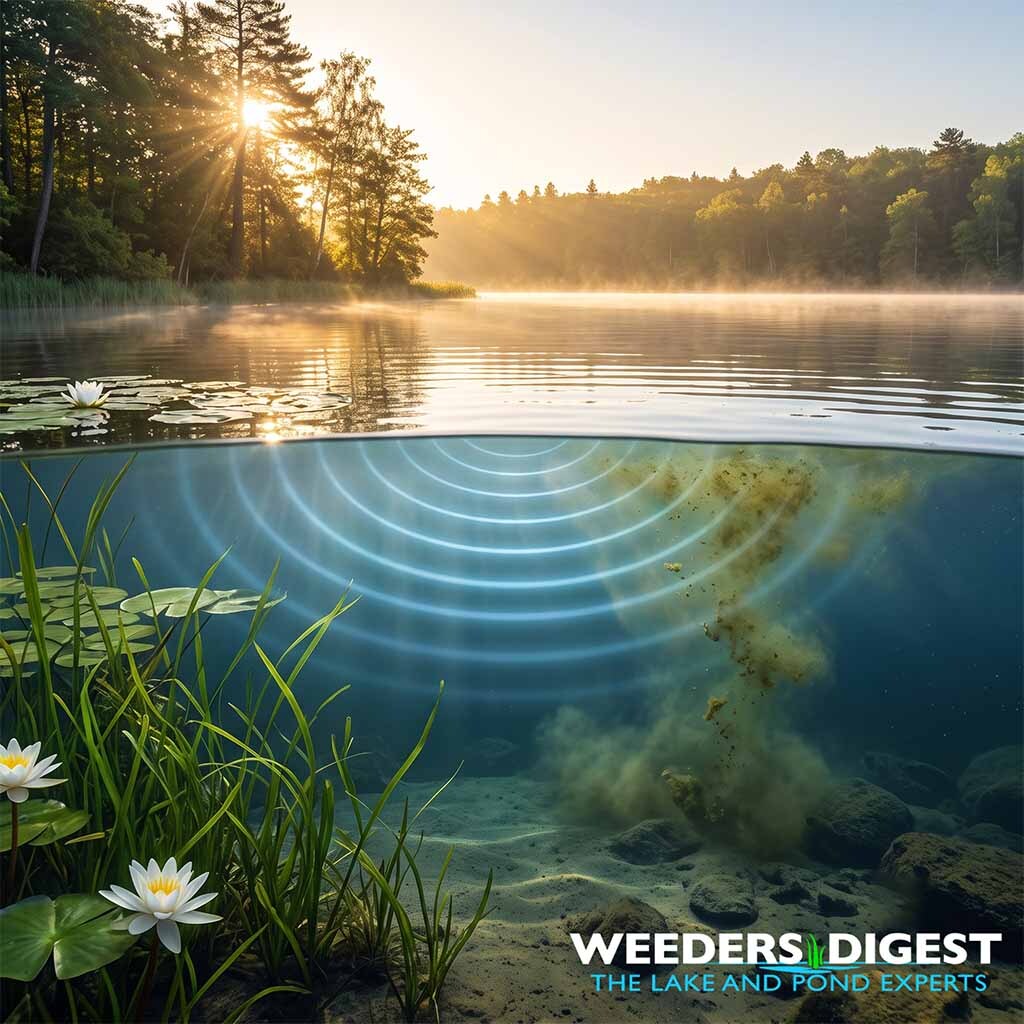
Sonication technologies use targeted, high-frequency sound waves to mechanically disrupt and destroy algal cells, clearing water bodies of harmful blooms without the application of chemical algicides. When a specialized device emits these ultrasonic waves into a lake or pond, the acoustic energy travels through the water and interacts directly with the physical structure of the algae. Depending on the targeted species, the sound waves either cause the cell's internal buoyancy mechanisms to collapse or they rupture the outer cell wall entirely. Without the ability to float to the surface and capture sunlight, the affected algae sink to the bottom of the water body and naturally decompose, leaving the surrounding aquatic ecosystem entirely unharmed.
In my daily routine as a Certified Lake Manager, I am frequently called out to properties where a eutrophic pond looks like it has been covered in thick, green paint. Deploying an ultrasonic transducer into one of these severely degraded systems always provides a satisfying field insight; within just a few weeks, I can observe the once-stagnant, opaque surface clearing up to reveal a healthy, transparent water column, all without relying on the heavy chemical treatments that can sometimes shock the local food web. It is a powerful reminder of how leveraging physical forces can safely restore ecological balance to an aquatic environment.
Because this technology relies entirely on mechanical disruption rather than chemical toxicity, it represents a highly targeted and environmentally sustainable approach to water quality management. The specific frequencies of the sound waves are calibrated to target the structural vulnerabilities of algal cells, meaning that fish, native vascular plants, and beneficial benthic microorganisms do not register the vibrations and remain completely unaffected. This unique selectivity makes sonication an invaluable tool for long-term pond management, offering a low-impact, persistent solution to one of the most frustrating challenges faced by riparian landowners.
The Science Behind It:
The fundamental mechanism driving sonication technologies in aquatic environments is a biophysical process known as acoustic cavitation. When high-intensity ultrasound waves are transmitted through a liquid medium, they create rapidly alternating cycles of high pressure, known as compression, and low pressure, known as rarefaction. During the low-pressure cycle, minute vacuum bubbles—often referred to as microbubbles—spontaneously form within the water column. As the alternating pressure cycles continue, these microbubbles absorb acoustic energy and expand until they reach a critical volumetric threshold where they can no longer remain stable. At this point, the bubbles violently implode during a high-pressure cycle, generating localized micro-jets and extreme mechanical shear forces that act as microscopic projectiles against the cellular structures of nearby microorganisms.
Cyanobacteria, commonly referred to as blue-green algae, are distinctly susceptible to acoustic cavitation due to their heavy reliance on intracellular gas vesicles. Gas vesicles are highly specialized, protein-bound structures that regulate cellular buoyancy, allowing cyanobacteria to migrate vertically within the water column to access optimal photosynthetic light and dissolved nutrients. The acoustic shear forces generated by cavitation penetrate the cell wall and induce intense resonance within these hollow vesicles. According to peer-reviewed research published in the journal Water (MDPI), the continuous removal of cyanobacteria is highly effective when subjected to targeted ultrasonic frequencies between 20 and 90 kHz, paired with low ultrasonic densities ranging from 0.0005 to 0.1 W/mL over short durations. At these specific parameters, the acoustic resonance causes the gas vesicles to permanently rupture, resulting in an immediate and irreversible loss of cellular buoyancy.
Beyond targeted vesicle collapse, intensive sonication can also achieve total cellular lysis through an extreme mechanical action known as sonoporation. When the shear forces from cavitation micro-jets directly impact the rigid cell walls of green algae or highly durable cyanobacteria, they induce localized structural failures that render the cell membrane highly porous and unstable. Experimental data published by the National Institutes of Health (NIH) demonstrates that achieving complete algal cell disruption requires significant, sustained energy, with structural disruption increasing linearly as peak rarefaction ultrasound pressure escalates from 1.90 to 3.07 MPa. As the cell wall ultimately tears under this intense acoustic pressure, intracellular contents—including vital metabolic enzymes and photosynthetic pigments—are rapidly expelled into the surrounding aqueous medium, ensuring the definitive biological death of the organism.
While high-intensity sonication achieves rapid cell lysis, the precise calibration of frequency and power remains critical for maintaining broader ecological safety within the limnological system. Low-frequency ultrasound generates relatively large cavitation bubbles that release massive amounts of localized kinetic energy upon collapse, whereas higher frequencies produce smaller, less forceful microbubbles. Consequently, effective biological management requires selecting exact acoustic parameters that provide just enough mechanical shear force to overcome the tensile strength of the target algae's cell wall without generating excessive collateral energy. This calculated application of ultrasonic technology represents a modern shift in aquatic ecology toward precision biophysics, allowing for the comprehensive mitigation of harmful algal blooms through tailored, chemical-free mechanical disruption.