

My Guide to Protecting Your Pond: Preventive Measures and Watershed Management
 |

Summary:
Preventive watershed management is the most effective and sustainable way to reduce aquatic weed growth in your pond by limiting the nutrient inputs that fuel their development. At its core, this approach involves controlling what enters your water from the surrounding land, specifically targeting phosphorus and nitrogen sources like fertilizer runoff, grass clippings, and eroding soil. By minimizing these external "food" sources, you can significantly discourage the rapid spread of nuisance vegetation and maintain a healthier aquatic environment for years to come.
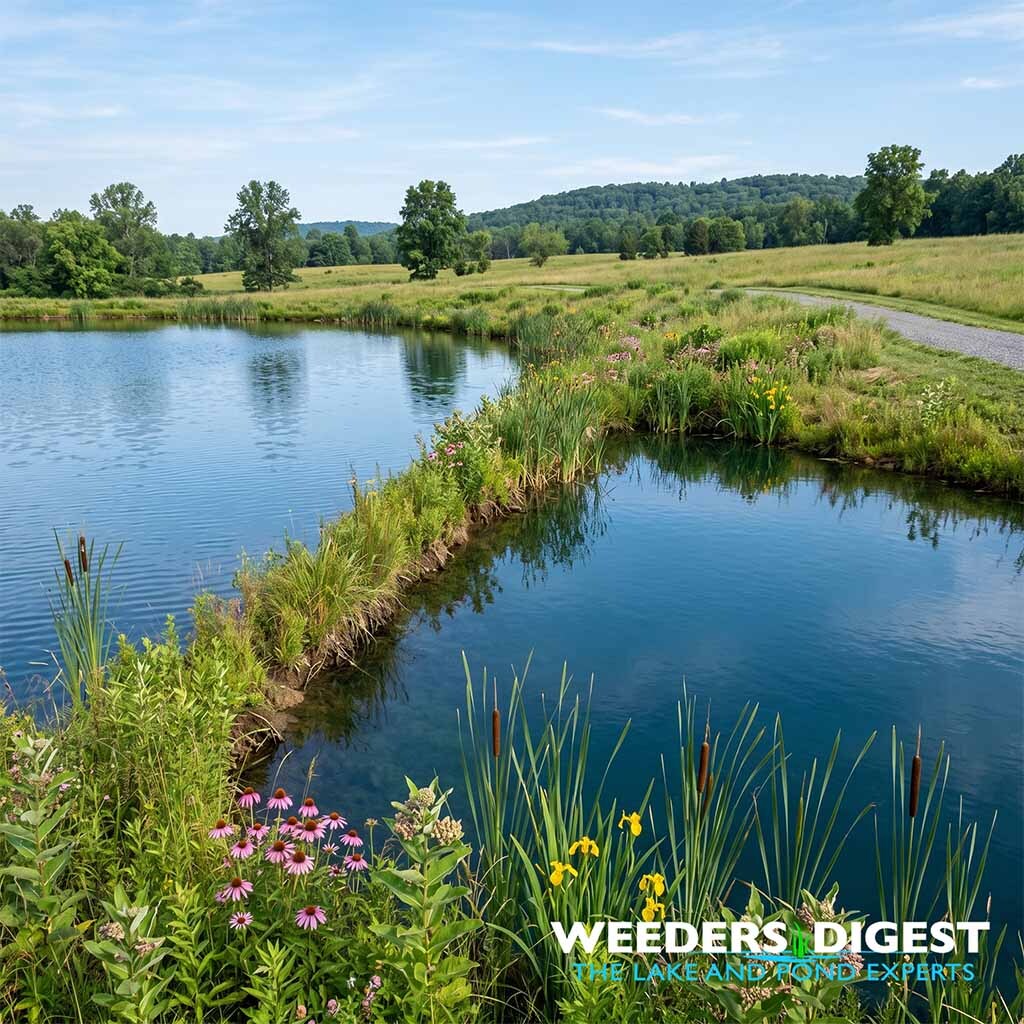
In my years working in the field, I have seen far too many landowners struggle with persistent weed cycles that could have been drastically reduced through simple land-use changes. I recall visiting a property where a lush, perfectly manicured lawn extended directly to the water’s edge; the homeowner couldn't understand why the pond was choked with submersed vegetation despite repeated treatments. Once we established a native vegetation buffer strip to trap nutrient-rich runoff before it reached the water, the dependency on aggressive chemical treatments plummeted. This observation highlights a fundamental truth: a pond is a reflection of its surrounding landscape, and the best way to treat the water is often to manage the land.
The Science Behind It:
The relationship between watershed management and aquatic plant proliferation is governed by the principles of eutrophication. Watersheds act as the drainage basin for all surface and subsurface water that eventually settles in a pond. When human-driven activities—such as excessive fertilizer application, livestock waste, or soil exposure from construction—occur within this drainage area, nutrient loads (specifically phosphorus and nitrogen) increase substantially. Research indicates that phosphorus is frequently the limiting nutrient in freshwater systems, meaning its presence directly dictates the rate of primary productivity, including the growth of algae and rooted aquatic plants.
Effective nutrient management requires the implementation of Best Management Practices (BMPs) to intercept pollutants. The establishment of a 10- to 20-foot buffer strip of native vegetation along a shoreline is a critical intervention. These deep-rooted plants act as a biological filter, slowing water velocity and allowing sediment to settle while simultaneously absorbing nutrients through their root systems before they reach the pond basin. Studies have demonstrated that such riparian buffers can significantly reduce the influx of sediments and associated phosphorus, which otherwise provide the substrate and fuel required for aquatic weed colonization in shallow, light-penetrating zones (typically less than 2–3 feet deep).
Beyond nutrient control, physical watershed modifications are essential for long-term suppression. Deepening the edges of a pond to a 3:1 slope—a one-foot drop in depth for every three feet of horizontal distance—creates a steep transition that limits the shallow, light-rich environment favored by most invasive or nuisance macrophytes. Furthermore, controlling the watershed includes managing the "internal loading" of nutrients; when plant matter from the shore or previous weed growth dies and decays within the pond, it releases stored nitrogen and phosphorus back into the water column, creating a self-sustaining cycle of over-fertilization.
The objective of these preventive measures is to maintain a state of oligotrophy or mesotrophy, where nutrient levels are kept low enough to prevent dominance by nuisance species. By quantifying the phosphorus "hotspots" in the surrounding landscape and implementing strategic infrastructure like retention ditches or engineered wetlands, managers can effectively decouple the land-use activities from the aquatic ecosystem’s health. This systemic approach is significantly more cost-effective and environmentally stable than attempting to manage the symptoms of weed overgrowth once the nutrient-rich threshold has been breached.