

My Guide to the Great Nutrient Battle: Phytoplankton vs. Macrophytes
 |

Summary:
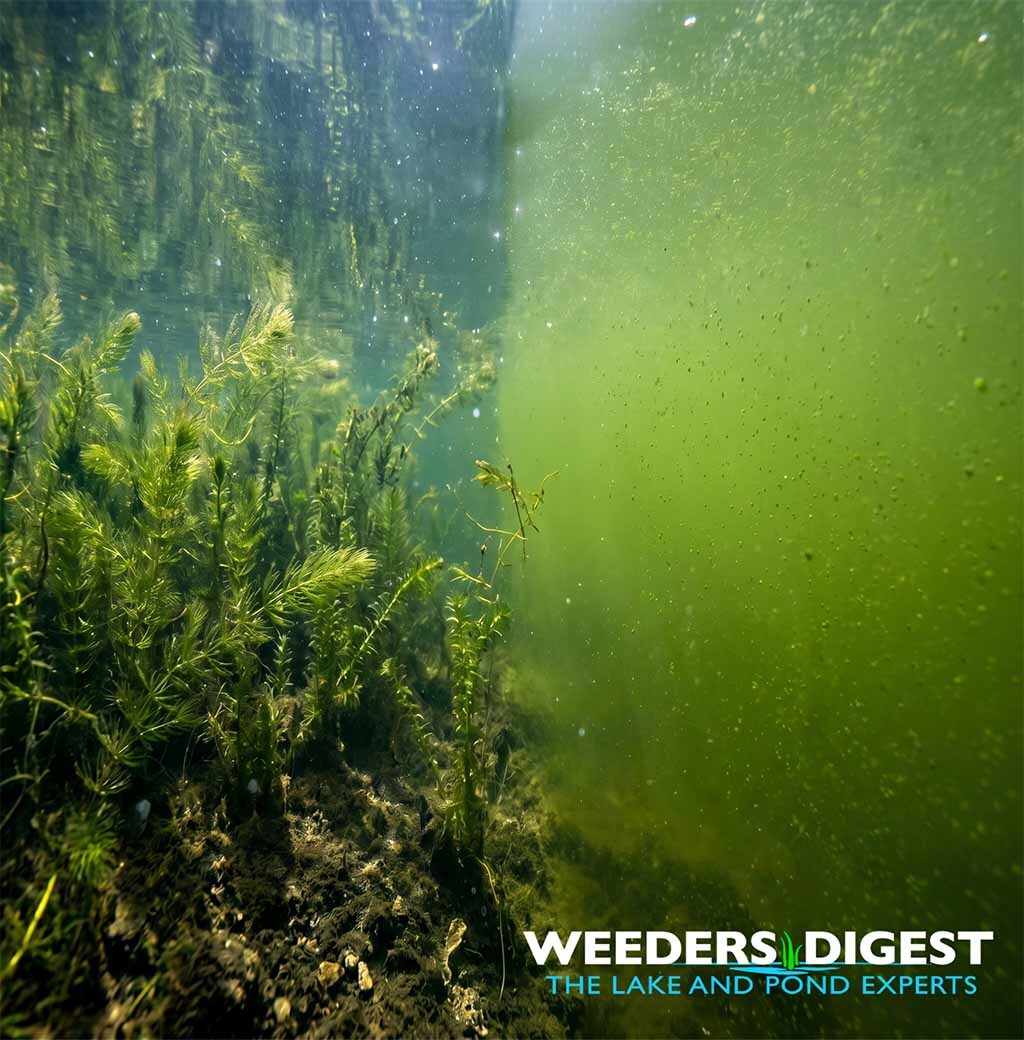
Phytoplankton and macrophytes are locked in a continuous, competitive struggle for the same limited nutrient pool—primarily phosphorus and nitrogen—and this battle ultimately dictates whether your lake remains clear or turns murky. While phytoplankton are microscopic, free-floating algae that thrive in the open water column, macrophytes are rooted aquatic plants that occupy the lake bottom and shallows. When macrophytes are abundant, they often win this competition by sequestering nutrients from both the water and the sediment, effectively starving the phytoplankton of the resources needed to bloom. Conversely, when water becomes too turbid for sunlight to reach the lake floor, macrophytes can die off, allowing phytoplankton to take over and turn the lake into an opaque, algae-dominated state.
In my years of field management, I have frequently observed that the most resilient lake systems are those where a robust, diverse bed of native macrophytes is maintained. I often find that when we successfully encourage these plant communities, the "clearing effect" is almost immediate; the plants stabilize the sediment, preventing nutrient-rich soils from being stirred up and recycled back into the water column. It is a fascinating biological seesaw: the plants act as a protective barrier, and when that barrier is lost, the sudden explosion of phytoplankton is often less a sign of "new" pollution and more a symptom of a system that has lost its primary ecological competitor.
The Science Behind It:
The competitive interaction between phytoplankton and submerged macrophytes is governed by a set of complex biogeochemical mechanisms that determine the "stable state" of a freshwater ecosystem. Research indicates that submerged macrophytes function as critical ecosystem engineers, significantly influencing the partitioning of nitrogen (N) and phosphorus (P) within the water column and sediment. By acting as a nutrient sink, macrophytes can reduce the biomass of phytoplankton by 50% to 80% in certain controlled environments through a combination of direct resource competition and indirect physical stabilization (Hilt & Gross, 2008).
One of the most profound mechanisms is the uptake of nutrients directly from the sediments. Unlike phytoplankton, which are limited to the dissolved nutrients in the water column, rooted macrophytes access the large, deep reservoirs of P and N held within the benthos. By locking these nutrients into their own biomass, they drastically limit the available pool for floating algae. Furthermore, the physical structure of a macrophyte bed slows down water movement, which promotes the sedimentation of particulate organic matter and prevents the resuspension of nutrient-laden sediments. This stabilization is vital; in systems where macrophytes are absent, sediment resuspension can provide a constant, internal supply of nutrients that fuels persistent algal blooms.
Beyond direct uptake, some macrophyte species exert inhibitory pressure through the release of allelopathic compounds—biochemicals that specifically suppress the growth of certain phytoplankton species. However, the efficacy of this "chemical warfare" varies significantly by species; while some studies have suggested it contributes to phytoplankton growth reduction, other research suggests its in-situ impact is often lower than the physical effects of shading and nutrient sequestration (Hilt et al., 2011).
Ultimately, the competition is a feedback loop. In clear-water states, macrophytes dominate because they can secure enough light and nutrients to thrive, which in turn keeps the water clear. If the system crosses a threshold—often triggered by excessive external nutrient loading or mechanical disturbance—phytoplankton populations increase, which increases turbidity. This turbidity limits light availability, causing the macrophytes to lose their competitive advantage and decline, which further releases nutrients into the water and cements the lake's shift to a phytoplankton-dominated state. Understanding these dynamics is essential for any long-term management strategy aimed at restoring water quality.
Sources / References:
- The Response of Macrophytes to Nutrients and Implications for the Control of Phytoplankton Blooms - Longdom
- Continental-scale effects of phytoplankton and non-phytoplankton turbidity on macrophyte occurrence in shallow lakes - PMC
- Regime shifts between macrophytes and phytoplankton – concepts beyond shallow lakes - Limnetica