

My Guide to Understanding Why Your Glacial Lake is Unlike Any Other
 |

What is a Glacial Lake? Our Guide to Understanding Why Your Glacial Lake is Unlike Any Other
A glacial lake is a body of water that occupies a depression formed by the erosional and depositional activity of glaciers. These lakes are typically found in regions that were once covered by glaciers during past ice ages, and they are characterized by their unique formation processes, often deep basins, clear and cold water, and distinct geological features like glacial flour.
Summary:
When you stand on the shore of a glacial lake, you are looking at a magnificent remnant of the Ice Age. These lakes are fundamentally different from other water bodies because of their violent and icy origins. While many lakes are formed by rivers changing course or humans building dams, glacial lakes were carved directly into the earth by massive sheets of ice moving across the landscape thousands of years ago. This unique beginning influences everything you see today, from the incredible clarity of the water to the steep, rocky drop-offs along the shoreline.
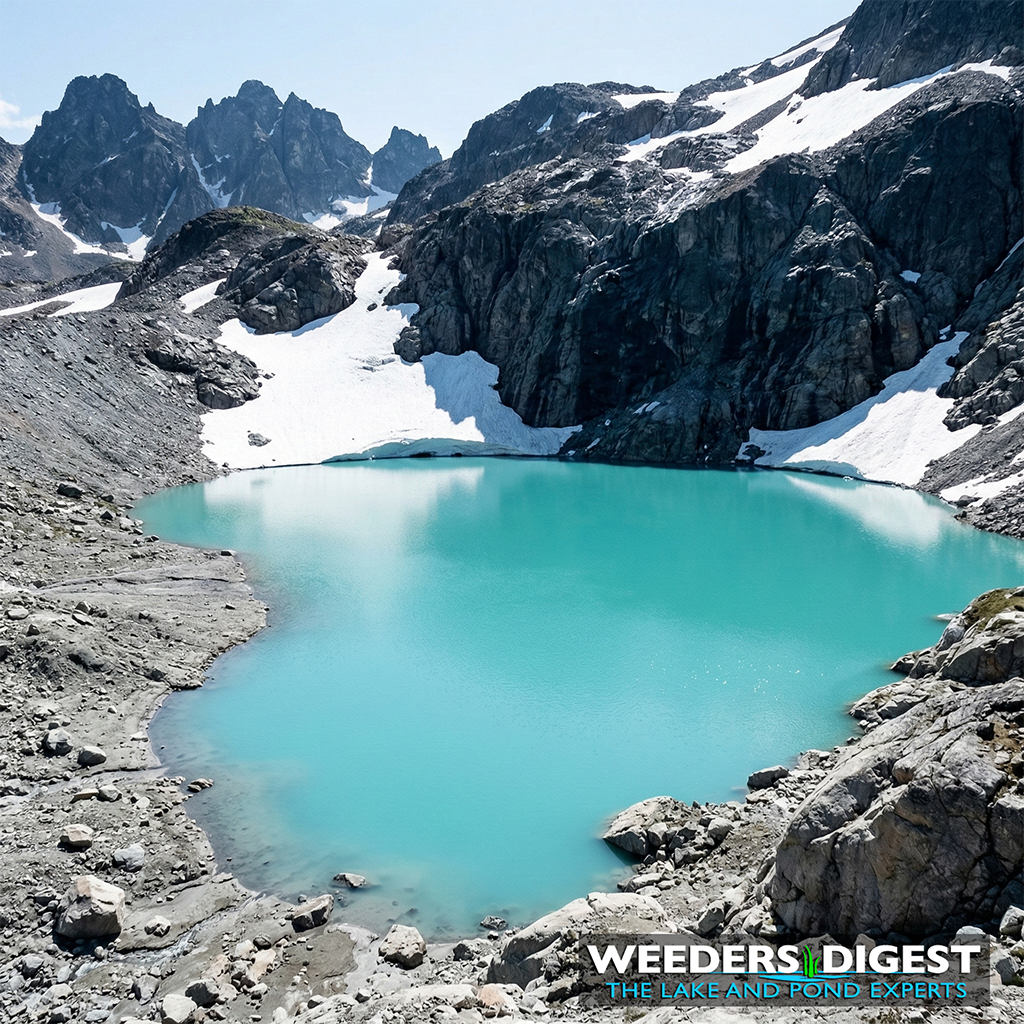
One of the first things you might notice is the striking color. Many glacial lakes possess a brilliant turquoise or deep blue hue that looks almost artificial. This happens because the heavy glaciers acted like giant sandpaper, grinding rocks into a fine powder known as "glacial flour." When this silt remains suspended in the water, it reflects sunlight in a way that creates those vivid colors. Additionally, because these lakes are often located in rocky, high-altitude or northern regions, they tend to be much colder and have fewer nutrients than a typical farm pond or reservoir, leading to a very specific and delicate ecosystem.
Living on or visiting a glacial lake feels different because the water is often exceptionally clear and crisp. Because they were formed by scouring out the bedrock, these lakes frequently have very little soil at the bottom compared to "younger" lakes. This lack of organic sediment means there is less "muck," but it also means the water can be quite sensitive to changes in the environment. Understanding these differences helps us appreciate why these ancient bodies of water require special care to maintain their pristine beauty.
The Science Behind It:
Glacial lakes are distinct geomorphological features primarily characterized by their formation during the Pleistocene epoch. The primary mechanism of creation involves the movement of continental ice sheets and alpine glaciers, which utilized processes of abrasion and plucking to excavate depressions in the terrestrial crust. According to research published by the University of Minnesota Duluth, these basins were often formed as "kettle lakes" when detached blocks of stagnant ice were buried by glacial outwash; as the ice melted, it left behind steep-sided, deep depressions that eventually filled with groundwater and precipitation.
The physical limnology of glacial lakes is significantly impacted by the presence of "glacial flour" or rock flour. This material consists of fine-grained, silt-sized particles of rock, generated through mechanical grinding of bedrock by glacial action. When these particles are suspended in the water column, they preferentially scatter the shorter wavelengths of the visible light spectrum, specifically blues and greens. A study on glacial hydrology from the University of Colorado Boulder indicates that the concentration and settling rates of this minerogenic material dictate the lake's optical properties, often resulting in high turbidity but unique spectral reflections compared to the organic-rich tannins found in lowland drainage lakes.
Chemical profiles in glacial lakes typically exhibit "oligotrophic" characteristics, meaning they are low in primary productivity and nutrient concentrations. Because the surrounding watersheds are often comprised of resistant igneous or metamorphic bedrock with minimal soil development, there is a low flux of phosphorus and nitrogen into the system. This lack of nutrients limits the growth of phytoplankton and macroscopic aquatic plants. Research in the journal Lakes & Reservoirs suggests that this nutrient limitation, combined with low mean annual water temperatures, results in high dissolved oxygen levels throughout the water column, supporting cold-water stenotherms such as lake trout and certain coregonid species.
Furthermore, the thermal stratification patterns in glacial lakes are often more pronounced due to their significant depths and clear water. Deep glacial basins can maintain a stable thermocline throughout the summer months, with a vast, cold hypolimnion that remains isolated from the warmer surface waters. This vertical structure is a critical differentiator from shallow, polymictic lakes that mix frequently. The longevity of these lakes is also a subject of scientific interest, as their primary aging process, known as eutrophication, occurs much more slowly in these deep, rocky basins than in shallower basins formed by fluvial or tectonic processes.
Glacial Lake Formation
Glacial lakes are formed through several distinct processes, all driven by the immense power of moving ice. The most common types include:
- Cirque Lakes (Tarn): These form in bowl-shaped depressions called cirques, carved by alpine glaciers at the heads of valleys. As the glacier retreats, the depression fills with water, often at high altitudes.
- Kettle Lakes: These develop when large blocks of ice break off from a retreating glacier and become buried in glacial sediment (outwash). As the ice block slowly melts, it leaves behind a depression that fills with water.
- Proglacial Lakes: These are temporary lakes that form in front of a glacier, often dammed by the ice itself or by glacial moraines. They can be very large and often drain catastrophically.
- Rift Valley Lakes: While not exclusively glacial, some lakes in tectonically active rift valleys have had their basins deepened or modified by glacial erosion.
- Finger Lakes: These long, narrow, and deep lakes, like those in upstate New York, are formed when glaciers deepen and widen existing river valleys.
The specific geological characteristics of the underlying bedrock and the dynamics of the glacier (e.g., its size, speed, and duration) dictate the precise morphology and depth of the resulting lake basin.
Glacial Lake Sediments
The sediments found in glacial lakes are distinct from those in other lake types, largely due to their glacial origin. The most notable sediment is "glacial flour," which is finely ground rock material produced by the abrasive action of glaciers on bedrock. This silt-sized material remains suspended in the water column for extended periods, giving many glacial lakes their characteristic turquoise or milky blue color.
Other common sediments include:
- Varves: These are annual layers of sediment, typically consisting of a coarser, lighter-colored layer deposited during summer melt and a finer, darker layer deposited during winter freeze-up. Varves provide valuable paleoclimatic data.
- Till: Unsorted and unstratified glacial sediment, often found along the lake margins or forming moraines that can dam the lake.
- Outwash: Stratified sand and gravel deposited by meltwater streams flowing away from a glacier.
The composition and distribution of these sediments influence the lake's water chemistry, clarity, and the types of organisms that can thrive within its ecosystem.
Biotic Ecosystems of Glacial Lakes
The ecosystems of glacial lakes are often unique and highly adapted to their cold, clear, and nutrient-poor (oligotrophic) conditions. The low nutrient levels limit primary productivity, meaning there is less phytoplankton and aquatic plant growth compared to more eutrophic lakes.
Key characteristics of glacial lake ecosystems include:
- Cold-Water Species: Fish species such as lake trout (Salvelinus namaycush), arctic char (Salvelinus alpinus), and various whitefish (Coregonidae) are common. These species are adapted to cold temperatures and high dissolved oxygen levels, which are typical of the deep hypolimnion in stratified glacial lakes.
- Specialized Invertebrates: The invertebrate communities often include species tolerant of cold water and low food availability. Zooplankton communities may be less diverse but include species well-adapted to grazing on the limited phytoplankton.
- Limited Macrophytes: Due to rocky substrates, deep basins, and cold temperatures, emergent and submerged aquatic vegetation is often sparse, primarily found in shallower, more sheltered bays.
- Sensitivity: These ecosystems are often very sensitive to environmental changes, such as nutrient pollution (eutrophication), which can disrupt their delicate balance and favor less desirable species.
Conservation efforts for glacial lakes often focus on protecting water quality and maintaining the habitat for these specialized cold-water species.
Glacial Lake Outburst Floods (GLOFs)
Glacial Lake Outburst Floods (GLOFs) are sudden and rapid releases of large volumes of water from glacial lakes. These events are a significant natural hazard, particularly in mountainous regions, and can cause widespread destruction downstream.
GLOFs can be triggered by several mechanisms:
- Moraine Dam Failure: The most common cause, where the natural dam of unconsolidated glacial till and ice (a moraine) holding back a proglacial lake fails due to erosion, seismic activity, or overtopping.
- Ice Dam Failure: Lakes impounded by glacial ice can burst when the ice dam melts or collapses.
- Landslides or Avalanches: Large masses of rock or ice falling into a glacial lake can create displacement waves that overtop and breach the lake's dam.
The increasing rate of glacier melt due to climate change is leading to the formation and expansion of new glacial lakes, increasing the potential for GLOFs in many regions worldwide. Monitoring and early warning systems are crucial for mitigating the risks associated with these powerful floods.
Examples of Glacial Lakes
Glacial lakes are found on every continent except Australia, showcasing the widespread impact of past glaciations. Some prominent examples include:
- Lake Superior, North America: The largest of the Great Lakes, its basin was extensively carved and deepened by continental ice sheets.
- Lake Louise, Canada: Famous for its vivid turquoise color, it's a classic example of a cirque lake in the Canadian Rockies, fed by glacial meltwater.
- Lake Geneva, Switzerland/France: A large, deep lake in the Alps, its basin was significantly modified by the Rhône Glacier.
- Paine Grande Lake, Chile: Located in Torres del Paine National Park, this lake showcases the dramatic landscape created by active glaciers.
- Lake Vostok, Antarctica: A subglacial lake, entirely covered by thousands of meters of ice, representing a unique extreme environment.
These examples highlight the diversity in size, depth, and setting of glacial lakes, each a testament to the Earth's glacial history.