

My Research: Understanding the Link Between Muck Depth and Underwater Plant Density
 |

Summary:
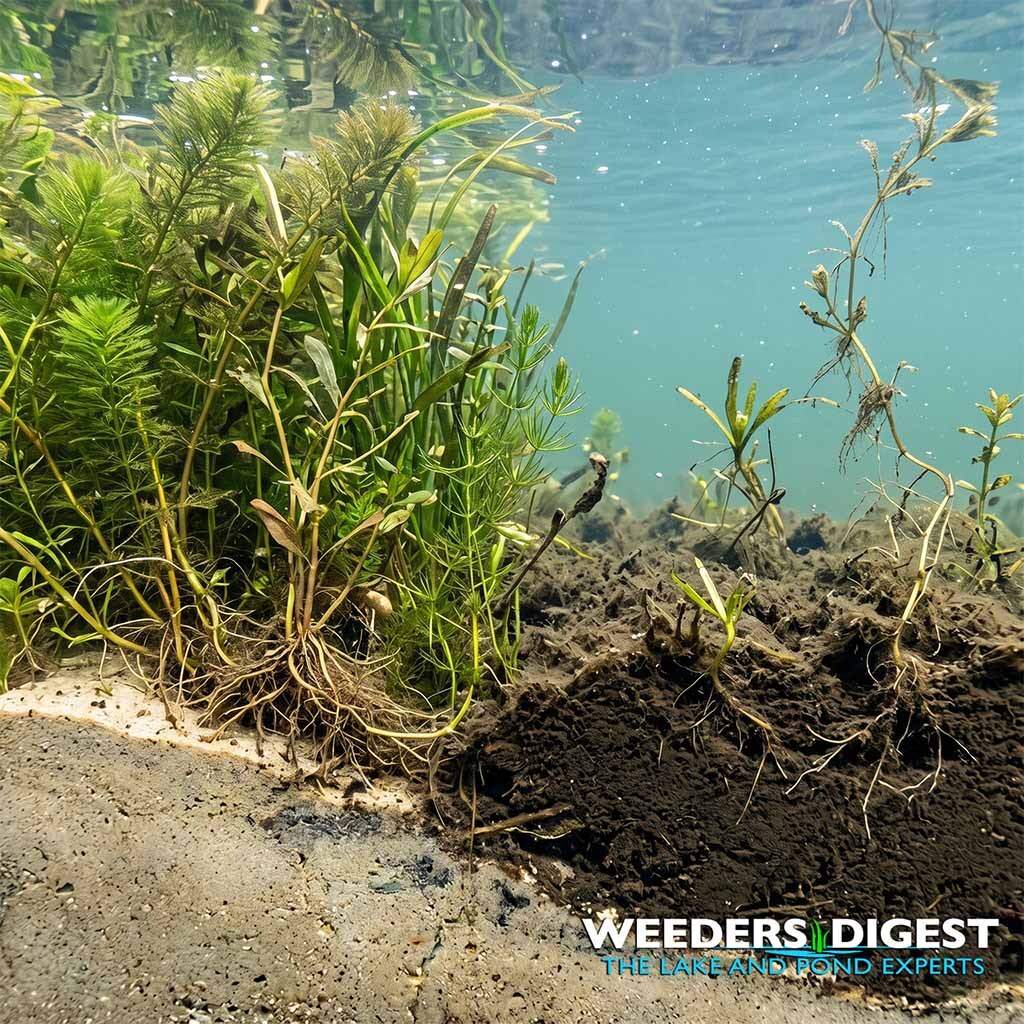
The density of aquatic plants in your pond or lake is directly influenced by the composition and depth of the organic sediment, commonly referred to as "muck," at the bottom. While a thin layer of nutrient-rich sediment can encourage plant growth, excessive accumulation of organic muck often creates an environment that suppresses root stability and can lead to anaerobic conditions, which ultimately hinders the development of dense macrophyte beds. Essentially, there is a "goldilocks zone" for sediment: too little provides insufficient nutrients, but too much organic matter can destabilize the lake floor and make it difficult for plants to maintain a firm anchor.
As a lake manager, I often see this dynamic play out during shoreline inspections. When probing a pond bottom, I might find a firm, sandy, or clay-based substrate where plant growth is sparse and controlled, versus an area with several feet of soft, loose organic muck. In those deep-muck zones, even if plants attempt to colonize, the sediment often lacks the structural integrity needed to hold the root systems securely, leading to areas that may appear patchy or susceptible to being uprooted by simple wave action or minor water movement.
The Science Behind It:
The relationship between sediment characteristics and macrophyte density is a complex ecological feedback loop. Submerged macrophytes act as biological engineers, and their growth is heavily dependent on the physicochemical properties of the lake bed. Research indicates that low levels of organic matter enrichment, specifically at concentrations of 7% or less, can actually enhance the growth and biomass of species like Myriophyllum spicatum. However, as organic matter levels increase—typically in the range of 12% to 18%—the growth of these plants is inhibited due to physical instability and the accumulation of phytotoxic compounds in the pore water.
The physical structure of the substrate is a critical determinant of plant density. Studies have shown that as organic matter content in sediment increases, sediment density can drop significantly, for example, from 0.99 g/cm³ to 0.30 g/cm³. This reduction in bulk density directly compromises the anchorage force of submerged macrophytes. When the substrate becomes too loose or "fluffy," the plants’ roots are unable to gain the necessary traction, increasing the risk of uprooting during even minor disturbances.
Furthermore, the chemical environment within the muck layer evolves with depth. Organic matter serves as a nutrient store, and the decomposition process often leads to high concentrations of nitrogen and phosphorus in the interstitial water. While these nutrients are theoretically available for uptake, the decomposition of high-load organic matter often results in anaerobic conditions (low oxygen) within the sediment. This can lead to the production of chemical byproducts that are toxic to plant roots. Consequently, while a moderate amount of organic sediment supports a healthy, balanced plant community, an excessive buildup of muck shifts the system toward a state that is less hospitable for stable, dense macrophyte colonization.
Sources / References:
- Growth and Anchorage of Myriophyllum spicatum L. in Relation to Water Depth and the Content of Organic Matter in Sediment (Frontiers in Environmental Science)
- Impacts of four emergent macrophytes on sediment nutrient loading (Taylor & Francis Online)
- Sedimentary organic matter load influences the ecological effects of submerged macrophyte restoration (PubMed)