

My Secret to a Rock-Hard Inflatable: How Your SUP Stays Perfectly Rigid on the Water
 |

Summary:
If you have ever stepped onto an inflatable stand-up paddleboard (iSUP), you’ve probably been amazed at how it feels almost as solid as a traditional fiberglass or wooden board. You might expect an inflatable object to feel like a bouncy pool float or a soft air mattress, but modern SUPs are engineered to be incredibly stiff. This rigidity is the "magic" that allows you to stand balanced in the middle of a lake without the board folding under your weight or feeling "mushy" beneath your feet.
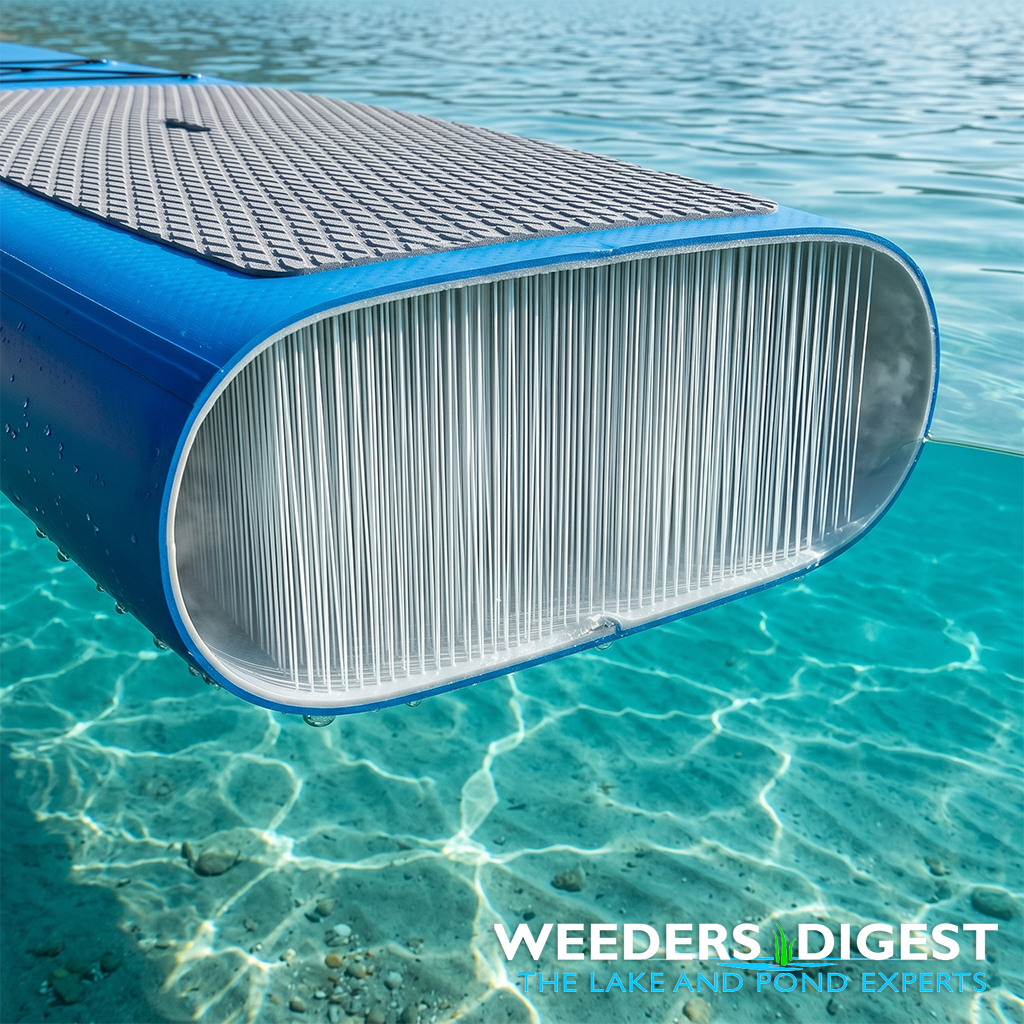
The secret to this stiffness isn't just the air pressure; it is a hidden internal structure that keeps the top and bottom of the board perfectly parallel. When you pump air into the board, you aren't just filling a balloon; you are tensioning thousands of tiny, high-strength threads that act like internal pillars. This creates a high-pressure environment where the board maintains a flat, stable profile rather than rounding out like a cigar.
I often tell people that the rigidity of their board is what transforms the experience from a struggle to a serene glide. Because the board doesn't flex or "taco" when you catch a wave or shift your weight, you get a much more efficient transfer of energy with every stroke. It’s a remarkable feat of engineering that makes the sport accessible to anyone with a car trunk and a bit of arm strength for the pump.
Knowing how your board works helps you appreciate the limits of its performance. By understanding that internal tension is the key, you can see why hitting that specific PSI (pounds per square inch) recommendation is so vital. It’s the difference between a high-performance aquatic platform and a floppy piece of plastic.
The Science Behind It:
The primary technology responsible for the structural integrity of inflatable stand-up paddleboards is known as drop-stitch construction. This method involves joining two layers of polyester fabric with tens of thousands of fine, high-tenacity polyester yarns. According to technical specifications found in textile engineering journals, these yarns are woven into the base layers in a way that allows them to reach a uniform, predetermined length when the internal cavity is pressurized. When air is introduced, these vertical threads are pulled taut, preventing the top and bottom surfaces from bowing outward. This allows the vessel to maintain a flat, hydrodynamic shape even under significant atmospheric pressure.
The rigidity of a drop-stitch structure is a function of internal pressure, typically ranging from 12 to 20 PSI. At these levels, the tensile stress applied to the internal threads creates a composite-like stiffness. The outer shell, often composed of reinforced Polyvinyl Chloride (PVC) or laminated Double Layer Light (DLL) materials, serves as a containment vessel. These materials are chosen for their high Young’s modulus, which measures a material's resistance to elastic deformation under load. By utilizing multi-layer lamination, manufacturers increase the longitudinal stiffness of the board, reducing the "deflection" or "flex" that occurs when a concentrated load—such as a human rider—is applied to the center of the span.
From a fluid mechanics perspective, the maintenance of a flat "rocker" (the curve of the board) is essential for reducing drag. In cheaper inflatable structures without drop-stitch technology, the internal air pressure would naturally force the object into a cylindrical shape to minimize surface tension. However, the thousands of internal pillars in an iSUP counteract this force, distributing the load across the entire surface area. This ensures that the displacement of water remains consistent across the hull, providing the stability required for aquatic locomotion.
Furthermore, the integration of "stringers"—strips of high-tensile material bonded to the top and bottom—works in tandem with the drop-stitch core to enhance the board's "moment of inertia." This mechanical property relates to an object's resistance to bending. By increasing the thickness of the rails (the sides) and using heat-pressed seams, the board behaves as a singular, rigid beam. This synergy of high-pressure air and internal tensile reinforcement allows the board to support weights exceeding 300 pounds while maintaining a deflection rate comparable to solid epoxy boards.