

Navigating Late-Summer Fish Kills: Understanding Our Waters as Temperatures Peak
 |

Summary:
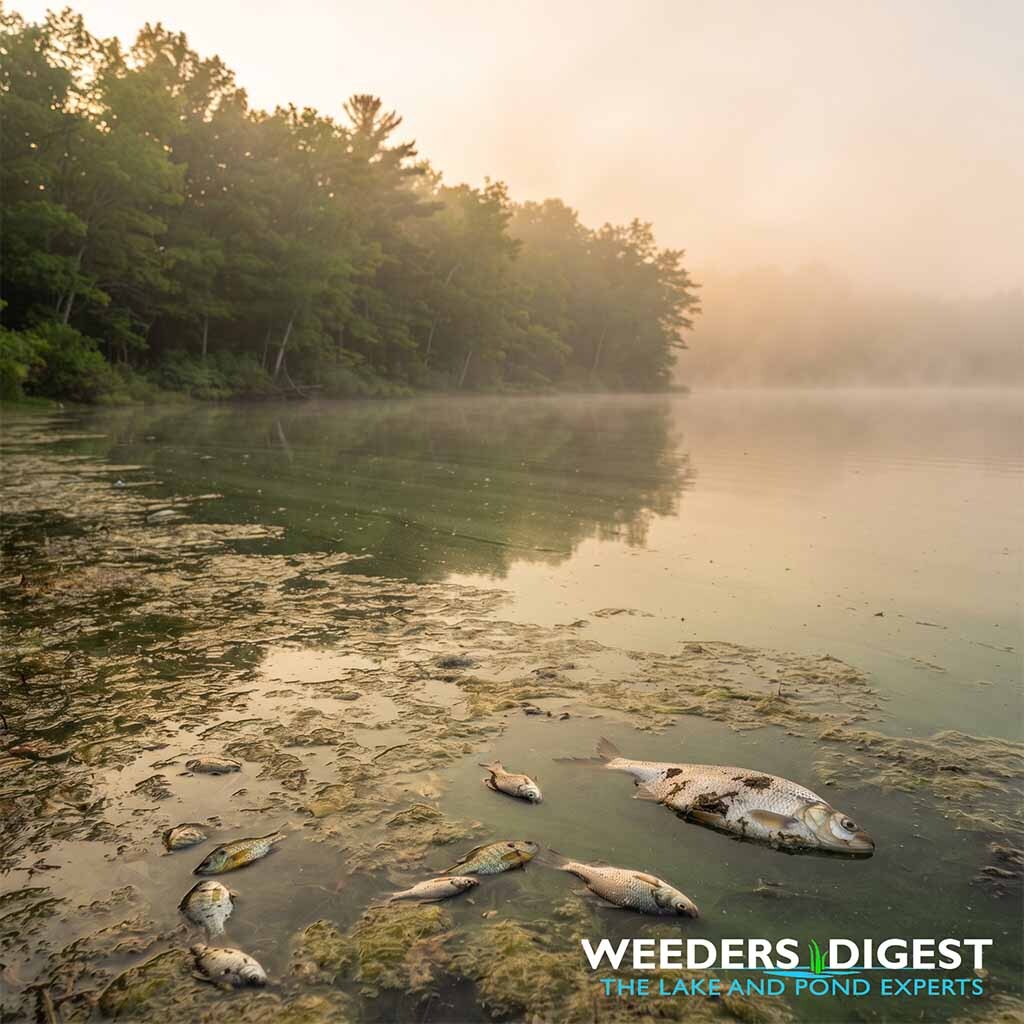
Late-summer fish kills are sudden mortality events driven primarily by severe drops in dissolved oxygen levels resulting from peak water temperatures, seasonal stratification, and high biological oxygen demand. When walking the shoreline during August, pond experts frequently encounter the distinct physical signs of these events, such as fish gasping near the surface or localized strandings, which signal acute environmental stress in the water column. As an aquatic research team, we recognize that late August represents a critical stress window for aquatic ecosystems. Prolonged atmospheric heat combined with dense biological activity creates an invisible squeeze on fish populations, making these sudden die-offs a frequent occurrence across stagnant or nutrient-rich water bodies.
The Science Behind It:
Late-August fish kills are governed by a well-documented convergence of physical and biological limnological processes. Throughout the summer months, lakes and ponds undergo thermal stratification, dividing the water column into a warm, oxygen-rich upper layer known as the epilimnion and a cold, dense, and oxygen-depleted lower layer known as the hypolimnion, separated by a transition zone called the thermocline (Ohio Woodland Stewards Program). Because warm water physically holds less dissolved oxygen than cold water, the maximum carrying capacity for oxygen drops significantly as summer temperatures peak (Noble Research Institute).
This natural limitation is exacerbated by high metabolic rates and respiration among aquatic plants, phytoplankton, and fish. While photosynthetic organisms produce oxygen during daylight hours, respiration by the entire biological community continues aggressively through the night. According to ecological monitoring data, aquatic systems frequently see dissolved oxygen levels plummet to critical thresholds just before dawn, with many game fish species facing acute distress when concentrations fall below the crucial threshold of 4.0 mg/L, while hypoxic zones drop below 2.0 mg/L (Fiveable Eutrophication Stages).
Compounding these daily fluctuations is the relentless accumulation of decomposing organic matter. As dead algae, plants, and animal detritus settle to the bottom of the lake or pond, aerobic bacteria consume vast quantities of dissolved oxygen to break down this material. During late August, hypolimnetic oxygen demand reaches its annual maximum (Fiveable Eutrophication Stages). When a sudden late-summer weather shift, cold rain, or high wind occurs, it can trigger premature lake turnover. This process violently mixes the toxic, oxygen-depleted bottom waters with the surface layer, causing an instantaneous crash in the total dissolved oxygen available across the entire water column and resulting in sudden fish mortality (Noble Research Institute).