

Protecting Your Lake: Why Preventative Aeration is the Key to Stopping Summer Algae Spikes
 |

Summary:
Preventative aeration is the process of actively dissolving oxygen into a lake's deep, bottom water layer (the hypolimnion) prior to summer warming to prevent the sediment from chemically releasing the massive nutrient loads that fuel severe algae blooms. During the spring, water temperatures are relatively uniform, allowing lakes to mix naturally from top to bottom. However, as the intense summer sun heats the surface, the water separates into distinct temperature layers. The cold, dense bottom layer quickly becomes trapped and sealed off from fresh atmospheric oxygen. Without preventative intervention, the natural decomposition of muck at the bottom rapidly consumes whatever oxygen remains, leaving the bottom layer suffocated.
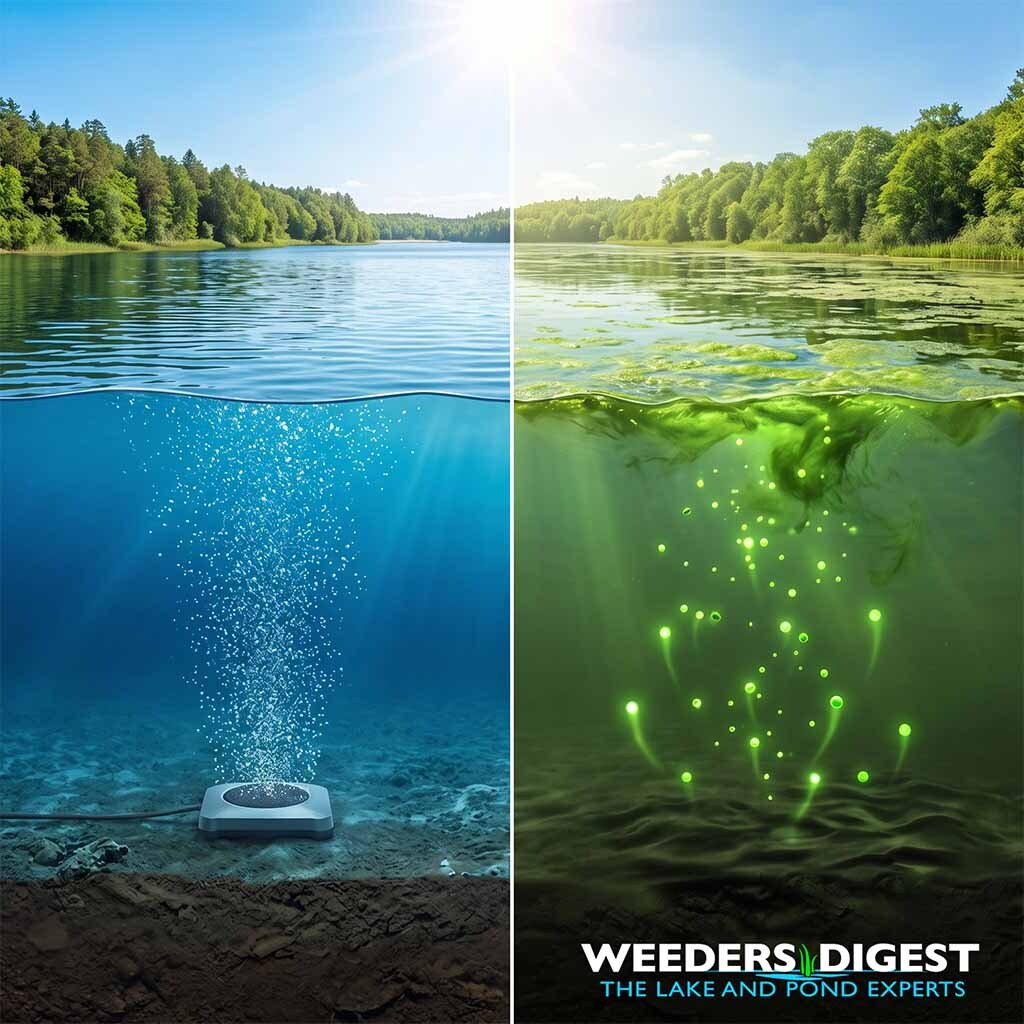
When a lake bottom runs out of oxygen, a chemical switch flips in the mud. Years of accumulated phosphorus and nitrogen—essentially aquatic fertilizer—are suddenly released from the sediment and dissolved into the water. By proactively running an aeration or oxygenation system early in the season, water resource managers keep the bottom sediments oxidized and healthy. This traps the nutrients safely in the mud, starving out the nuisance algae and invasive weeds that would otherwise explode in growth when the water peaks in temperature later in the summer.
As a Certified Lake Manager conducting routine dissolved oxygen profiling, a common field observation is the stark contrast between proactive and reactive lake management. Lakes that begin hypolimnetic aeration in early spring maintain clean, clear surfaces throughout the dog days of August. Conversely, waiting to turn on an aeration system until the first signs of a mid-July green water event often results in a massive setback. By that time, the bottom water has already become totally devoid of oxygen, and turning on a heavy mixing system simply churns that toxic, nutrient-rich bottom water up to the sunlit surface, instantly feeding the exact bloom the manager was desperately trying to stop.
The Science Behind It:
The mechanics of preventative aeration rely heavily on manipulating the physical and chemical properties of a waterbody during thermal stratification. Stratification occurs when a lake divides into distinct layers based on temperature and water density. The epilimnion, or warm surface layer, floats above the metalimnion (the transition zone or thermocline), while the hypolimnion constitutes the cold, dense, deep-water layer at the lake bottom. Because the thermocline acts as a physical barrier, the hypolimnion is entirely cut off from atmospheric oxygen exchange and wind-driven mixing. Consequently, the natural biological decomposition of organic matter on the lake bottom rapidly consumes the remaining dissolved oxygen, leading to a state of anoxia, or total oxygen depletion, at the sediment-water interface.
When the hypolimnion becomes anoxic, the redox potential of the benthic (bottom) environment drops significantly. Under these chemically reducing conditions, the chemical bonds holding nutrients in the sediment break down. Specifically, iron changes from an oxidized ferric state to a reduced ferrous state, releasing previously bound phosphate directly into the water column. This process, known as internal nutrient loading, is a massive driver of eutrophication. According to research published by the Lake Champlain Basin Program and Water Resources Research (Kirol et al., 2024), as much as 40% to 80% of total in-lake phosphorus during summer months originates from this internal loading. This massive nutrient flux disproportionately fuels cyanobacteria (blue-green algae) blooms when warm, stable surface conditions arise.
Preventative hypolimnetic aeration or oxygenation combats this phenomenon by mechanically injecting dissolved oxygen into the hypolimnion without disrupting the thermal stratification. By maintaining aerobic conditions at the sediment-water interface, the system ensures that redox-sensitive metals like iron remain oxidized. Oxidized iron actively binds to free phosphate, locking it within the sediment and preventing the nutrient from migrating upward into the photic zone where algae thrive. Intervening early prevents the initial drop in redox potential, effectively shutting down the internal loading mechanism before the seasonal cycle begins.
Furthermore, introducing oxygen early in the season addresses the intense biological oxygen demand generated by decomposing organic matter and reduced chemical compounds. Benthic fluxes of reduced substances, particularly ammonia, exert a tremendous, often underestimated drain on oxygen resources. A 2021 study published by Georgia Southern University on water supply reservoirs demonstrated that ammonia oxygen demand alone can represent 20% to over 100% of the calculated hypolimnetic oxygen demand. The researchers determined that to successfully satisfy this demand and prevent anaerobic conditions, oxygenation systems must often be designed to provide up to three times the baseline oxygen estimated from standard depletion curves.
Ultimately, early and properly sized aeration ensures that the dissolved oxygen saturation remains high enough to outpace this immense benthic consumption. When the hypolimnion remains thoroughly oxygenated throughout the entirety of the summer stratification period, the lake ecosystem avoids the catastrophic nutrient spikes that degrade water quality. The proactive application of this technology stabilizes the internal chemistry of the lake, protecting the aquatic habitat from severe biological disruptions.