

Protecting Your Pond: How Aquatic Dyes Actually Shade Out Benthic Algae
 |

Summary:
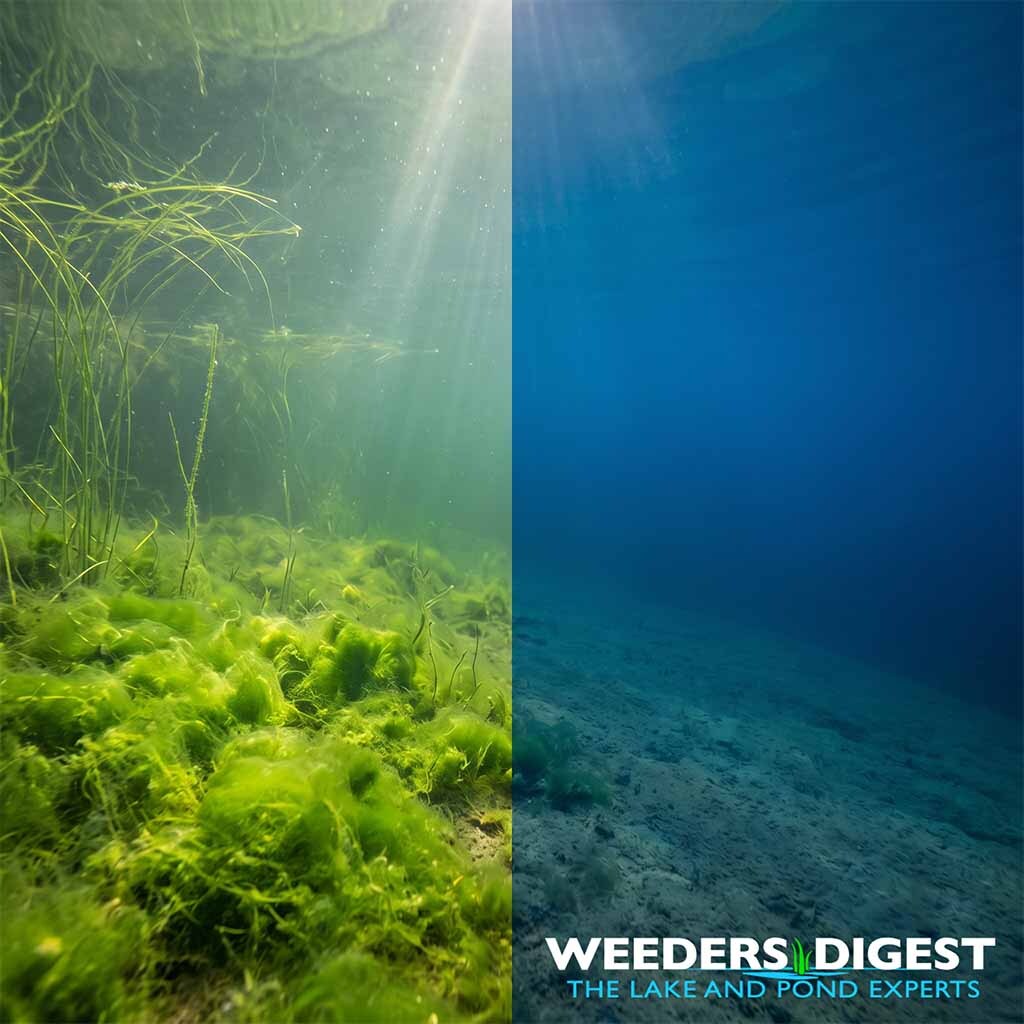
Aquatic dyes reduce benthic algae growth by acting like a pair of sunglasses for your pond, filtering out the specific sunlight wavelengths that algae need to photosynthesize and thrive on the pond floor. When applied correctly before an algae bloom begins, these dyes tint the water and significantly limit sunlight penetration, halting the rapid spread of bottom-dwelling growth. While many pond owners think of dye purely as a cosmetic upgrade to give water a rich blue hue, its primary function in pond management is shading out the aquatic equivalent of weeds. In my experience as a Certified Lake Manager, I have walked the shoreline of hundreds of ponds where owners are frustrated by late-summer algae mats; the ponds that stay consistently clear are almost always the ones where dye was proactively poured in early spring, creating a light-blocking barrier before the water even had a chance to warm up. Ultimately, by cutting off the energy source before the algae can establish a strong hold, you are safely managing your waterbody's ecosystem from the bottom up without relying entirely on harsh chemical interventions.
The Science Behind It:
Benthic algae—which includes both macroalgae like Chara and various filamentous green algae—colonizes the substrate (bottom) of lentic (still water) ecosystems. Unlike planktonic algae that float freely in the water column, benthic species rely on sunlight penetrating the entire water column to reach the pond floor. Photosynthesis in these organisms is driven by Photosynthetically Active Radiation (PAR), a specific band of the electromagnetic spectrum ranging from 400 to 700 nanometers. Chlorophyll, the primary pigment responsible for photosynthesis, does not absorb all light equally; it specifically requires the red-orange (around 650-700 nanometers) and blue-violet (around 400-450 nanometers) wavelengths to convert light energy into chemical energy.
Aquatic dyes function as light-attenuating agents by physically filtering these exact critical wavelengths. Most commercial pond dyes consist of a blend of food-grade colorants, such as Acid Blue 9 and Acid Yellow 23. When dispersed throughout a waterbody, these compounds selectively absorb the red-orange and blue-violet light rays before they can reach the benthic zone. By disrupting the availability of PAR at the substrate level, the dye severely limits the photosynthetic capacity of developing algae, forcing a metabolic deficit that prevents germination and widespread colonization.
Empirical data from limnological studies underscores the efficacy and spatial limitations of this shading technique. Research synthesized by the Interstate Technology and Regulatory Council (ITRC) and university aquatic extension programs indicates that light-attenuating dyes are highly effective only at depths of two feet or greater. In the littoral zone (the shallow, near-shore area) where the water is less than 24 inches deep, sufficient PAR can still penetrate the tinted water column to support benthic photosynthesis, rendering the dye largely ineffective in these margins. Therefore, morphometry—the shape and depth profile of the lake or pond—plays a crucial role in predicting treatment success.
Application rates and subsequent biomass reductions further quantify the ecological impact of aquatic dyes. Standard application rates for commercial aquaculture and recreational ponds are typically around 1 part per million (ppm), which equates to roughly one gallon of dye per four acre-feet of water. According to mesocosm research evaluating chemical algae management strategies, applying dye at slightly elevated concentrations of 1.5 ppm can decrease the aquatic photic depth by 50 percent and subsequently reduce phytoplankton and periphyton biomass by up to 60 percent. This substantial quantitative reduction highlights how manipulating light availability acts as a primary regulatory mechanism in aquatic plant management.