

Securing Your Waterway: How to Create an "Invasion Defensible Space" Around Your Marina
 |

Summary:
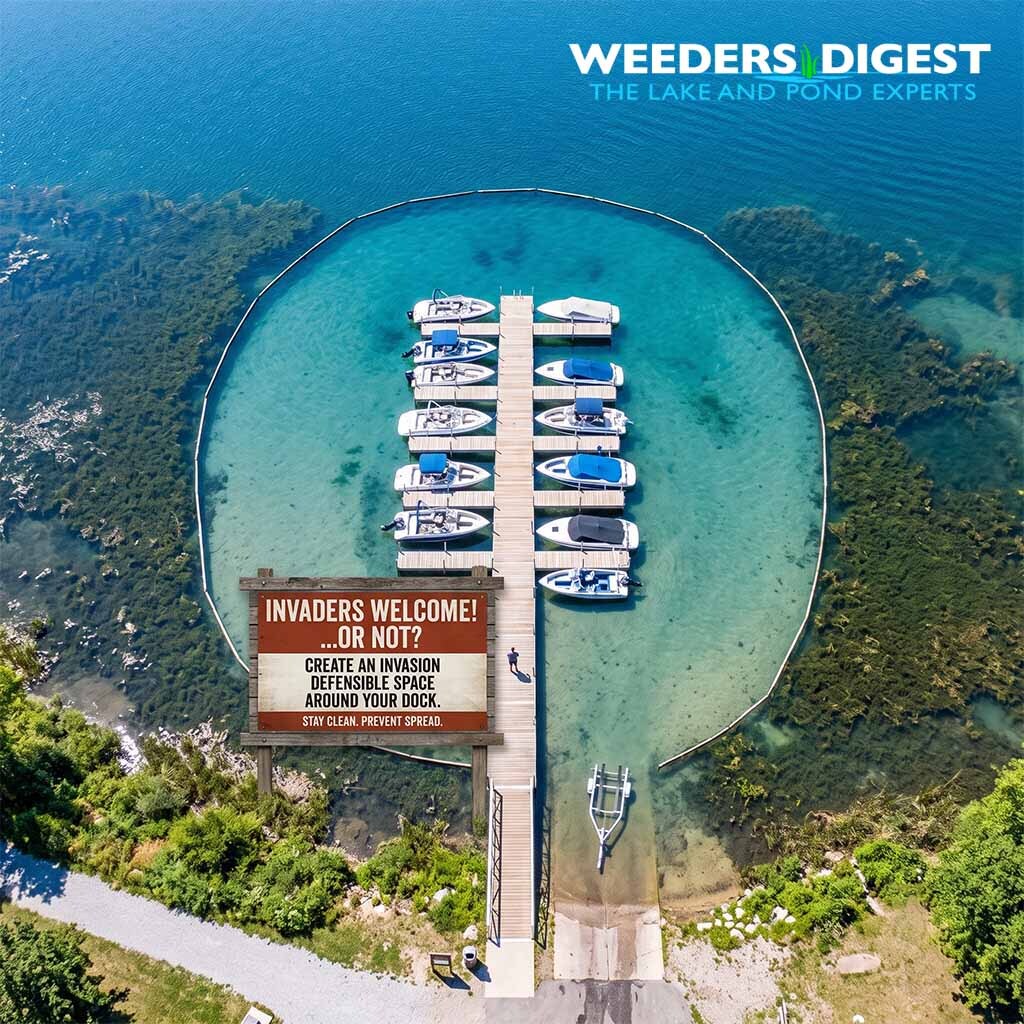
Creating an "invasion defensible space" around your marina or boat dock means establishing a highly managed, weed-free buffer zone that prevents aquatic invasive species from attaching to vessels and spreading to new waters. By maintaining a physical barrier of clear water, boat propellers and trailers are significantly less likely to slice through weeds or harbor hitchhiking organisms. We view this localized containment approach as the essential frontline defense for preserving the broader ecological health of a lake or river system. In our field work monitoring high-traffic public boat launches, we consistently observe that maintaining just a 50-foot clear zone around a dock drastically reduces the volume of plant fragments snagged on departing boat trailers, effectively severing the primary transportation route for these biological threats. Sustaining this buffer requires consistent observation and the immediate removal of unwanted organic material before it can establish a deep root system. Ultimately, proactive management of the immediate dock area safeguards the surrounding aquatic ecosystem from aggressive, fast-growing invaders while keeping the waterway accessible and clean.
The Science Behind It:
The concept of an invasion defensible space relies on interrupting the mechanical vectors of transmission for aquatic invasive species (AIS). Recreational boats, trailers, and maritime equipment act as the primary overland dispersal mechanisms for invasive flora, such as Eurasian watermilfoil (Myriophyllum spicatum), and fauna, like zebra mussels (Dreissena polymorpha). When watercraft operate in heavily vegetated dock areas, propellers churn through the aquatic canopy and induce vegetative fragmentation. This biological process allows a single severed plant stem to drift, generate adventitious roots, and establish an entirely new colony elsewhere. By creating a physical void of vegetation around a marina, the opportunity for this mechanical fragmentation and subsequent attachment to watercraft is severely diminished.
The quantitative impact of these localized transmission hubs is staggering if left unmanaged. According to data published by the New England Interstate Water Pollution Control Commission, aquatic invasive species management and prevention costs the United States an estimated $120 billion annually. Furthermore, the exponential growth rate of these organisms underscores the critical need for a defensible space at the launch point. Research tracking the spread of hydrilla within the Connecticut River system demonstrated that the invasive plant expanded to cover more than 774 acres in merely three years following its initial detection. Establishing a strict buffer zone at the marina level acts as a direct, scalable mitigation strategy against this rapid proliferation.
Maintaining a defensible space also involves altering localized limnological conditions to make the immediate benthic zone—the lowest level of a body of water, including the sediment surface—less hospitable to invasive colonization. Marinas often experience nutrient loading from runoff and altered water circulation, creating ideal microhabitats for invasive aquatic macrophytes (large aquatic plants). By actively clearing this zone, lake experts disrupt the accumulation of nutrient-rich detritus on the lake floor. This reduction in decaying organic sediment lowers the localized nutrient availability, thereby stunting the aggressive growth cycles that invasive species rely on to outcompete native aquatic flora.
Beyond macroscopic plant fragments, an invasion defensible space also addresses the microscopic transport of invasive bivalve larvae, known as veligers. When a dock area is choked with invasive weeds and hard-shelled organisms, the ambient water drawn into a boat's ballast, bilge, or live-well is highly concentrated with these microscopic threats. A managed, clear zone featuring deeper, well-circulated water dilutes the concentration of veligers in the immediate vicinity of boat intakes. Consequently, the statistical probability of a vessel drawing in and subsequently transporting a viable population of invasive larvae to an uninfected waterbody is substantially reduced.