

The Future of Your Waterfront: My Take on Biodegradable Benthic Barriers
 |

Summary:
Biodegradable benthic barriers are an innovative, sustainable solution for managing invasive aquatic weeds by providing a natural, temporary alternative to traditional plastic sheeting. By utilizing materials like jute or coconut fiber, these barriers effectively block sunlight from reaching the lakebed—thereby suppressing weed growth—while allowing the fabric to decompose naturally over time, which eliminates the need for manual retrieval and reduces long-term site disturbance.
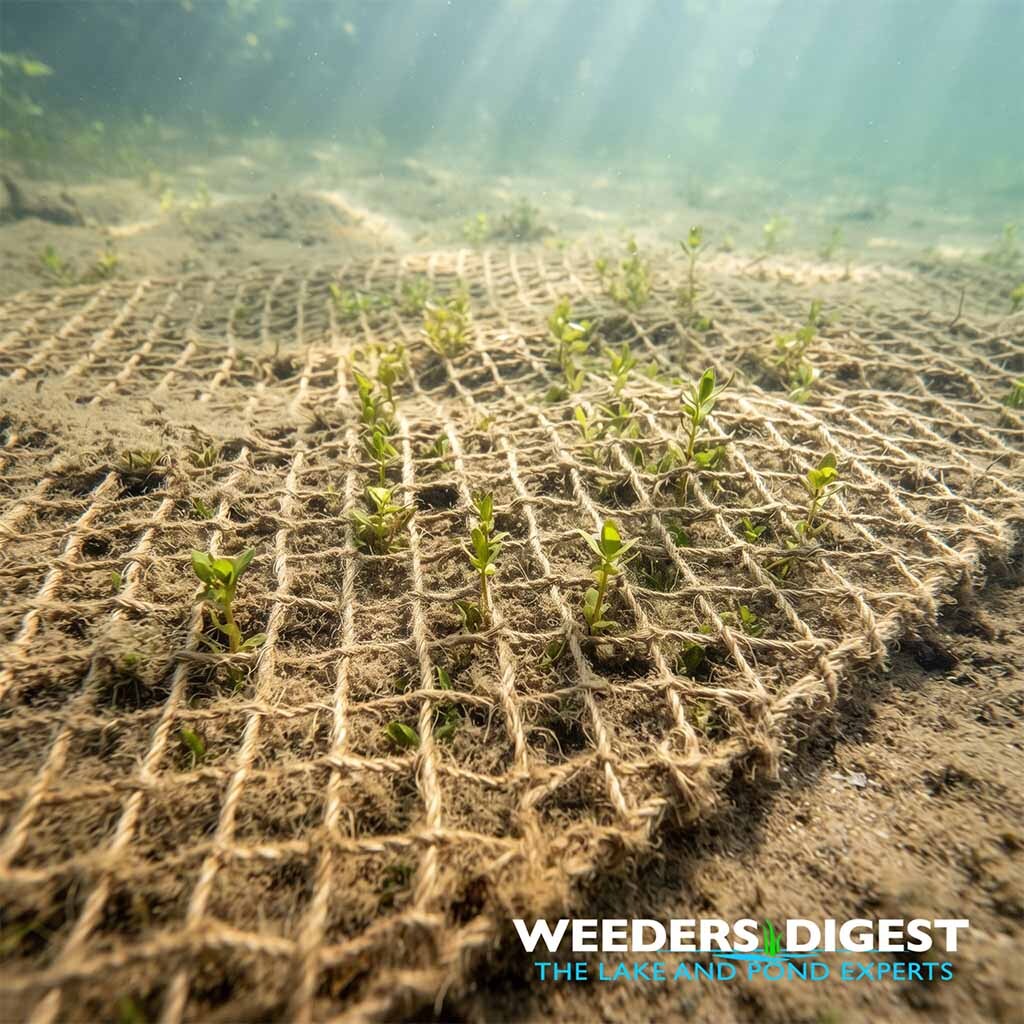
In my years working as a lake manager, I’ve often seen homeowners struggle with the logistics of heavy plastic liners, which are difficult to anchor and can create localized "dead zones" if left too long. Transitioning to permeable, organic materials has been a game-changer. I’ve observed firsthand how these mats allow for a more natural transition in the littoral zone; instead of creating a stark void, they often act as a substrate that eventually fosters the recruitment of native charophytes, helping to restore the ecological balance of the shoreline.
The Science Behind It:
Benthic barriers function primarily through the mechanism of light exclusion, effectively starving submerged macrophytes of the solar energy required for photosynthesis. While conventional impermeable synthetic liners (such as plastic sheeting) have been the industry standard for decades, they present significant operational challenges, including difficulty in deployment, anchoring, and the necessity of recovery to avoid environmental degradation. Research indicates that while short-duration placement of four weeks can reduce Eurasian watermilfoil biomass by 75%, longer durations are often required to achieve complete control, which can subsequently suppress native plant biomass by 79% to 93% if the barrier is not managed appropriately (Three Lakes Association, 2008).
The introduction of permeable, biodegradable barriers, such as jute matting, addresses many of these shortcomings by facilitating gas exchange between the benthos and the water column, a process inhibited by non-porous plastics. Studies have demonstrated that jute matting can comprehensively eradicate invasive macrophytes like Lagarosiphon major while simultaneously supporting the growth of native species. In field trials, researchers recorded eight indigenous plant species, including four charophytes and four angiosperms, growing directly through the open weave of the jute fabric (Caffrey et al., 2010).
Ecological integrity is further maintained through the natural decomposition process of these materials. Unlike synthetic barriers that may become colonized by sediment and facilitate the re-establishment of invasive species if left unchecked, biodegradable barriers are designed to integrate into the ecosystem. Observations show that these materials typically maintain their structural integrity for 10 to 17 months before disintegrating, a timeframe that allows for targeted weed suppression and subsequent ecological recovery without requiring intensive mechanical retrieval that could otherwise disrupt established benthic macroinvertebrate communities.
The selection of a barrier—specifically regarding density and permeability—is critical to successful management. Research comparing hessian and coconut fiber products indicates a trend toward reduced plant emergence with increasing product density, though native charophytes often show better recruitment success in these controlled environments compared to more aggressive invasive species. By utilizing these materials, managers can achieve a selective level of control that balances the need for immediate weed suppression with the long-term goal of fostering a diverse, healthy littoral habitat.
Sources / References:
- Caffrey, J.M., et al. (2010). A novel approach to aquatic weed control and habitat restoration using biodegradable jute matting. ResearchGate.
- Three Lakes Association (2008). Efficacy of Benthic Barriers as a Control Measure for Eurasian Watermilfoil.
- Aquatic Plant Management Society (2014). Assessment of benthic barrier products for submerged aquatic weed control.