

The Ripple Effect: How My Management of Submerged Weeds Impacts Your Local Waterfowl
 |

Summary:
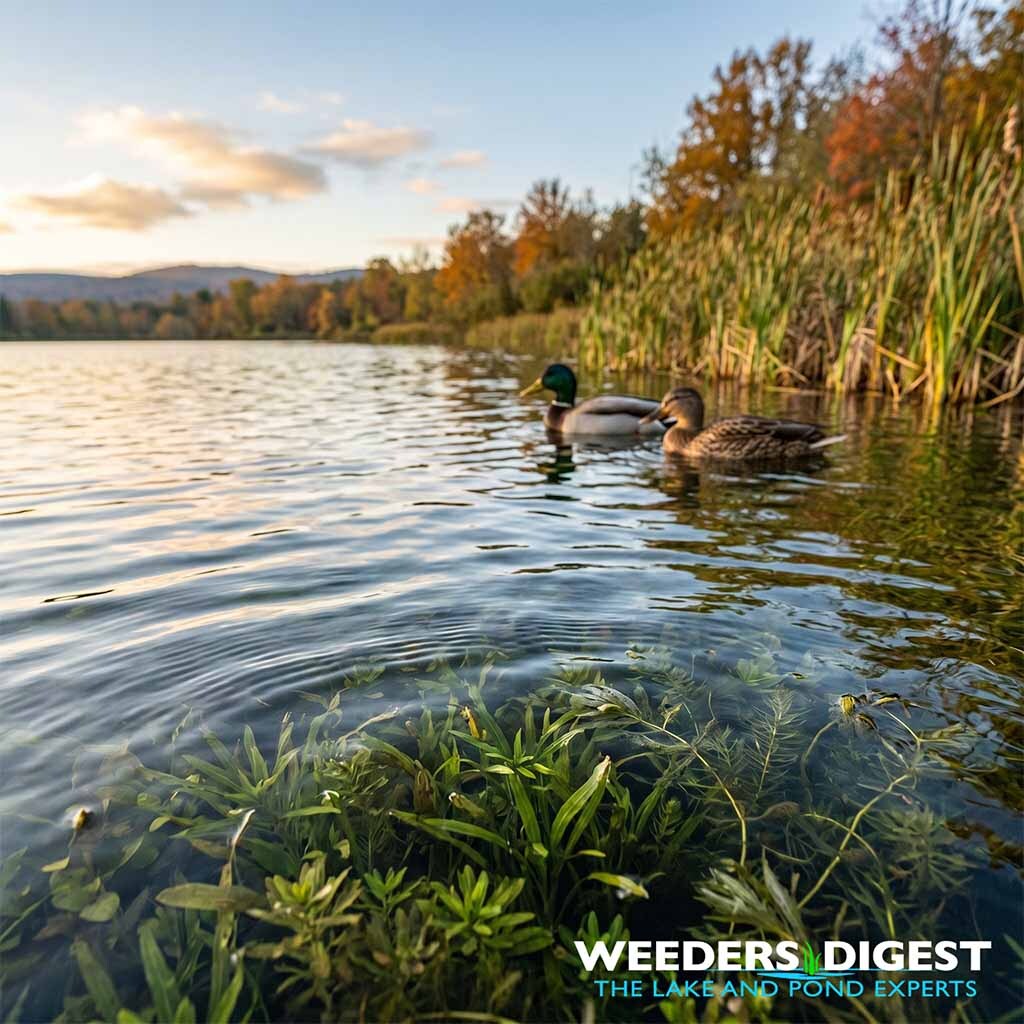
Removing submerged aquatic vegetation from your lake or pond can significantly alter the local waterfowl habitat by reducing both immediate food availability and the vital invertebrate populations that ducks rely on for survival. Submerged aquatic plants serve as an underwater buffet, providing seeds, starchy rhizomes, and foliage that dabbling ducks need for carbohydrates and warmth, especially during the fall and winter months. When you clear these plants, you aren't just removing greenery; you are effectively thinning the "pantry" that sustains migratory birds throughout their demanding seasonal cycles.
In my experience as a lake manager, I’ve often seen homeowners focus strictly on the aesthetic clarity of their shoreline, only to realize later that the local duck population has moved to a different basin. While a clear swimming area is a common goal, it is crucial to recognize that waterfowl are highly selective foragers. They gravitate toward diverse, complex plant communities because those areas host the highest density of macroinvertebrates—the protein-rich insects and crustaceans necessary for feather production and breeding success. By maintaining a balance of native vegetation rather than total removal, you can keep your water healthy while continuing to support the waterfowl that visit your property.
The Science Behind It:
The ecological relationship between waterfowl and submerged aquatic vegetation (SAV) is driven primarily by energetic requirements. Research indicates that dabbling ducks, such as mallards, rely on SAV for both direct consumption and as a substrate for aquatic invertebrates. According to studies conducted by the Forbes Biological Station, the True Metabolizable Energy (TME) available to mallards within various SAV species averages approximately 0.68 kcal/g. While this is lower than the 1.78 kcal/g found in many moist-soil seeds, the sheer abundance and year-round availability of SAV make it a fundamental component of waterfowl diet during migration and wintering periods.
The structural complexity of native SAV communities is another critical factor in ecosystem health. Dense, native plant beds function as a primary habitat for small invertebrates, which serve as essential protein sources for waterfowl. NOAA Fisheries notes that a single acre of high-quality SAV can support up to 50 million small invertebrates. When native vegetation is removed or replaced by invasive monocultures, this support system collapses, leading to a decrease in the carrying capacity of the wetland. The loss of this architectural structure effectively removes the "canopy" where fish and invertebrates hide and forage, forcing waterfowl to expend more energy searching for food in less optimal locations.
Furthermore, the impact of vegetation density is non-linear. Waterfowl, particularly during the breeding season, prefer an "interspersion" of cover and open water. Research confirms that while dense, uniform stands of invasive emergent weeds can be detrimental, completely denuding a lake of all submerged growth eliminates the essential refugia that protects waterfowl from predators and provides the specific nutritional resources they require to maintain body condition. Effective management often involves fostering a mosaic of native species, which research shows provides a more reliable source of energy than reliance on a single, homogenous food source.
Ultimately, the decision to manage aquatic weeds has cascading consequences for the entire food web. Because SAV acts as both a carbon sink and a nutrient-cycling engine, its presence supports water quality, which in turn benefits the entire avian community. Strategic management that preserves native plant diversity while controlling invasive growth is the most effective approach for maintaining both your property's utility and the ecological vitality required to sustain visiting waterfowl.