

Unlocking Maximum Herbicide Efficiency: How Surfactants Help Your Treatments Penetrate Waxy Weed Cuticles
 |

Summary:
Surfactants are essential additives that significantly improve the performance of aquatic herbicides by breaking down the natural waxy barrier on plant leaves, allowing the treatment to effectively penetrate and control the weeds. Without a surfactant, many herbicide droplets simply bead up and roll off the surface of floating or emergent aquatic plants due to the high surface tension of water, rendering the treatment largely ineffective. By lowering this surface tension, the surfactant ensures the herbicide spreads evenly across the leaf surface and sticks, which is crucial for achieving consistent, reliable control of dense weed populations.
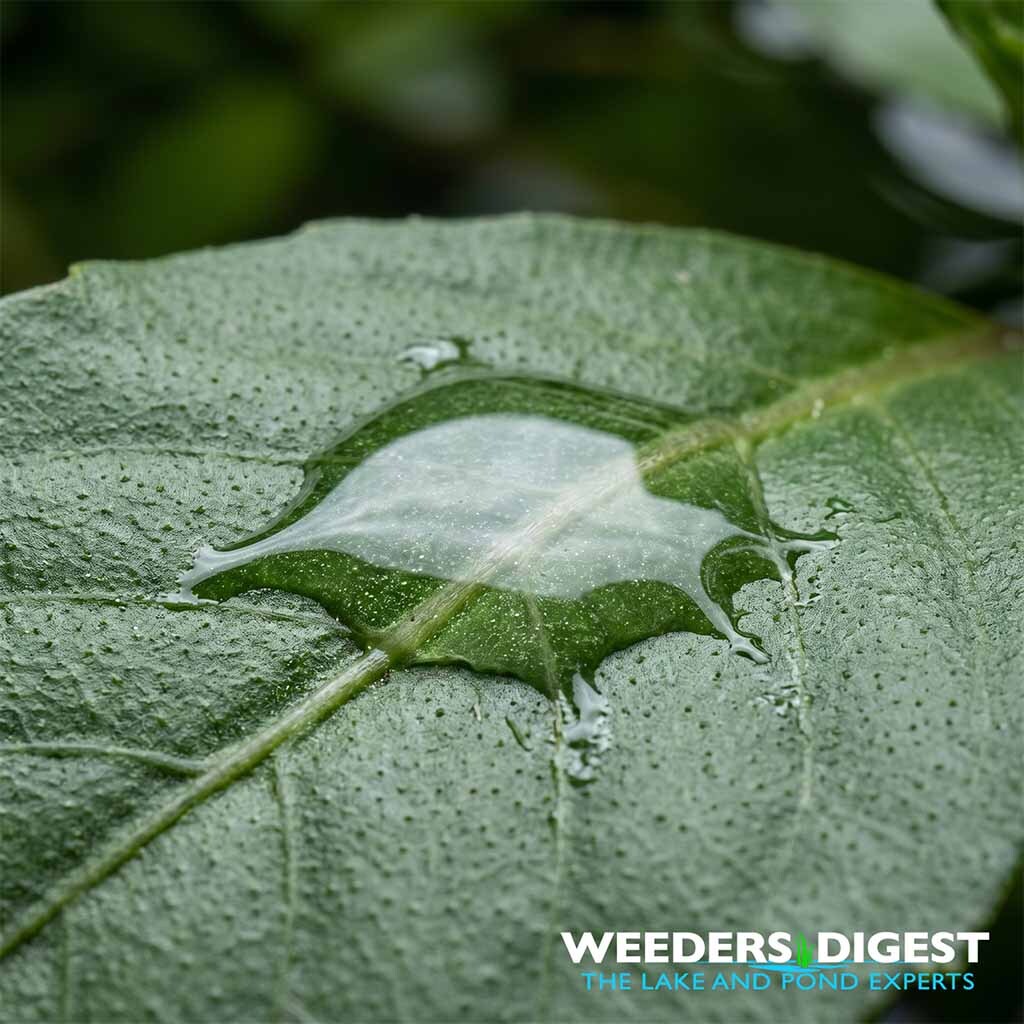
In my years of managing complex lake ecosystems, I have frequently observed that the difference between a successful treatment and a wasted application often comes down to the choice of adjuvant. I recall a site visit where a client had attempted to treat a stubborn infestation of water primrose with a systemic herbicide alone. Despite multiple applications, the weeds remained vibrant and unaffected. Upon closer inspection, the leaves were covered in a thick, waxy epicuticular layer that caused the herbicide to bead up and run off immediately. After we incorporated an appropriate non-ionic surfactant into the tank mix, the liquid was finally able to "wet" the foliage and penetrate the leaf cuticle, resulting in a total collapse of the weed mat within two weeks.
The Science Behind It:
The primary function of a surfactant is to reduce the surface tension at the interface between a liquid (the herbicide solution) and a solid (the plant cuticle). Most aquatic weeds, especially those with emergent or floating leaves, possess a waxy, hydrophobic layer known as the epicuticular wax. This layer is an evolutionary adaptation designed to protect the plant from desiccation and pathogen entry, but it also creates a significant obstacle for herbicide uptake. When a water-based herbicide droplet lands on this surface, the high cohesive forces of the water molecules cause the droplet to remain spherical, minimizing the contact area with the leaf.
Surfactants, or "surface-active agents," possess an amphiphilic molecular structure, meaning they contain both a hydrophilic (water-attracting) head and a hydrophobic (water-repelling) tail. When added to a spray solution, these molecules orient themselves at the air-water interface. As noted in research published in Weed Technology, surfactants with a high Hydrophile/Lipophile Balance (HLB) improve the water-holding capacity of the cuticle, which facilitates the diffusion of hydrophilic herbicides. Conversely, surfactants with a low HLB act by increasing the fluidity of the leaf waxes, which assists in the absorption of lipophilic (oil-loving) herbicides.
The efficacy of these treatments is quantitatively linked to the contact angle of the spray droplet on the leaf surface. A lower contact angle indicates greater spreading and wetting. Studies have demonstrated that integrating the correct adjuvant can increase the herbicide efficacy of active ingredients by up to 50% compared to using herbicides alone. This improvement is not merely a product of better coverage; the surfactant also facilitates the actual movement of the active herbicide molecules across the plant's cell membrane, ensuring the systemic action required to kill the plant from the roots up.
Furthermore, the choice of surfactant must be matched to both the herbicide's chemical properties and the environmental conditions. Under extreme temperatures, plants may harden their cuticles to survive, reducing the rate of chemical uptake. In these instances, high surfactant oil concentrates—which contain significant oil fractions—are often more effective at softening these wax layers than standard non-ionic surfactants. By properly selecting the adjuvant, lake managers can maximize the diffusion rate of the herbicide, ensuring that even under challenging field conditions, the treatment reaches its target site within the plant tissues.