

Unlocking the Seasonal Shift: How Our Native Frog Populations Prepare for the Fall Transition
 |

Summary:
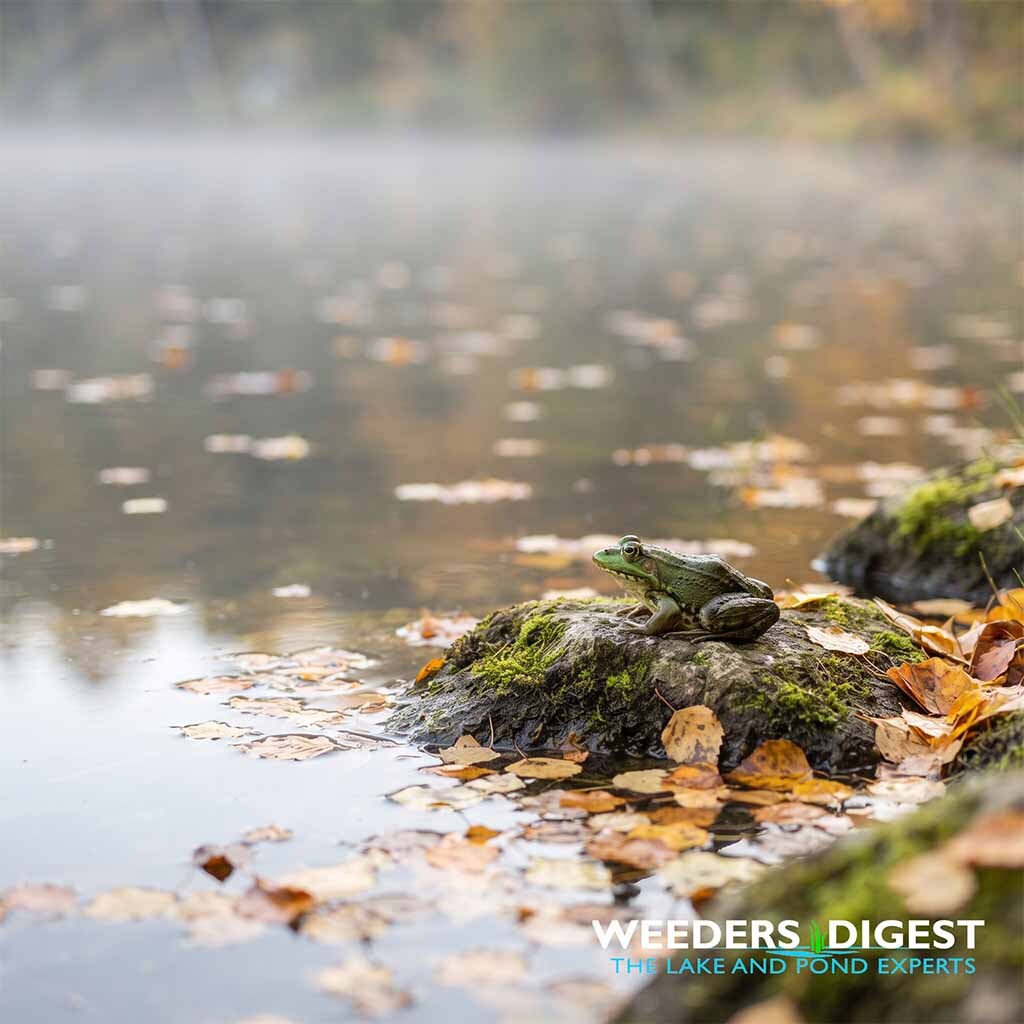
As we transition into fall, frog populations undergo a remarkable physiological and behavioral shift, moving from active summer feeding grounds to protected overwintering sites to survive the cold months ahead. We observe that as ambient air and water temperatures steadily drop, ectothermic species—commonly known as cold-blooded animals—drastically slow their metabolisms, cease active foraging, and seek out thermal refuges. When conducting late-season shoreline assessments, pond experts frequently notice a sudden absence of surface activity as frogs transition away from open water banks and burrow into deep mud or terrestrial leaf litter. This seasonal bottleneck requires a precise balance of energy conservation and physiological adaptation to endure sub-optimal conditions.
The Science Behind It:
The physiological transition of amphibians during autumn is governed by thermodynamic constraints and metabolic suppression. Because frogs are ectotherms, their internal body temperatures fluctuate directly with ambient environmental conditions, dictating a complete overhaul of their routine biological processes as autumn progresses. Research tracking overwintering behaviors in temperate aquatic and semi-aquatic species demonstrates that movement rates decline precipitously as water temperatures fall below critical thermal thresholds. For instance, field telemetry studies on cold-region ranid populations reveal that movement patterns drop to near-zero as autumn progresses into winter, with individuals clustering tightly in submerged microhabitats such as rock crevices, undercut banks, or deep pool substrates.
As the photoperiod shortens and temperatures decline, aquatic species like the American bullfrog (Lithobates catesbeianus) migrate from shallow littoral zones into the deeper, more thermally stable benthic zones of ponds and lakes. In these submerged environments, water temperatures typically stabilize around 4°C, preventing complete freezing while remaining cold enough to suppress metabolic demand. Aquatic overwinterers rely entirely on cutaneous respiration, absorbing dissolved oxygen directly through their highly vascularized skin from the surrounding water column, circumventing the need for pulmonary ventilation while dormant.
In contrast, terrestrial or semi-aquatic species—such as wood frogs (Rana sylvatica) and spring peepers (Hyla crucifer)—adopt a terrestrial freeze-tolerance strategy rather than seeking deep aquatic refugia. Scientific analyses of freeze-tolerant anurans indicate that as ice crystal formation initiates in extracellular fluids during sudden autumn frosts, hepatic glycogen is rapidly converted into massive quantities of glucose or glycerol. This internally synthesized cryoprotectant acts as a biological antifreeze, lowering the freezing point of intracellular water, preventing cellular dehydration, and protecting vital organs while up to 65% of the total body water freezes solid.
Energy budgeting during this seasonal transition is critical for long-term population viability. Research examining physiological responses to environmental variability indicates that unseasonably warm autumn or winter days impose severe metabolic costs, driving up daily energy expenditure and prematurely depleting vital lipid and glycogen reserves stored in fat bodies. When energy reserves are drained prior to true dormancy, overall post-winter survival rates plummet. Consequently, a gradual, uninterrupted temperature drop in autumn is ecologically essential, allowing populations to transition safely into metabolic stasis and safeguard regional biodiversity for the following spring.
Sources / References:
- Loudoun Wildlife Conservancy - Ectotherms in Winter: How Do Reptiles and Amphibians Survive? (https://loudounwildlife.org/2019/11/ectotherms-in-winter-how-do-reptiles-and-amphibians-survive/)
- Springer Open / Research Gate - Overwinter behavior, movement, and survival in a recently reintroduced, endangered amphibian, Rana muscosa (https://www.researchgate.net/publication/355509463_Overwinter_behavior_movement_and_survival_in_a_recently_reintroduced_endangered_amphibian_Rana_muscosa)
- PMC National Institutes of Health - Physiological responses to a changing winter climate in an early spring-breeding amphibian (https://pmc.ncbi.nlm.nih.gov/articles/PMC11267634/)