

Unlocking the Secrets: How Our Local Muskrats Prepare for the Changing Seasons
 |

Summary:
Muskrats adapt to changing seasons by shifting from open-water foragers to methodical architects that construct insulated dome lodges and sub-ice feeding stations to survive freezing conditions. As pond experts, we frequently observe these semi-aquatic rodents modifying their daily routines and territorial boundaries as water temperatures drop and autumn gives way to winter. Rather than hibernating, muskrats rely on continuous underwater foraging and specialized structures to maintain core body temperatures and evade terrestrial predators when ice blankets our local lakes and ponds.
The Science Behind It:
The seasonal ecology of the muskrat (Ondatra zibethicus) involves intricate behavioral modifications and physiological adaptations designed to combat declining water and air temperatures. As daylight hours shorten, muskrats transition from their expansive summer home ranges to localized winter territories. Research indicates that muskrats can remain submerged beneath surface ice for extended periods, routinely tolerating dive durations between 12 to 17 minutes. This exceptional capability is supported by physiological mechanisms featuring a reduced sensitivity to carbon dioxide accumulation in the bloodstream, which facilitates prolonged foraging beneath frozen littoral zones.
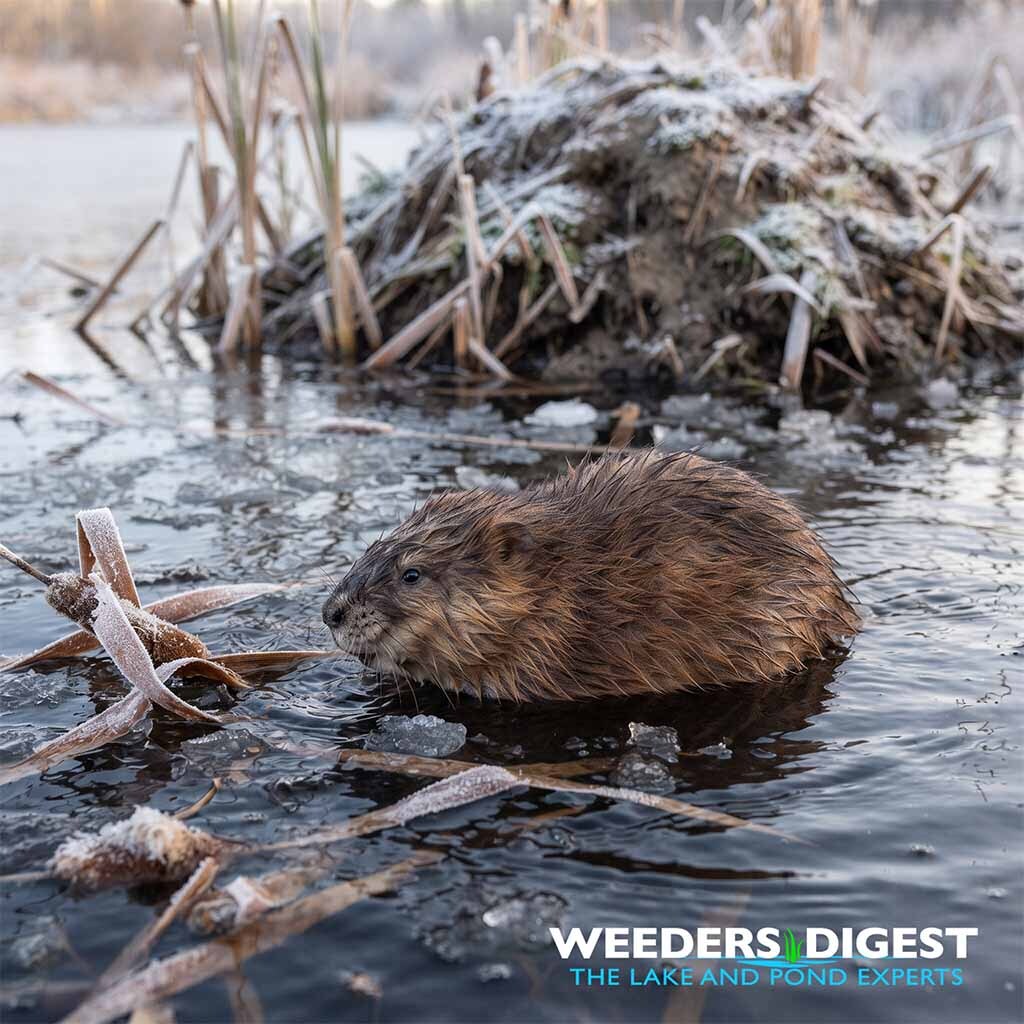
To withstand harsh winter conditions, muskrats construct complex multi-chambered lodges out of aquatic macrophytes, such as cattails and reeds, bound together with mud. In marsh environments, these structures reach heights of up to 90 centimeters, providing crucial thermal refuge against sub-zero ambient air temperatures. Field studies tracking overwinter survival estimate baseline survival rates around 0.59, highlighting that lodge integrity and stable winter water levels are primary determinants of population persistence through the coldest months. Furthermore, snow accumulation plays a significant protective role by insulating these lodges and reducing conductive heat loss.
Dietary habits also undergo a distinct seasonal shift. While warm-weather diets comprise a diverse array of green vegetation and opportunistic animal matter, winter foraging relies almost entirely on the roots, tubers, and basal stems of perennial aquatic plants accessed via sub-ice channels. Muskrats do not cache large food stores inside their main lodges for the winter; instead, they maintain active open-water breathing and feeding holes, meticulously plugging them daily with fresh vegetation to prevent total freezing while maintaining security from predatory mustelids such as the American mink (Neovison vison). Through these combined architectural and physiological adjustments, muskrats successfully navigate the ecological bottlenecks imposed by seasonal freezing cycles.
Sources / References:
- Animal Diversity Web, University of Michigan Museum of Zoology: Ondatra zibethicus (Muskrat) Information Archive [https://animaldiversity.org/accounts/Ondatra_zibethicus/].
- Wikipedia: Muskrat Ecological and Biological Overview [https://en.wikipedia.org/wiki/Muskrat].
- USGS / University of Nebraska-Lincoln Digital Commons: Ecology of an Isolated Muskrat Population During Regional Population Declines [https://digitalcommons.unl.edu/].