

Unlocking Your Fishery: How My Strategic Weed Slicing Creates Perfect Micro-Habitats
 |

Summary:
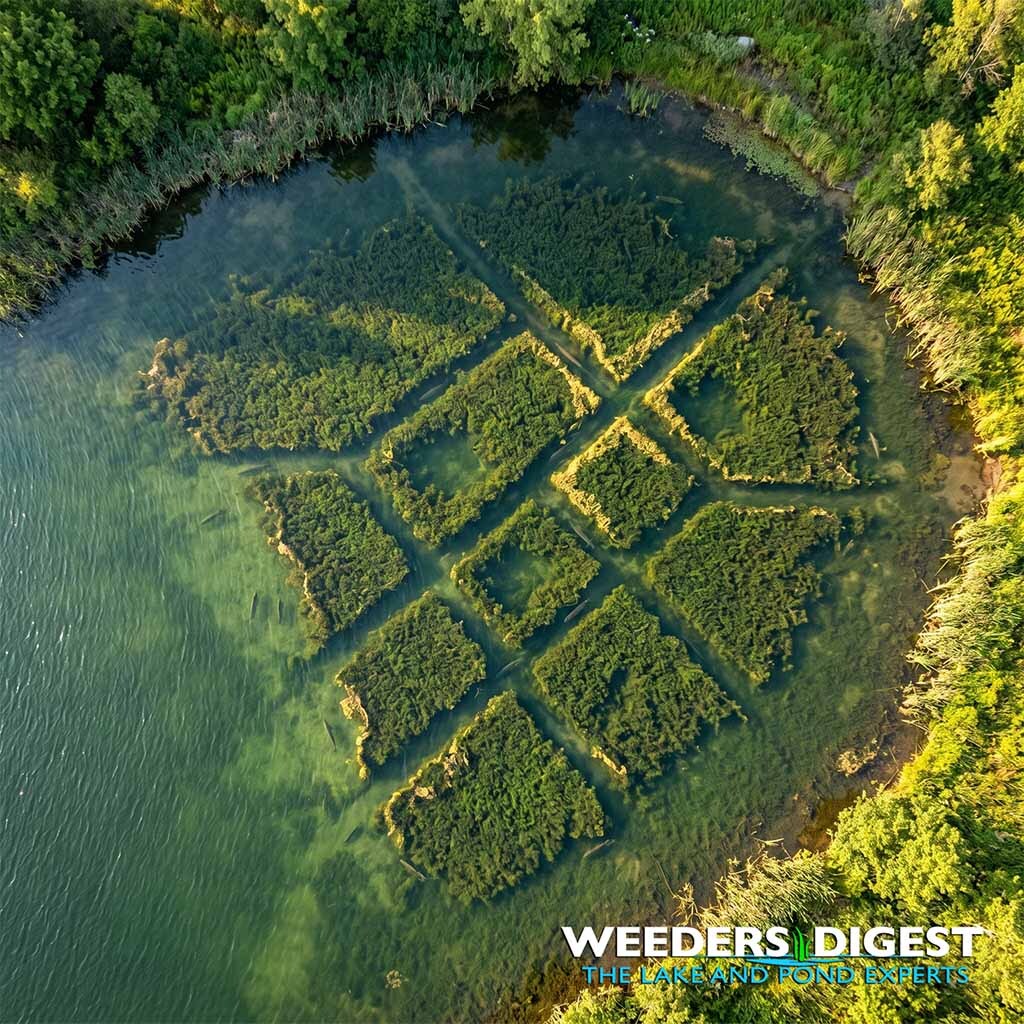
Strategic weed slicing is one of the most effective ways to boost the health of your fishery by transforming impenetrable, choked weed beds into a balanced environment of "edge habitat" that predatory fish thrive in. While an overgrown pond might look like a lush jungle, it often acts as a trap that prevents larger game fish from foraging effectively and can lead to stunted populations. By carving precise lanes or pockets through dense vegetation, you create high-traffic ambush points where predator fish—like bass—can wait for smaller prey, effectively turning an unproductive "green desert" into a dynamic hunting ground.
In my time as a Certified Lake Manager, I’ve often walked properties where the owner is frustrated by poor fishing despite having plenty of weeds. They treat the water like a lawn that needs to be mowed flat, which is a classic mistake. I always tell my clients that if you remove all the structure, you remove the nursery. Instead, I show them how to "slice" the weeds, leaving behind structure-rich corridors. When you create these transition zones, you’ll almost immediately see bigger fish patrolling the edges, because you’ve given them a tactical advantage they didn't have before.
The Science Behind It:
Aquatic vegetation is the foundation of a healthy freshwater ecosystem, acting as both a nursery for juvenile fish and a primary source of oxygenation. However, the relationship between plant density and fish population structure is highly nuanced. Research from the Journal of Applied Ecology (2026) highlights that habitat characteristics are primary drivers of fish recruitment; specifically, fish recruitment is approximately 295% higher in areas with dense (~80%) shoot cover compared to sparse (~20%) cover. While density is beneficial for survival, excessive, uniform growth—often caused by invasive species—creates a "closed" system where larger predators struggle to navigate, leading to stunted fish populations and poor growth rates.
Ecologically, the value of vegetation lies in the creation of "micro-habitats." These are small, localized environments that differ significantly from the surrounding area. According to a study conducted in the Pentwater Marshes, vegetated shallows can hold 10 to 100 times as many young fish as weed-free areas, with densities reaching up to 800,000 fish per acre in high-quality habitats. By utilizing mechanical weed slicing to create paths, a manager disrupts the uniformity of the plant bed. This creates an "edge effect," where the interface between the open water and the remaining vegetation serves as a high-density foraging zone.
These sliced lanes allow for optimal predator-prey dynamics. Predators like largemouth bass are visual hunters that require maneuverable water to strike; they cannot effectively forage in the center of thick, monolithic weed mats. By maintaining a mosaic of vegetation, you maximize the surface area for macroinvertebrates—the essential food source for smaller fish—while simultaneously opening "lanes" that allow predators to patrol the edges. This structural complexity is vital for maintaining a balanced fish population where juvenile survival remains high, yet adults have enough access to prey to achieve target growth weights.
Furthermore, these micro-habitats mitigate the risk of hypoxic (low oxygen) conditions. Thick, homogeneous weed mats can lead to severe diurnal oxygen fluctuations, where plants consume oxygen at night, potentially leading to fish stress or localized kills. By creating channels through the vegetation, you encourage water movement and light penetration, which helps stabilize dissolved oxygen levels throughout the water column. Implementing a strategic slicing plan ensures that the pond remains a productive, balanced habitat rather than a stagnant, over-vegetated trap.
Sources / References:
- Lee, J., et al. (2026). Habitat characteristics drive fish recruitment enhancement in threatened coastal nursery habitats. Journal of Applied Ecology.
- O'Keefe, D. (2015). Aquatic plants provide shelter for young fish. Michigan State University Extension.
- Purdue Extension. (n.d.). Aquatic Vegetation Management: Pond Management for Fishing.