

Why My Approach to Early Spring Weed Control Can Save Your Pond Before Fish Spawning Begins
 |

Summary:
Treating your aquatic weeds in early spring before water temperatures reach 60°F is the most effective way to eliminate invasive plants without endangering the fish spawning cycle. Waiting until the summer months to manage heavy vegetation almost always results in a chaotic scramble to save the ecosystem. By targeting weeds right as they emerge from their winter dormancy, you strike when the plant is most vulnerable and the pond environment is highly resilient. This proactive timing ensures that the ecosystem remains balanced and clear well before the warmer temperatures arrive.
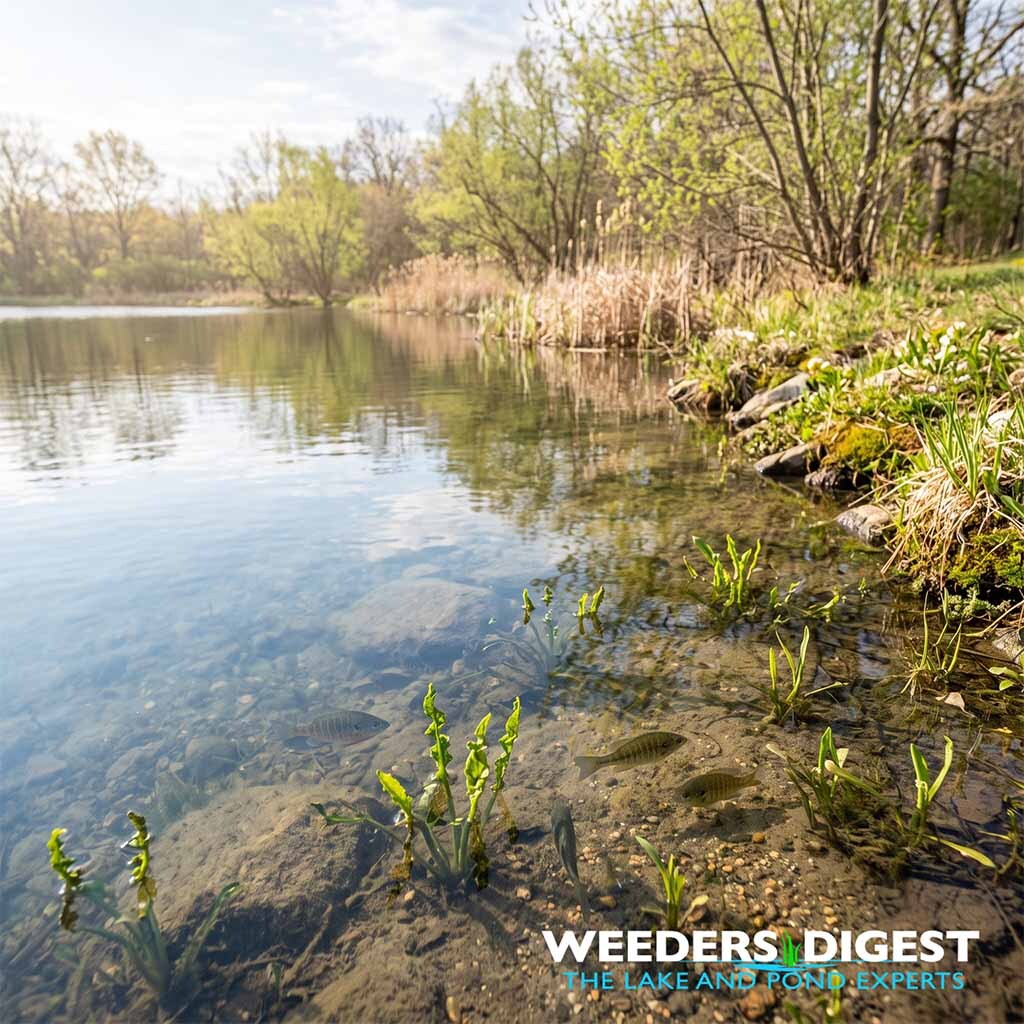
As a Certified Lake Manager, I often walk around properties in late May only to find panicked pond owners dealing with massive weed mats and distressed fish. My field observations consistently show that clients who wait until the water feels warm enough for swimming end up fighting a losing battle against oxygen depletion. The vegetation has already grown thick, and the fish are right in the middle of laying their eggs in the shallow areas, making any intervention incredibly disruptive to the fishery.
Managing the growth early means there is simply less plant material to deal with, allowing for gentle, highly effective physical removal or targeted treatments. If you use a physical aquatic tool, remember that the goal is not to rip up the pond floor; an effective approach doesn't cut the roots, it just cuts them at the roots, leaving the bottom undisturbed while clearing the water column. Early intervention keeps the water clear, prevents muck accumulation, and creates a pristine, stress-free habitat for your fish to reproduce safely.
The Science Behind It:
The fundamental mechanism driving early spring aquatic plant management relies heavily on the inverse relationship between water temperature and dissolved oxygen. Dissolved oxygen is the amount of non-compound oxygen available in the water, which is critical for the survival of fish and other aquatic organisms. Research from the Purdue University Extension indicates that colder water holds significantly more dissolved oxygen than water fluctuating between 70°F and 90°F during the summer months. By initiating aquatic weed control in the early spring, the water naturally contains an abundant supply of oxygen to buffer against any sudden drops caused by management efforts.
When aquatic vegetation is treated or cut and left in the pond, it undergoes microbial decomposition. This process requires massive amounts of oxygen as bacteria break down the dead organic matter. If a large volume of plant biomass—defined as the total mass of living biological organisms in a given area—is eradicated in mid-summer, the sudden decomposition rapidly strips the already low dissolved oxygen from the water column. According to agricultural extension studies from Texas A&M and the University of Missouri, this sudden biological oxygen demand is the primary culprit behind catastrophic summer fish kills. Treating in early spring targets a much smaller biomass, meaning the decomposition process exerts a minimal, easily absorbed oxygen demand.
The timing of intervention is equally critical for the reproductive success of aquatic life. Fish are ectotherms, meaning their internal body temperature and metabolic rates are completely dictated by the temperature of their surrounding water. Purdue University Extension documents that largemouth bass typically initiate spawning behaviors when water temperatures reach exactly 60°F, while bluegill begin spawning closer to 70°F. Intervening before the water hits these critical temperature thresholds ensures that nesting sites in the shallow littoral zones remain entirely undisturbed during the sensitive egg-laying and fertilization periods.
Furthermore, integrating physical management techniques with early spring timing provides exceptional long-term control. The Mississippi State University Extension Service notes that exposing 35 to 50 percent of the pond bottom through a winter drawdown, followed by targeted early-spring weed control, can effectively eliminate weed infestations without threatening fish populations. Because the fish have slower metabolisms in the cooler water, they experience significantly less physiological stress from environmental changes or turbidity than they would in the heat of summer.
Ultimately, early spring aquatic weed control aligns human intervention with the natural limnological cycles of the waterbody. By managing the vegetation before the exponential growth phase of the summer, managers prevent the dangerous compounding effects of high temperatures, high biomass, and low oxygen. This scientifically grounded timeline protects the delicate spawning windows and ensures a highly productive, balanced aquatic ecosystem throughout the entire year.
Sources / References:
- Purdue University Extension - More than just a puddle: Understanding the pond ecosystem for better management: https://www.extension.purdue.edu/extmedia/FNR/FNR-567.pdf
- Mississippi State University Extension Service - Winter Drawdowns: https://extension.msstate.edu/natural-resources/fisheries/pond-and-lake-management/winter-drawdowns
- University of Missouri Extension - Managing Ponds and Lakes for Aquaculture and Fisheries: https://extension.missouri.edu/publications/g9478