

Why My Safety on the Water Depends on Red and Green Navigation Markers
 |

Summary:
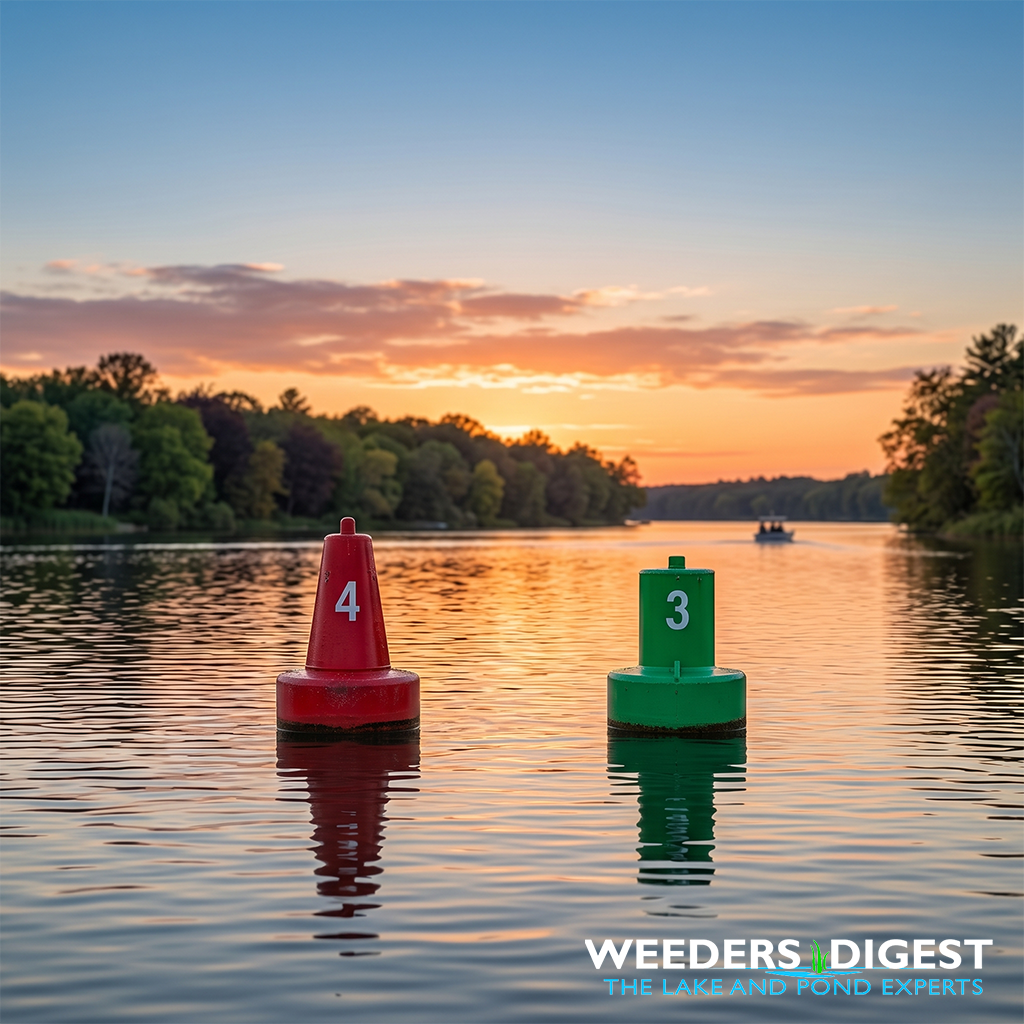
When I am out on the lake or navigating a narrow channel, those red and green markers act like the traffic lights of the water. Their primary job is to tell me exactly where the deep, safe water is and which side of the "road" I should be on. Without them, finding the way back to the dock or avoiding shallow hazards would be a guessing game that could easily end with a damaged propeller or a grounded boat.
The reason these colors were chosen is rooted in visibility and international consistency. Red and green are high-contrast colors that stand out against the blue and brown tones of the water and the earth tones of the shoreline. By following the simple rule of "Red Right Returning," I know that as long as I keep the red markers on my right side when coming in from a larger body of water, I am staying within the designated safe zone.
In simple terms, these markers provide a universal language that every boater can understand regardless of their experience level. They remove the ambiguity of open water by creating a clear, visual path. Whether the sun is bright or the clouds are low, these distinct hues help guide me safely through the transition from the open lake to the confines of a harbor or river.
Understanding this system is about more than just following rules; it is about maintaining a shared sense of order on the water. Because these colors are used globally, a boater can travel to different regions or even different countries and still possess the fundamental knowledge required to navigate safely. It is a brilliant example of how a simple visual cue can prevent complex accidents and ensure everyone enjoys their time on the water.
The Science Behind It:
The selection of red and green as the primary indicators for lateral navigation markers is predicated on the principles of maritime optics and the International Association of Marine Aids to Navigation and Lighthouse Authorities (IALA) standards. These colors are chosen because they occupy distinct portions of the visible light spectrum, which minimizes the risk of chromatic confusion in diverse atmospheric conditions. According to maritime safety protocols established by the U.S. Coast Guard and international bodies, the high-chroma nature of these specific wavelengths ensures they remain detectable even when viewed against complex backdrops such as coastal vegetation or urban light pollution.
The physiological aspect of color perception plays a critical role in this systemic design. Humans possess trichromatic vision, and the peak sensitivities of the Long (red) and Medium (green) cone cells allow for rapid differentiation between these two colors, even in low-light transitions or "nautical twilight." Research into maritime signaling emphasizes that red and green provide the highest degree of "conspicuity" when filtered through moisture-laden air. This is vital for maintaining the "lateral system," where the color of the buoy or beacon indicates the side of the channel on which a vessel should pass.
In the IALA Maritime Buoyage System, specifically Region B which includes North America, the "Red Right Returning" rule is a standardized application of these optical cues. The engineering of these markers often incorporates specific retroreflective materials that enhance the return of light from a vessel’s searchlight. Scientific literature regarding marine pilotage indicates that the consistency of these colors across different navigational aids—including buoys, daymarks, and lighted beacons—is essential for reducing the cognitive load on the navigator. By utilizing a binary color system, the chance of navigational error is significantly reduced compared to more complex multi-chromatic schemes.
Furthermore, the physical placement and shape of these markers—often "nuns" for red and "cans" for green—serve as a secondary redundant system for identification. This redundancy is scientifically necessary for cases where color perception might be hindered by extreme glare, fog, or color vision deficiency in the observer. The integration of color, shape, and light rhythm creates a robust framework that satisfies the rigorous requirements of the International Maritime Organization (IMO) for safe passage through restricted waterways. This standardized ecological and physical interface ensures that the biological limitations of human sight are compensated for by predictable, high-contrast environmental engineering.