

Why Our Lake Water Clarity Shifts Dramatically Between August and October
 |

Summary:
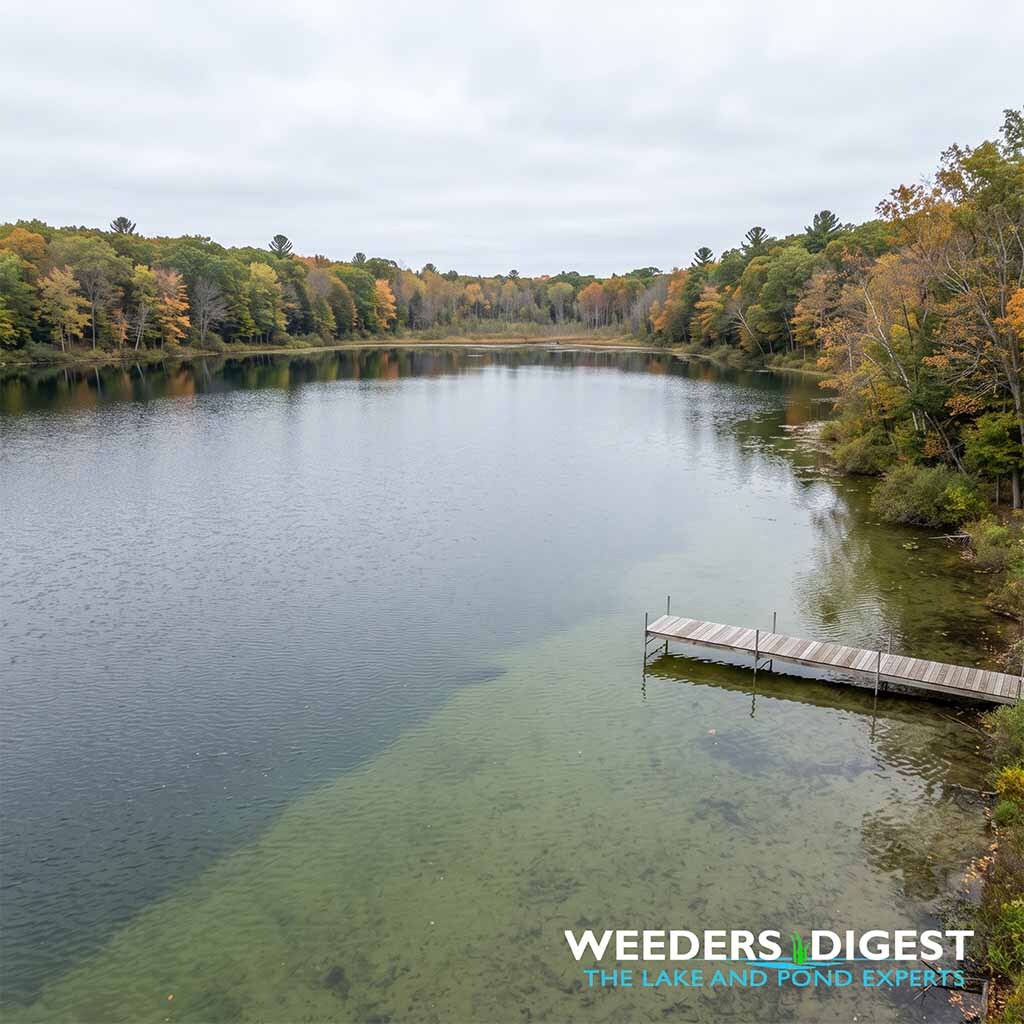
Lake water clarity shifts significantly between August and October primarily due to the breakdown of summer thermal stratification and the subsequent mixing of the entire water column during autumn turnover. As we monitor water bodies through the late summer, prolonged solar heating creates distinct thermal layers that trap nutrients at the bottom while keeping surface waters relatively clear. When air temperatures drop in the fall, these layers cool, equalize in density, and blend together via wind action, redistributing suspended sediments, organic matter, and accumulated nutrients throughout the lake. When walking the shoreline on crisp October mornings, our field experts frequently notice a sudden, temporary murkiness and shift in hue—a classic visual indicator that the lake is actively destratifying and turning over.
The Science Behind It:
The physical transformation of lake water clarity from the height of summer in August to the mid-autumn conditions of October is governed by limnological principles of thermal stratification and density dynamics. During August, moderate-to-deep lakes typically establish three distinct thermal layers: the warm and well-lit epilimnion at the surface, the transitional metalimnion (or thermocline) where temperatures drop rapidly, and the cold, dark hypolimnion at the bottom. Because water reaches its maximum density at approximately 4°C (39.2°F), the warm surface water remains buoyant, floating above the denser bottom water. This density barrier prevents vertical mixing, isolating the hypolimnion from atmospheric oxygen and causing bottom-dwelling bacteria to deplete remaining oxygen levels as they decompose organic matter. Under these anoxic conditions, chemical reactions alter iron-phosphorus bonds in bottom sediments, releasing high concentrations of dissolved phosphorus and other nutrients into the dark lower layer.
As autumn progresses from September into October, ambient air temperatures cool, and the intense solar radiation driving summer stratification begins to wane. The warm surface layer gradually loses heat, causing its temperature—and consequently its density—to approach that of the cooler underlying water. Research evaluating thermal profiles notes that when the temperature difference across the water column diminishes, the stability of stratification collapses. Wind-induced turbulence can then easily overcome the minimal remaining density gradient, triggering a complete hydrological mixing event known as fall turnover.
During fall turnover, the entire volume of water circulates from top to bottom. According to long-term limnological observations documented by research institutions such as the International Institute for Sustainable Development Experimental Lakes Area (IISD-ELA), this biannual mixing redistributes vital dissolved oxygen into deeper zones while simultaneously dragging accumulated nutrients and organic sediments from the lakebed up into the water column. Research highlights that a primary optical consequence of this process is a sharp reduction in Secchi disk transparency. The suspension of benthic sediments and the sudden influx of bioavailable phosphorus frequently spark late-season phytoplankton or algal pulses, transforming clear summer waters into a cloudy, nutrient-rich environment.
Ultimately, this seasonal shift is a vital ecological reset mechanism rather than a sign of ecosystem degradation. By re-oxygenating bottom waters and recycling essential minerals, the autumn transition prepares aquatic life for the impending winter freeze. Understanding these predictable physical mechanics helps our lake experts interpret fluctuations in water transparency and manage long-term watershed health effectively.
Sources / References:
- Ausable Freshwater Center: What Happens to Lakes in the Fall? https://www.ausableriver.org/blog/what-happens-lake-fall
- International Institute for Sustainable Development (IISD-ELA): How and Why Lakes Stratify and Turn Over: We explain the science behind the phenomena https://www.iisd.org/ela/blog/lakes-stratify-turn-explain-science-behind-phenomena/
- Canyon Lake POA: Lake Stratification and Water Quality Dynamics https://www.canyonlakepoa.com/lake-stratification