

Why Our Lakes Lose So Much Water by Late August
 |

Summary:
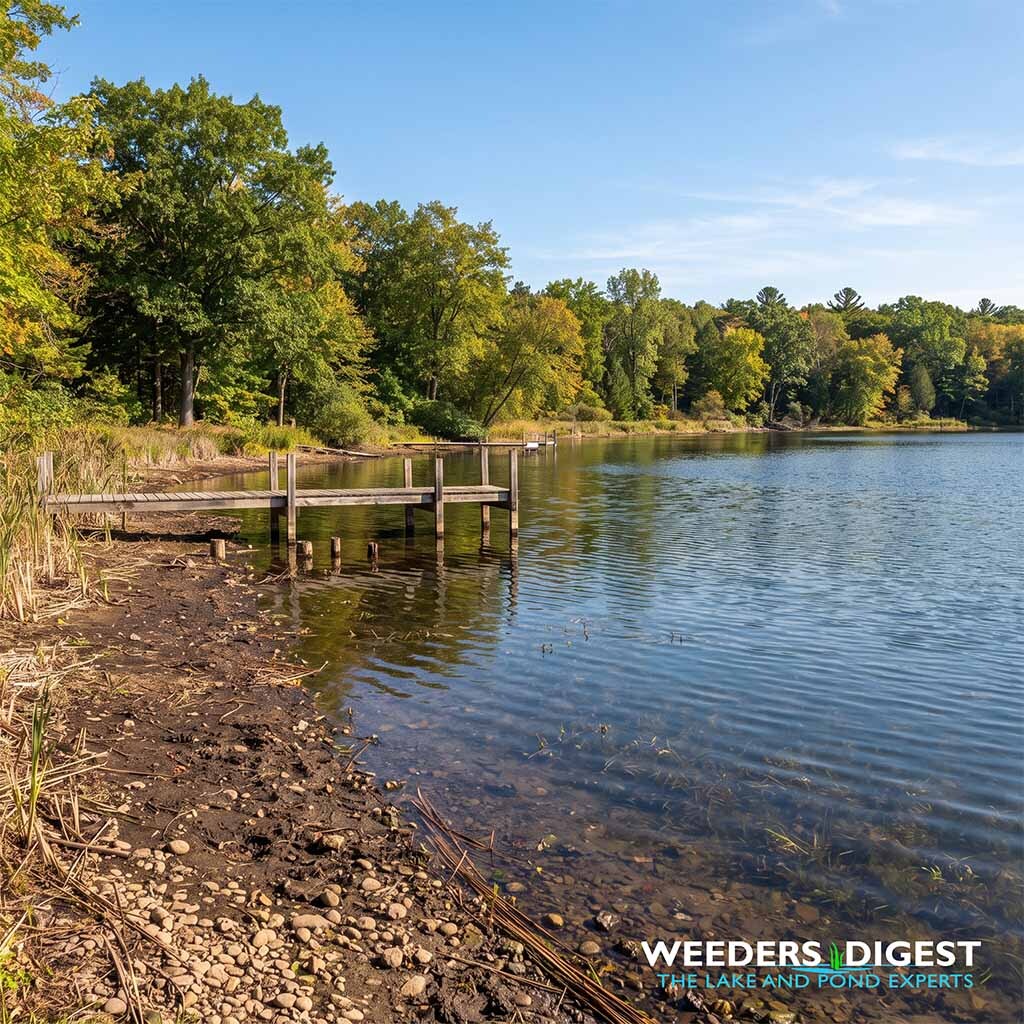
The dramatic drop in water levels observed in lakes by late August is primarily driven by cumulative seasonal evaporation outpacing precipitation, combined with high rates of plant transpiration and declining groundwater tables. We often notice this phenomenon when walking down to our docks in late summer, finding the shoreline noticeably receded even after weeks of dry, sunny weather. As pond experts frequently observe during routine field assessments, late-summer heat combined with steady thermal winds creates an invisible "bank account withdrawal" of moisture from the water body day after day. Without sufficient spring and summer rainfall to offset these continuous losses, the overall volume of the lake decreases rapidly.
The Science Behind It:
The physical mechanics governing late-summer water level reductions are rooted in the basin's comprehensive hydrological budget, where the net change in water storage is dictated by the balance between total inflows and total outflows. In the absence of substantial precipitation inputs, outflows—specifically evaporation and net groundwater exchange—dominate the system. Evaporation from an open water surface is governed by energy balance principles, notably net radiation, vapor pressure deficits, and wind speed, which together dictate the rate at which liquid water undergoes a phase change into water vapor. According to energy balance models evaluated in hydrological studies, open-water evaporation rates can consistently remove significant vertical layers of water monthly, compounding drastically over the warm summer months.
Concurrently, biological processes within the littoral zone amplify this water loss. Riparian and aquatic vegetation undergo high rates of transpiration during the peak growing season, drawing moisture from the saturated soil and releasing it into the atmosphere through plant stomata. Research into landscape-scale hydrology indicates that dense vegetation and active summer plant growth can substantially deplete local water yields, sometimes reducing available surface and subsurface moisture by significant margins annually depending on regional climate conditions. This combined loss via direct evaporation and plant-mediated transpiration is collectively termed evapotranspiration, which peaks precisely during the high temperatures and extended daylight hours of mid-to-late summer.
Beneath the water surface, subterranean interactions further exacerbate the late-summer drop. Lakes exist as physical expressions of the regional water table, functioning either as drainage systems or seepage systems connected to surrounding unconfined aquifers. When regional groundwater levels decline during extended seasonal dry spells due to a lack of recharge, the hydraulic gradient reverses or shifts. Instead of groundwater feeding the lake, the water body acts as a recharge source for the depleted aquifer, resulting in a process known as outseepage where water drains downward through benthic sediments.
Compounding these volume-reducing factors, localized atmospheric dynamics can temporarily create the illusion of even more dramatic drops. Sustained seasonal winds and barometric pressure fluctuations frequently induce seiches—physical tilting events where water is pushed toward downwind shores, exposing littoral zones on the opposite side. While a seiche redistributes water temporarily rather than removing it from the basin entirely, combined with actual volume loss from prolonged evapotranspiration and outseepage, it explains why late August consistently reveals the lowest water marks of the annual hydrological cycle.
Sources / References:
- Weeders Digest: The Mystery of the Vanishing Water: Why Your Lake Level Changes Even Without Rain (https://weedersdigest.com/lake-and-pond-science/the-mystery-of-the-vanishing-water-why-your-lake-level-changes-even-without-rain/)
- IWA Publishing / Hydrology Research: Development and application of a new lake evaporation estimation approach based on energy balance (https://iwaponline.com/hr/article/49/5/1528/38868/Development-and-application-of-a-new-lake)
- Missouri Department of Natural Resources: Why Groundwater Levels Change (https://dnr.mo.gov/document-search/why-groundwater-levels-change-pub2884/pub2884)