

Why Our Late Summer Ponds Swarm: The Science Behind Intense Insect Hatches
 |

Summary:
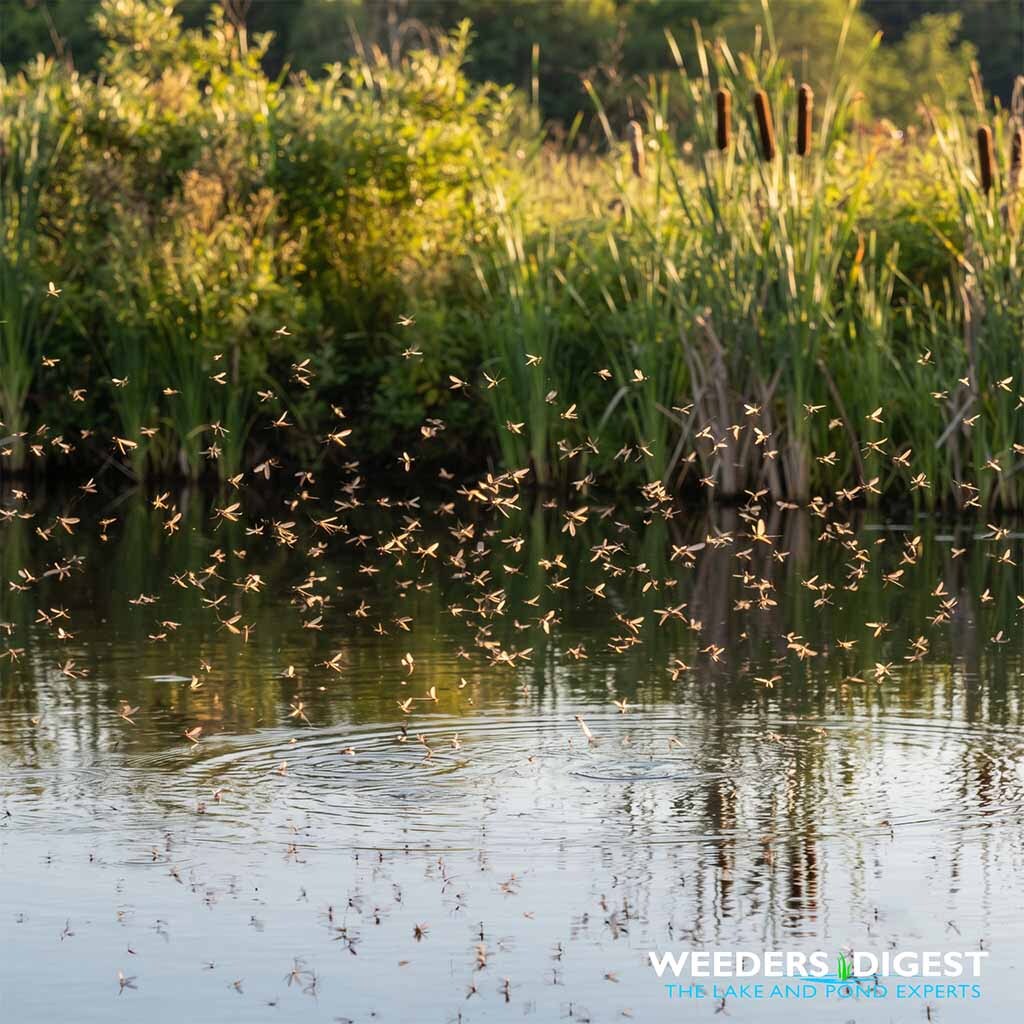
Late summer insect hatches appear intensely abundant because a combination of rising seasonal water temperatures, high nutrient accumulation, and synchronized larval development triggers massive, simultaneous emergences of aquatic insects like midges and mayflies. When we monitor local water bodies during these warm months, our lake experts routinely observe dense clouds of adults emerging all at once. This seasonal surge happens because metabolic rates peak in warmer water, accelerating the final stages of metamorphosis for generations of benthic insects simultaneously.
The Science Behind It:
The phenomenon of intense late summer insect hatches is rooted in the interplay between water temperature, dissolved oxygen levels, and benthic ecology. As aquatic ecosystems absorb solar radiation throughout the summer, epilimnetic water temperatures reach their annual peaks. These elevated temperatures directly influence the metabolic rates of aquatic macroinvertebrates resting in the sediment. According to research published in the Journal of Freshwater Ecology, metabolic processes in chironomid midges can increase exponentially with every 10-degree Celsius rise in water temperature, which drastically shortens their final pupal development phase and synchronizes emergence timing across entire populations.
This thermal forcing coincides with seasonal peaks in primary productivity and nutrient cycling within the water column. Over the course of the summer, accumulated organic matter decomposes, providing an abundant food web base for detritivores. When combined with declining dissolved oxygen concentrations in deeper benthic zones—driven by high microbial respiration rates—benthic organisms experience strong physiological cues to leave the sediment. Studies on aquatic insect emergence patterns highlight that low bottom-water oxygen levels can act as a primary trigger, forcing hypoxia-tolerant yet stressed larvae to accelerate their ascent to the water surface.
Once at the surface, the transition from aquatic pupae to aerial adults occurs en masse. Research tracking littoral zone secondary production indicates that up to 70% of an annual benthic insect biomass can emerge within a condensed four-to-six-week window in late summer. This high-density emergence overwhelms local vertebrate and invertebrate predators, ensuring that a sufficient number of adults survive to reproduce. Consequently, our evening shorelines become dominated by massive swarms as these synchronized broods complete their life cycles simultaneously.