

Why Your Best Late Summer Fishing Spots Are Always Near Deep Weed Edges
 |

Summary:
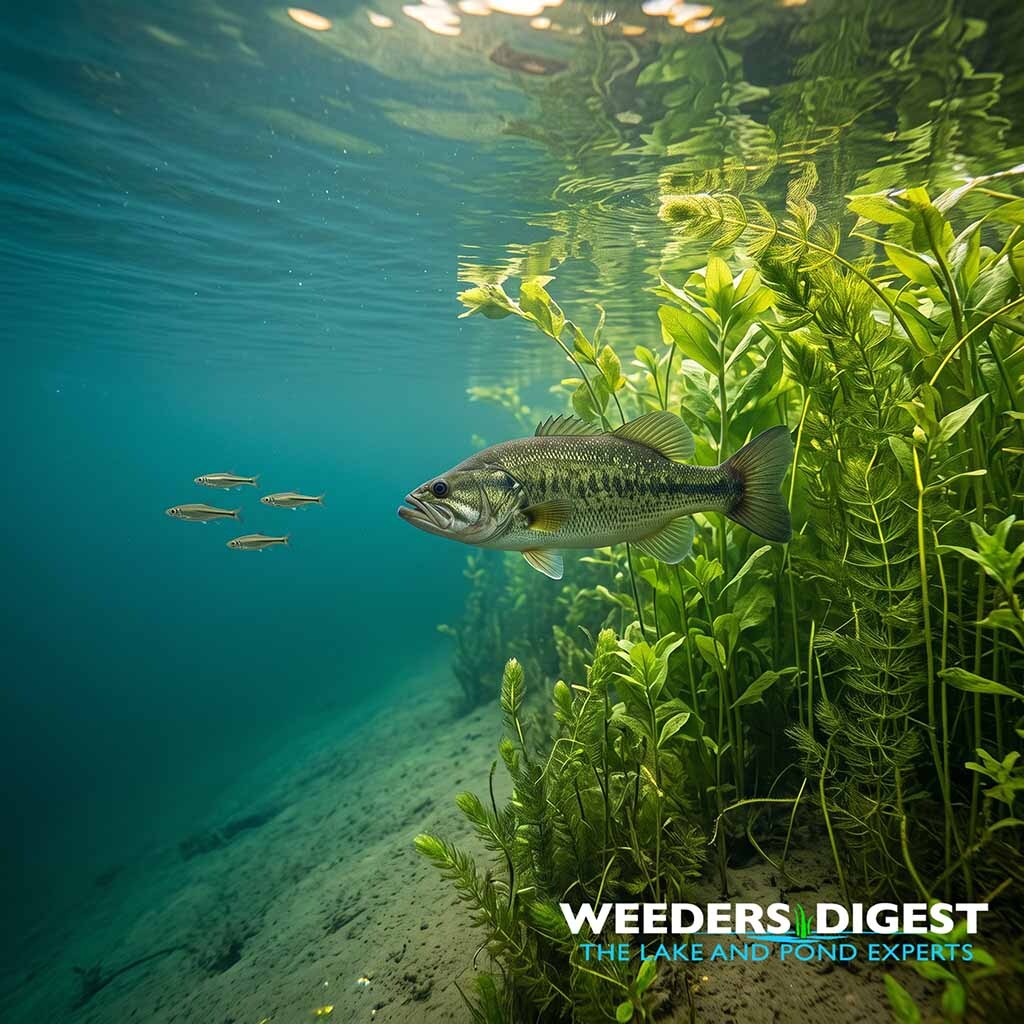
Late summer fishing is most productive along deep weed edges because this boundary creates an optimal convergence of high dissolved oxygen, cooler water temperatures, cover, and high-efficiency feeding opportunities for game fish. As summer progresses and surface water warms to peak seasonal temperatures, shallow weed beds can become choked and deplete overnight oxygen levels. Deep weed lines represent the outer limit where sunlight can still reach the lake bottom, creating a natural underwater wall that separates open, deep water from dense plant cover. This boundary serves as an aquatic superhighway where predatory fish like largemouth bass, walleye, and northern pike stage comfortably while ambushing prey.
When we inspect lake ecology late in the season, we consistently observe fish positioning themselves not buried deep inside the thickest growth, but hovering suspended along the clean, vertical breaklines of native coontail, cabbage, or milfoil stands. The deep edge provides them an escape route to cooler depths while keeping them mere feet away from schools of perch, bluegills, and minnows that inhabit the vegetation. For anglers, recognizing how depth, light, and aquatic plants interact is the key to unlocking consistent late-season action.
The Science Behind It:
The primary physical and chemical driver behind late-summer fish distribution is thermal stratification and its direct impact on dissolved oxygen (DO) dynamics. During late summer, temperate lakes separate into distinct thermal layers: the warm upper layer (epilimnion), a rapid temperature transition zone (metalimnion or thermocline), and the cold, dense bottom layer (hypolimnion). As decaying organic matter accumulates on the lake bottom, bacterial respiration consumes oxygen in the hypolimnion, often causing severe bottom hypolimnetic hypoxia where DO drops below 2.0 mg/L, rendering the deepest water uninhabitable for sport fish. Consequently, fish are physically restricted from descending too deep, while simultaneously avoiding overheated, shallow surface water that can exceed their optimal thermal niche.
Submersed aquatic vegetation (macrophytes) heavily regulates the local microclimate within the littoral zone. While dense macrophyte canopies produce abundant oxygen during peak daylight through photosynthesis, high stem density severely reduces internal water circulation and triggers sharp nocturnal respiration spikes. Research on littoral predator-prey dynamics published in ecological fisheries literature indicates that predation mortality and ambush events are lowest in the dense interior of macrophyte refuges, peak precisely along the structural edge (ecotone), and decline again in open pelagic waters.
Predatory fish utilize the deep weed line as an optimal bioenergetic feeding zone. Classical foraging models show that dense vegetative interiors create high visual interference and physical obstruction, reducing a predator's search velocity and capture success. At the deep weed line, plant density abruptly ends where light attenuation limits photosynthesis—often occurring at the 1% surface light threshold (the euphotic zone boundary). This sudden transition provides ambush predators with maximum visual contrast and uninhibited strike angles into the open pelagic water, allowing them to target forage fish that drift or school outside the vegetation matrix.
By positioning along the deep weed edge, apex predators optimize their bioenergetic budget. They minimize metabolic energy expenditure by resting in deeper, shaded, oxygenated water while maximizing caloric intake through high-probability ambushes along the vegetated transition zone.
Sources / References:
- ResearchGate / Journal of Fish Biology: https://www.researchgate.net/publication/227773926_Whole-lake_influences_of_littoral_structural_complexity_and_prey_body_morphology_on_fish_predator-prey_interactions
- Taylor & Francis / Lake and Reservoir Management: https://www.tandfonline.com/doi/full/10.1080/02705060.2014.982726
- MDPI Water: https://www.mdpi.com/2073-4441/14/21/3543