

Why Your Lake Keeps Turning Green: My Guide to Phosphorus Binding with Alum and Phoslock
 |

Summary:
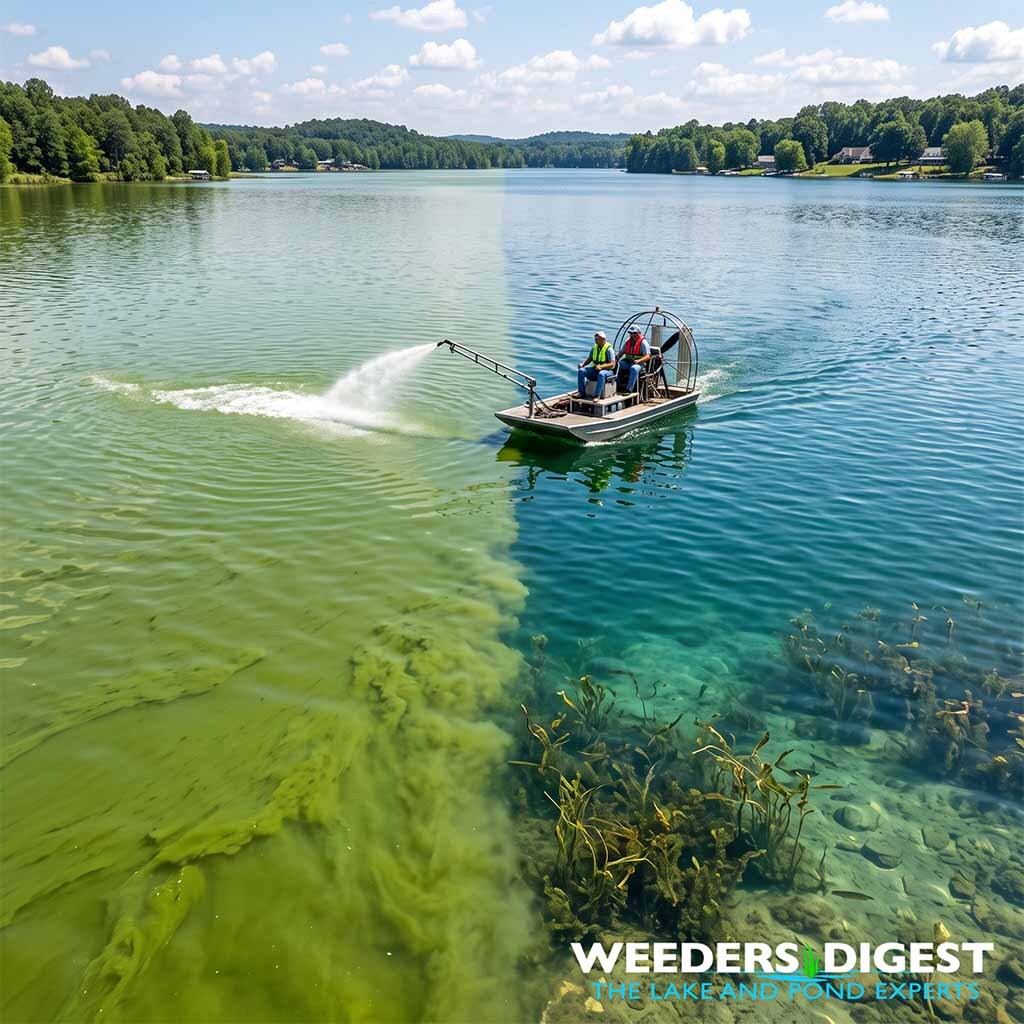
Phosphorus binding is a highly effective lake management technique that permanently traps excess phosphorus in the water column and bottom sediments, instantly starving nuisance algae of their primary food source and stopping severe algal blooms. When too much fertilizer runoff, decaying organic matter, and urban pollution dump phosphorus into your waterbody, the lake essentially becomes an all-you-can-eat buffet for algae. To fix this, we apply specialized mineral compounds—most commonly aluminum sulfate (alum) or a lanthanum-modified bentonite clay called Phoslock. These products chemically react with the dissolved phosphorus, turning it into a heavy, insoluble solid that sinks to the bottom and forms a protective cap over the sediment.
This capping process not only cleans the water column but prevents the old, legacy phosphorus trapped in the muck from leaking back up into the water during the hot summer months. It is something I see out in the field all the time; after spending a long, grueling day on an airboat applying a custom-dosed alum slurry to a chronically green, foul-smelling lake, it is incredibly rewarding to return just a few days later and drop a Secchi disk into water that has suddenly become crystal clear. By locking the phosphorus into the sediment matrix, we stop the internal recycling loop that keeps lakes in a constant state of eutrophication.
While both products achieve the same fundamental goal of water clarification, they work through slightly different chemical pathways and are chosen based on the specific chemistry of your lake. The right choice depends on factors like your water's pH, the lake's depth, and whether you are fighting actively suspended phosphorus or just trying to seal off the bottom muck. Understanding how these treatments work allows us to reclaim your lake's health and restore a balanced, vibrant aquatic ecosystem.
The Science Behind It:
The fundamental mechanism of chemical phosphorus inactivation relies on precipitating soluble reactive phosphorus (SRP) from the water column and halting the benthic flux of internal phosphorus loading. Internal loading occurs when anoxic conditions at the sediment-water interface cause iron-bound phosphorus to dissociate and diffuse back into the epilimnion. Aluminum sulfate, commonly referred to as alum, addresses this by creating a dual-action binding effect. When applied, alum hydrolyzes in the water to form a highly reactive, amorphous aluminum hydroxide floc ($Al(OH)_3$). This floc physically sweeps suspended particulates from the water column as it settles, while simultaneously adsorbing inorganic phosphorus. Once resting on the benthos, it acts as a chemical barrier. Extensive reviews of lake treatments indicate that the longevity of water quality improvements following alum application is highly dependent on lake morphology; deep, stratified lakes exhibit a mean treatment longevity of 21 years, whereas shallow, polymictic lakes average about 5.7 years before internal loading resumes (Huser et al., 2016).
Phoslock operates through a different chemical pathway, utilizing lanthanum, a rare earth element, embedded within a bentonite clay carrier. When introduced to the water, the lanthanum ions ($La^{3+}$) react highly specifically with free phosphate ions ($PO_4^{3-}$) to form rhabdophane, or lanthanum phosphate ($LaPO_4$). This resulting mineral is exceptionally stable and remains insoluble across a wide pH range of 4 to 10, preventing phosphorus from re-dissolving even under severe anoxic conditions at the lake bottom. Assessments of Phoslock's efficacy show it is capable of drastically reducing nutrient availability, with applications demonstrating the ability to reduce water column SRP concentrations to less than 10 µg/L within 24 hours of treatment (Tetra Tech, 2022).
Deciding between alum and lanthanum-modified bentonite requires a rigorous analysis of the specific limnological conditions present in the target waterbody. Alum is highly effective, but its hydrolysis consumes alkalinity, meaning waterbodies with low buffering capacity require the simultaneous application of a buffer, such as sodium aluminate, to prevent the pH from dropping into ranges where free aluminum toxicity could harm aquatic life. Phoslock does not significantly alter the pH or alkalinity of the water column, making it a safer alternative for sensitive, low-alkalinity systems. However, while alum is capable of binding both particulate and soluble phosphorus as the floc settles, Phoslock strictly targets soluble reactive phosphorus, meaning it is best applied during periods of low algal biomass such as early spring or late fall.
Ultimately, mitigating internal loading is paramount for the long-term remediation of eutrophic lakes. Research conducted on chronically impaired waterbodies has shown that internal sediment release can account for 55 to 65 percent of the total phosphorus entering the water column annually (Steinman et al., 2004). By applying these chemical inactivants at accurately calculated doses based on sediment phosphorus fractionation, aquatic ecologists can successfully sever the internal nutrient cycle. This engineered approach is a critical step in shifting lakes from a turbid, cyanobacteria-dominated state back to a clear-water, macrophyte-dominated equilibrium.
Sources / References:
- https://www2.whoi.edu/site/andersonlab/wp-content/uploads/sites/20/2018/10/Huser-et-al-Longevity-and-effectiveness-of-aluminum-in-lake-restoration-2016.pdf
- https://dam.assets.ohio.gov/image/upload/h2.ohio.gov/TAP/H2Ohio-Technology-Assessment-Final-Report-Phoslock-Jan-2022.pdf
- https://springlaketwp.org/wp-content/uploads/delightful-downloads/2017/10/spring_lake_report_jan_2017_final_draft.pdf