

Managing My Waterfront: The Best Tools for a Clear Lake Surface
Summary:
When I look out at my pond, nothing ruins the view faster than a "blanket" of severed weeds and floating debris. This usually happens after a big storm or right after I’ve used a weed cutter. If these fragments aren't cleared away, they don't just look messy—they eventually sink, turn into muck, and provide the exact nutrients that fuel next year’s weed explosion. My goal is always to get that debris out of the water as efficiently as possible to keep the ecosystem healthy and the water swimmable.
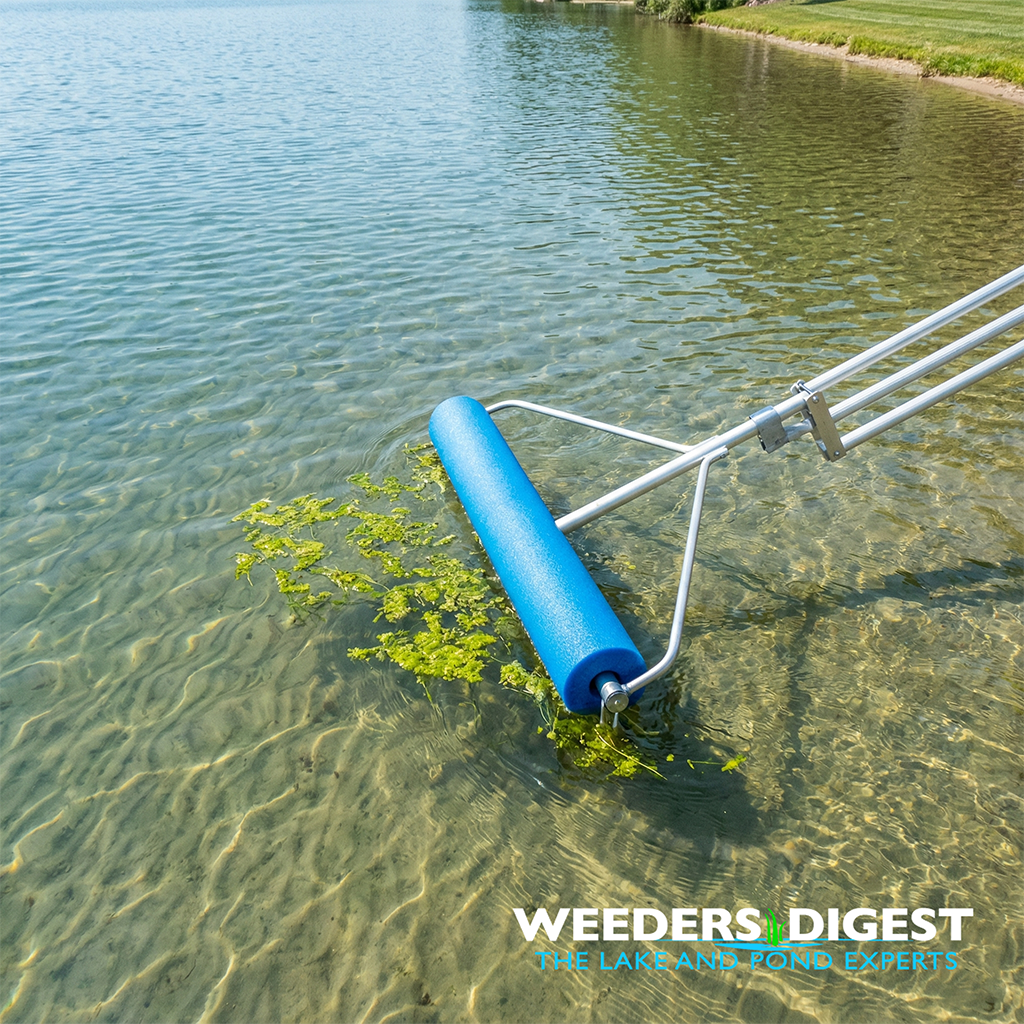
The best approach for my waterfront depends on the scale of the mess. For small areas or daily maintenance, a specialized lake rake with a float attachment is my go-to tool. These are designed to skim just the top few inches of water, capturing floating weeds without getting bogged down in the heavy mud. If I’m dealing with a larger "bloom" of floating duckweed or watermeal, a fine-mesh surface skimmer or even a handheld skimming net is more effective because it catches the tiny particles that standard rake tines miss.
For those of us with larger shorelines, mechanical help is a game changer. Tow-behind skimmers or specialized "weed sails" can be pulled by a boat to corral large mats of floating vegetation into a manageable pile. Regardless of the tool, the secret is acting fast. Once those severed weeds start to waterlog and sink, the job becomes ten times harder. Keeping a consistent skimming routine is the best way I've found to maintain a pristine, clear surface all season long.
The Science Behind It:
Mechanical removal of floating biomass is a critical component of Integrated Pest Management (IPM) in aquatic ecosystems. When aquatic macrophytes are severed—either through mechanical harvesting or natural senescence—they represent a significant internal nutrient load. Research indicates that failing to remove these fragments can lead to rapid decomposition, which depletes dissolved oxygen (DO) levels and releases phosphorus and nitrogen back into the water column, potentially triggering secondary algal blooms. According to the LSU AgCenter, mechanical methods like raking and skimming are highly effective because they provide immediate relief and physically remove these nutrients from the system.
The selection of skimming tools must account for the "fragmentation recovery" potential of specific invasive species. For example, species such as Myriophyllum spicatum (Eurasian watermilfoil) can reproduce via auto-fragmentation; a single severed stem left floating can drift to a new location, develop adventitious roots, and establish a new colony. Direct citations from New Mexico State University Extension emphasize that mechanical cutters are only recommended if they are paired with rigorous harvesting of the cut material. Specialized surface skimmers and fine-mesh nets are technically superior for this task as they minimize the escape of these viable vegetative propagules.
Hydrodynamics and wind patterns also play a scientific role in effective skimming. Floating debris typically accumulates on the leeward side of a water body due to wind-driven surface currents. Limnologists often recommend utilizing "boom" systems—temporary floating barriers—to concentrate dispersed debris into a localized area for easier extraction. This concentration increases the efficiency of manual rakes and mechanical skimmers by increasing the biomass density per "scoop," thereby reducing the labor-to-removal ratio.
Furthermore, the physical properties of the tools themselves, such as buoyancy and tine spacing, are engineered based on fluid dynamics. A "skimming rake" uses a float to maintain a specific depth, ensuring the tool stays within the top 2–6 inches of the water column where the majority of buoyant debris resides. For microscopic floaters like Wolffia (watermeal), the surface tension of the water requires ultra-fine mesh (often less than 1.0 mm) to effectively "break" the surface and trap the organic matter. This technical precision ensures that both macro-debris and micro-floaters are addressed before they contribute to the benthic muck layer.
Sources / References:
- https://pubs.nmsu.edu/_circulars/CR681.pdf
- https://www.lsuagcenter.com/topics/aquaculture/recreational_ponds/aquatic_weed_control