

My Battle With Invasive Lake Weeds: Does Cutting Them Actually Help or Make Things Worse?
Summary:
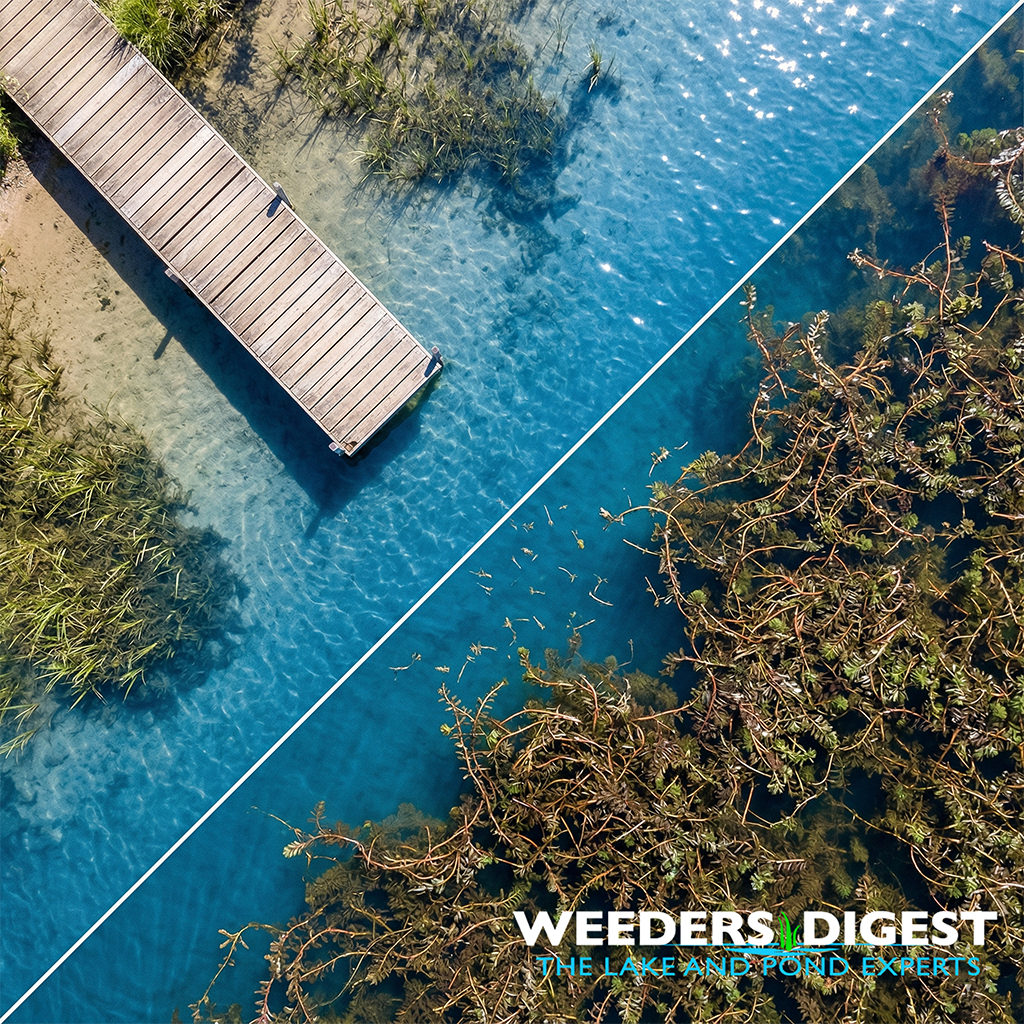
When you see your favorite swimming spot or boat dock being overtaken by thick, tangled mats of invasive weeds, your first instinct is likely to grab a lake rake or a mechanical cutter to clear a path. It feels productive to physically remove the nuisance, and in the short term, you get that satisfying immediate relief of clear water. However, we have help people manage countless water bodies, we have seen many homeowners accidentally turn a small patch of weeds into a lake-wide infestation because they didn't realize how these specific plants reproduce.
The truth is that for many of the most aggressive invasive species, mechanical cutting can be a double-edged sword. While it clears the area today, the process of cutting often creates hundreds of tiny plant fragments. If these fragments aren't meticulously collected and removed from the water, they don't just die; they drift away, sink, and grow into entirely new plants. This is why many people find that their weed problem seems to "explode" to new parts of the shoreline a few weeks after they finish their cleanup.
Understanding whether to cut depends entirely on the specific plant you are dealing with. If you are dealing with a species that spreads through fragmentation, a mechanical cutter without a robust collection system is essentially a "propagation machine." You are effectively "planting" the rest of your lake while trying to clean your own dock. To manage your lake successfully, you have to look beyond the immediate visual fix and consider the long-term health of the entire ecosystem.
The Science Behind It:
The efficacy of mechanical harvesting as a control method is heavily dictated by the regenerative strategies of the target macrophyte. Many of the most problematic invasive aquatic species, such as Myriophyllum spicatum (Eurasian Watermilfoil) and Hydrilla verticillata, rely on vegetative propagation rather than seed production for primary colonization. According to research published in the Journal of Aquatic Plant Management, these species possess high regenerative capabilities where even a single node on a small stem fragment can develop adventitious roots and establish a new colony. Mechanical cutters that do not utilize a vacuum or specialized collection system often leave behind a significant biomass of these viable fragments.
Hydrodynamic forces within the water column facilitate the dispersal of these fragments to previously uninfested littoral zones. Once a fragment settles into the benthic sediment, it rapidly initiates growth, often outcompeting native flora due to its aggressive growth rate and canopy-forming architecture. Studies conducted by university extension programs emphasize that "autofragmentation"—a natural process where the plant breaks apart to spread—is significantly accelerated by anthropogenic mechanical disturbance. This suggests that improper mechanical control can inadvertently function as a vector for secondary infestations within a water body.
Furthermore, the "creeping" nature of rhizomes and stolons in species like Potamogeton crispus (Curly-leaf Pondweed) means that surface cutting often leaves the reproductive structures and nutrient-storing turions intact in the sediment. Research from the Minnesota Department of Natural Resources indicates that while cutting provides temporary navigational relief, it does little to deplete the long-term seed bank or turion population. In some instances, removing the upper canopy can actually stimulate growth by increasing light penetration to the lower water column, allowing remaining fragments or dormant turions to flourish without competition for photosynthetically active radiation.
In contrast, large-scale mechanical harvesting, when executed with high-efficiency collection equipment that removes the entirety of the harvested biomass from the lake system, can provide a net removal of nutrients like nitrogen and phosphorus. However, the selective pressure of harvesting can shift the community composition. If the mechanical process is non-selective, it may damage native populations more severely than the invasive ones, as many native species have lower recovery rates following physical trauma. Therefore, the scientific consensus suggests that mechanical cutting must be paired with meticulous fragment recovery to avoid exacerbating the spread of invasive macrophyte populations.