

My Personal Guide to Identifying a Healthy Northern Lake
Summary:
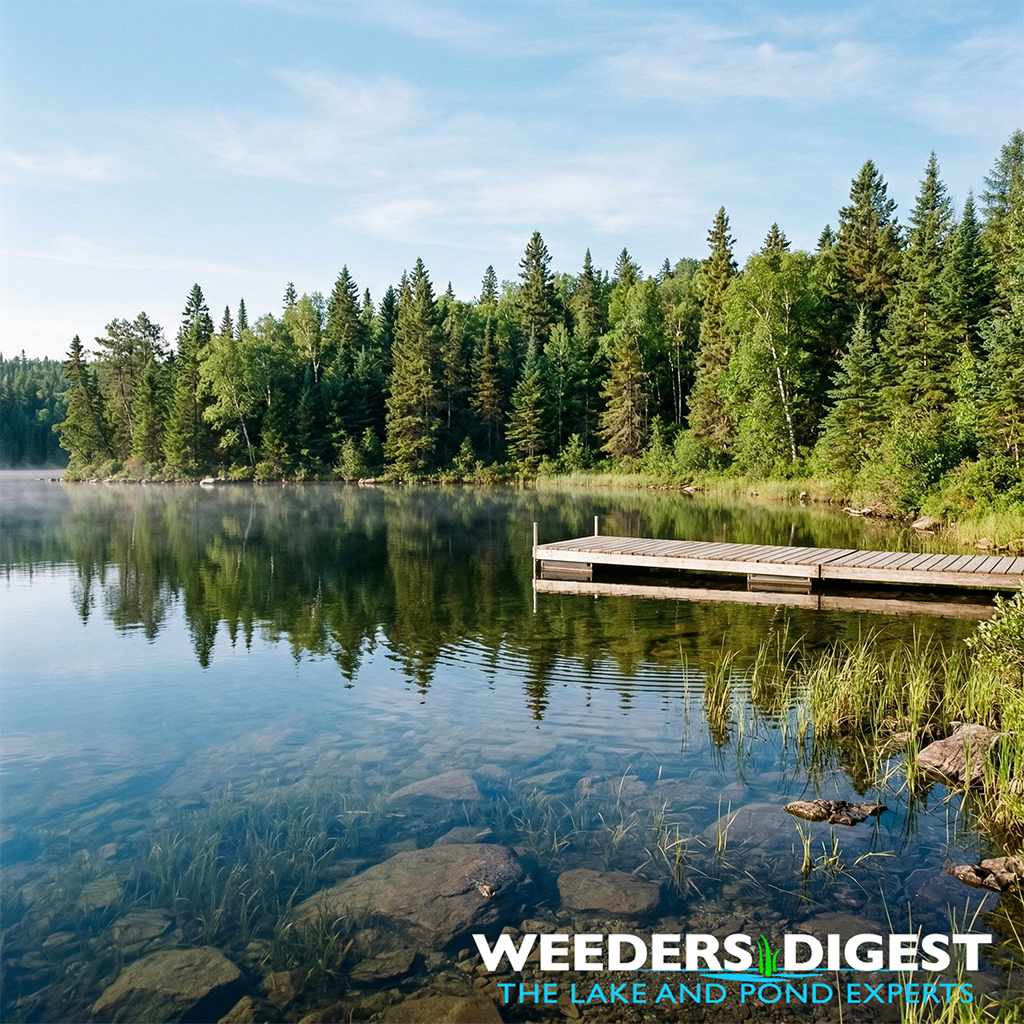
When I look out over a northern lake, I’m not just looking for a pretty view; I am looking for a complex, living system that is functioning in perfect harmony. To the average homeowner, a healthy lake often means water clear enough to see your toes and a lack of "scum" on the surface. While those are good signs, true health is found in the balance between the water, the plants, and the creatures that call it home. In my experience, a healthy northern lake is one that can handle the changing seasons—from the deep freeze of winter to the heat of July—without losing its vitality.
A healthy lake isn't necessarily a swimming pool; it needs some "weeds" or aquatic plants to act as a nursery for fish and a filter for the water. You want to see a variety of life, from loons diving for dinner to dragonflies buzzing the shoreline. If the water looks like pea soup or smells like sulfur, the balance is off. But when the oxygen is high and the nutrients are low, the lake stays resilient, providing a beautiful backdrop for our lives while supporting a robust natural ecosystem.
Essentially, a healthy lake is a productive one that doesn't overdo it. It has enough nutrients to grow some plants and fish, but not so many that it triggers massive algae blooms that choke out everything else. It is a delicate dance of chemistry and biology that keeps the water refreshing and the fishing Great.
The Science Behind It:
The health of a northern temperate lake is primarily defined by its trophic state and its ability to maintain dissolved oxygen levels throughout the water column. Northern lakes are often characterized by their glacial origins and are subject to dimictic circulation, meaning the water "turns over" in the spring and fall. According to research published in Limnology and Oceanography, the vertical distribution of temperature and oxygen during summer stratification is a critical indicator of lake health. A healthy system typically maintains an oxygenated hypolimnion (the cold, bottom layer), which is essential for the survival of cold-water fish species like lake trout and cisco.
Nutrient loading, specifically phosphorus and nitrogen concentrations, dictates the primary productivity of the basin. Healthy northern lakes generally fall into the oligotrophic or mesotrophic categories. Excessive nutrient input from runoff can lead to eutrophication, a process where over-stimulation of algal growth leads to oxygen depletion as bacteria decompose dying organic matter. The Journal of Paleolimnology highlights that maintaining a natural shoreline buffer is vital for mitigating these nutrient spikes, as terrestrial vegetation traps sediments and absorbs phosphorus before it enters the lacustrine environment.
Biodiversity at the microbial and macro-invertebrate levels serves as a biological "canary in the coal mine." A healthy lake supports a diverse assemblage of macrophytes—native aquatic plants—which provide structural complexity and stabilize benthic sediments. These plants compete with phytoplankton for nutrients, preventing the dominance of cyanobacteria (blue-green algae). Research from University Extension programs indicates that the presence of sensitive indicator species, such as Hexagenia mayflies, correlates strongly with high water quality and sufficient sub-surface oxygen levels.
Furthermore, the chemical buffering capacity, measured by alkalinity and pH, ensures the lake can resist acidification. In northern regions where granitic bedrock is common, the ability of the water to neutralize acid rain is a key component of long-term ecological stability. A healthy lake maintains a pH between 6.5 and 8.5, fostering an environment where calcium-dependent organisms, like snails and crustaceans, can thrive. This chemical stability supports the entire food web, from primary producers up to apex predators.
Sources / References:
- https://aslopubs.onlinelibrary.wiley.com/journal/19395590
- https://www.jstor.org/journal/jpalolimnology