

My Small Backyard Habits: Can They Actually Save an Entire Lake?
 |

Summary:
When you stand on the shore of a massive lake, it is easy to feel like your individual actions are just a drop in the bucket. Many homeowners assume that unless a massive industrial change occurs, the health of their local waterway is out of their hands. However, the reality of aquatic ecology is that a lake is simply a reflection of its entire watershed. Every gallon of water that runs off your lawn, every leaf pile left in the gutter, and every bit of fertilizer used on your garden eventually finds its way into that basin.
I often tell people to think of a lake like a giant communal bathtub. If every person around the rim adds just a tiny bit of soap or dirt, the entire tub becomes murky and unusable. Conversely, when we all take small steps to manage our own little "slice" of the shoreline or neighborhood, the cumulative effect is transformative. These small actions act as a collective filter, preventing the lake from becoming overwhelmed by nutrients and pollutants.
Improving a lake doesn't always require multi-million dollar dredging projects or massive chemical treatments. Often, the most sustainable way to keep water clear and fish healthy is through "death by a thousand cuts" in reverse—where a thousand small, positive choices outweigh the negative impacts of development. By adjusting how we manage our properties, we are providing the lake with the breathing room it needs to heal itself naturally.
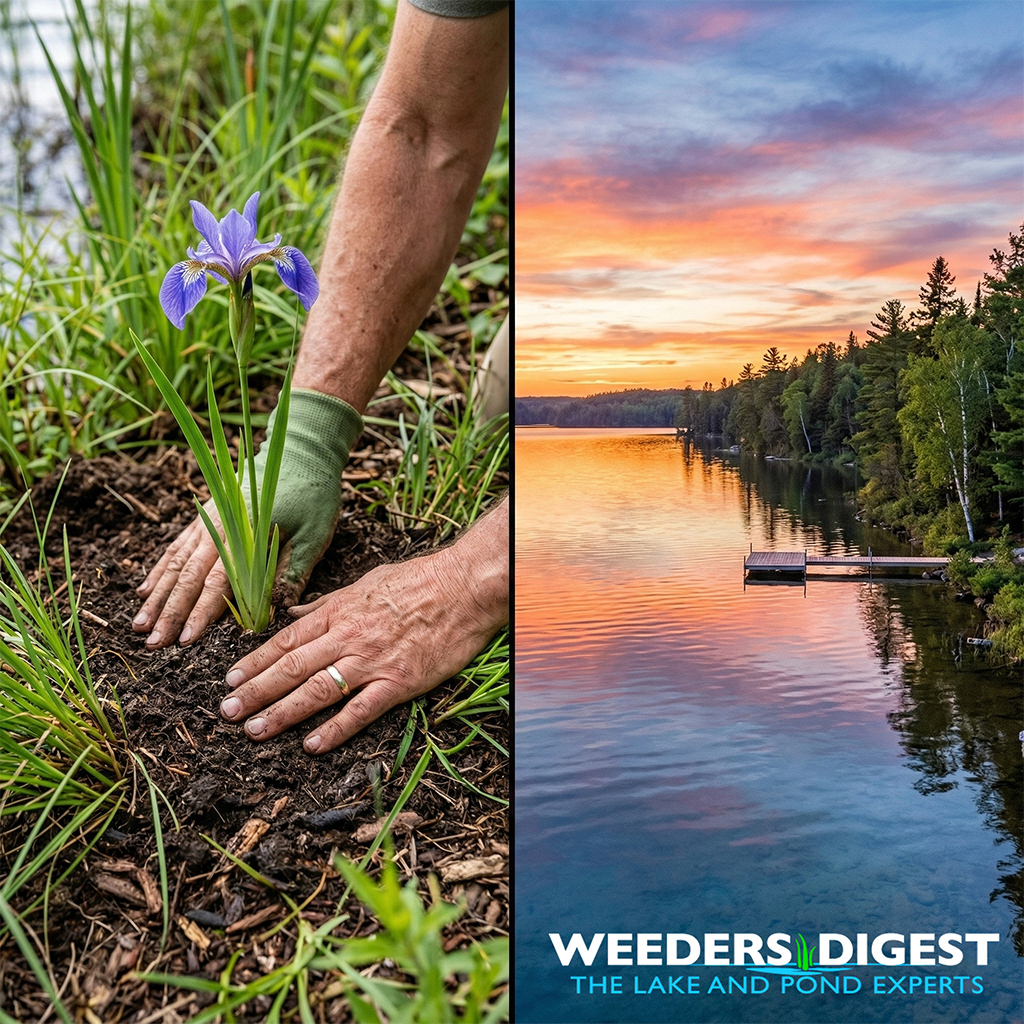
Your backyard is essentially the front door to the lake. When you choose to leave a natural buffer of plants along the water or reduce the runoff from your driveway, you are participating in a grand-scale restoration project. It is the power of compounding interest applied to nature; small, consistent investments in water quality lead to a massive biological payoff for the entire community.
The Science Behind It:
The efficacy of small-scale interventions in aquatic systems is grounded in the principles of watershed hydrology and nutrient loading dynamics. Lakes are "sinks" for their surrounding landscapes, meaning they accumulate the chemical and organic output of the entire drainage basin. Research into Non-Point Source (NPS) pollution demonstrates that cumulative phosphorus and nitrogen inputs from residential areas are primary drivers of cultural eutrophication. When individual landowners implement Best Management Practices (BMPs), such as rain gardens or vegetative buffer strips, they significantly reduce the hydraulic loading and nutrient transport into the lacustrine environment.
A study published in Environmental Management by Herbert et al. (2010) highlights that small-scale riparian buffers are disproportionately effective at sequestering nutrients before they enter the water column. These buffers facilitate denitrification and physical filtration, preventing orthophosphates from fueling harmful algal blooms (HABs). By increasing the "roughness" of the landscape through natural plantings, the velocity of overland flow is reduced, allowing for greater infiltration into the soil profile where microbes can break down pollutants. This localized reduction in nutrient flux is critical for maintaining the trophic state index of a water body.
Furthermore, the concept of "micro-restoration" addresses the biological integrity of the littoral zone. Individual actions, such as the retention of coarse woody debris or the planting of native emergent macrophytes, provide essential micro-habitats for macroinvertebrates and juvenile fish. According to research in Ecological Engineering, these small patches of restored habitat serve as biological corridors that support biodiversity across the entire lake. This bottom-up approach to ecology ensures that the foundational levels of the food web remain resilient against invasive species and climate-induced stressors.
The transition from a highly managed, "manicured" shoreline to a more naturalized state also impacts the thermal regime and dissolved oxygen levels of the near-shore environment. Shading provided by terrestrial vegetation can mitigate localized increases in water temperature, which is vital for cold-water species. Moreover, reducing the organic load from leaf litter and grass clippings prevents the excessive biochemical oxygen demand (BOD) that leads to hypoxic conditions in the benthic zone. Therefore, the scientific consensus supports the idea that the aggregation of minor anthropogenic changes creates a measurable shift in the lake’s overall socio-ecological resilience.
Sources / References:
- https://www.canr.msu.edu/news/small_steps_can_lead_to_big_changes_in_lake_health
- https://link.springer.com/article/10.1007/s00267-010-9558-y